
Serbia's election-winning Student List plans to stop arms exports to war zones, including sales through Western middlemen that pass Serbian ammunition on to Ukraine, Reuters reported on October 26.
The movement's leading candidates said a future government would halt exports from Serbia to areas of military conflict and cut off the Western intermediaries through which Serbian shells reach Kyiv. Reuters did not name the candidates or specify a mechanism or timetable. The movement also ruled out joining EU sanctions on Russia, continuing Aleksandar Vucic's foreign-policy line.
Taken at its word, the Student List would end the double game that made Vucic useful to both sides of the war in Ukraine: Belgrade refused to sanction Moscow while Serbian ammunition kept turning up in Ukrainian guns.
Moscow keeps the half it valued and loses an irritant. Kyiv, still short of ammunition after more than four and a half years of full-scale war, loses a supply line it never officially had. Israel stands to lose a supplier whose ammunition sales to it rose nearly 40-fold in two years.
The Student List, which grew out of two years of protests over the deadly November 2024 collapse of the Novi Sad railway station canopy, took 52.6% of the vote against 39.3% for Vucic's United Serbia list on October 25, with 96.5% of polling-station records processed, the Republic Electoral Commission said. That gives it a majority in the 250-seat parliament. Vucic, who resigned as president on September 27 to run for prime minister, conceded defeat on election night.
Shells for Kyiv
Serbian-made ammunition worth around €800mn reached Ukraine through third countries after 2022, the Financial Times reported in 2024, and Vucic defended the sales as commercial. In May 2025 Russia's Foreign Intelligence Service accused Serbian arms makers of shipping shells to Kyiv on fake end-user certificates via the Czech Republic, Poland and Bulgaria. A month later Vucic said Serbia had stopped all ammunition exports, yet Belgrade kept letting foreign shells transit its territory for the Czech-led ammunition initiative, and by November 2025 he told Euronews he would sell to EU buyers even if the shells ended up in Ukraine.
The opposition always read those sales as Vucic buying Western tolerance, Vuk Vuksanovic, a lecturer in foreign policy at King's College London, told Al Jazeera on October 26.
"Regarding Ukraine, Serbia will maintain its policy of not recognising the annexation of Crimea and Donbas. However, there is a question mark over ammunition deliveries, as the opposition viewed Vucic's weapons sales to Kyiv as a cynical ploy to buy Western tolerance for his domestic rule," he said.
President Volodymyr Zelenskiy welcomed the result in a post on X on October 26, calling it a new page in Serbia's history and saying Kyiv was ready to keep increasing cooperation with Belgrade. He visited Belgrade as recently as August.
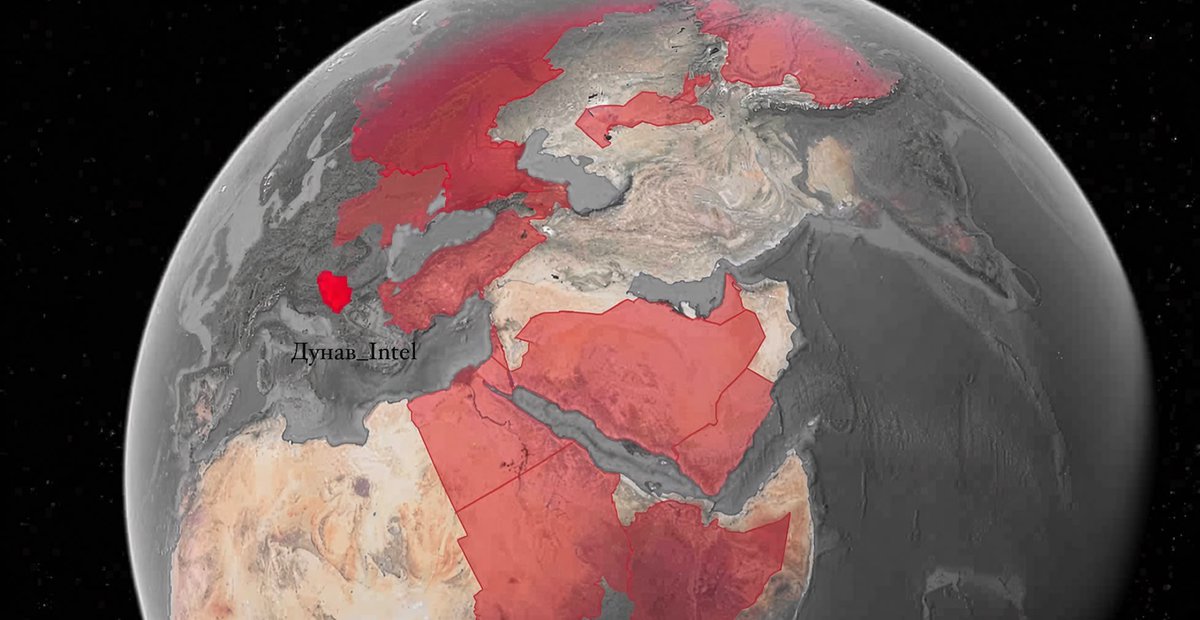
Serbia, highlighted in bright red, and the regions at war or in conflict shaded around it. Source: Dunav Intel
Israel's ammunition pipeline
Reuters' account of the pledge did not name Israel. A ban on sales to areas of military conflict could cover Israel, which joined the US in a 39-day war on Iran from late February, but the incoming government's scope and enforcement plan are not yet clear. Serbian arms exports to Israel rose from €3mn in 2023 to €48mn in 2024 and €114mn in 2025, nearly 40-fold in two years, according to Serbian statistics office data reported by EUalive in March. Cargo flights from Belgrade to Israel doubled from 19 in 2024 to 38 in 2025, with at least 17 more in the first months of 2026.
Serbia exported a record €55.5mn of ammunition to Israel in the first half of 2025 alone, even as Vucic announced his export halt. Arms also flow the other way: Israel's Elbit Systems is supplying Belgrade under a $1.63bn five-year deal and Vucic opened a drone assembly plant with Israeli partners on September 17.
"The new government has no reason to abandon cooperation with Israel, but it will certainly re-examine newly concluded contracts - primarily those concerning Serbian ammunition exports to Israel and Israeli surveillance equipment exports to Serbia," foreign policy analyst Bosko Jaksic told Al Jazeera. He said Prime Minister Benjamin Netanyahu's government had lost another "authoritarian, nationalist ally" in Europe after Viktor Orban's defeat in Hungary.
Sanctions stay off the table
On Russia, the winners are sticking to Vucic's line. "We respect Russia as a great power and as a historically important partner, and in many cases as a protector," Jovo Bakic, a Belgrade University professor speaking for the Student List, told the Kremlin-backed broadcaster RT Balkan. "There will be no changes on this issue." He said the new government would not give up Russian gas either. The movement had already pledged on September 30 to keep Serbia's "principled" refusal to impose restrictive measures on Russia.
Vucic says otherwise. "What worries me most is that sanctions will be imposed against Russia by March or April," he told supporters at his party's headquarters as he conceded, TASS reported. Any new government will inherit Serbia's dependence on a Gazprom supply deal that has been extended only to year-end and on US waivers for the Russian-owned refiner NIS, whose latest licence expires on October 30.
"The new Serbian government will not see value in joining EU sanctions or adopting a hawkish stance toward Moscow," Vuksanovic said, though he expects intelligence cooperation with Russia to be downgraded and the pro-Moscow cheerleading of Vucic-controlled tabloids to end.
"We deeply value the contribution that Mr. Vucic has made to the development of our bilateral relations," Kremlin spokesman Dmitry Peskov told reporters on October 26, adding that Moscow hoped Vucic would keep advancing ties "even in opposition", The Moscow Times reported. The incoming government should work "constructively" with Moscow, he said.
"For our part, we intend to continue doing everything possible to foster our relations with Belgrade. But as you know, it takes two to tango," Peskov said.