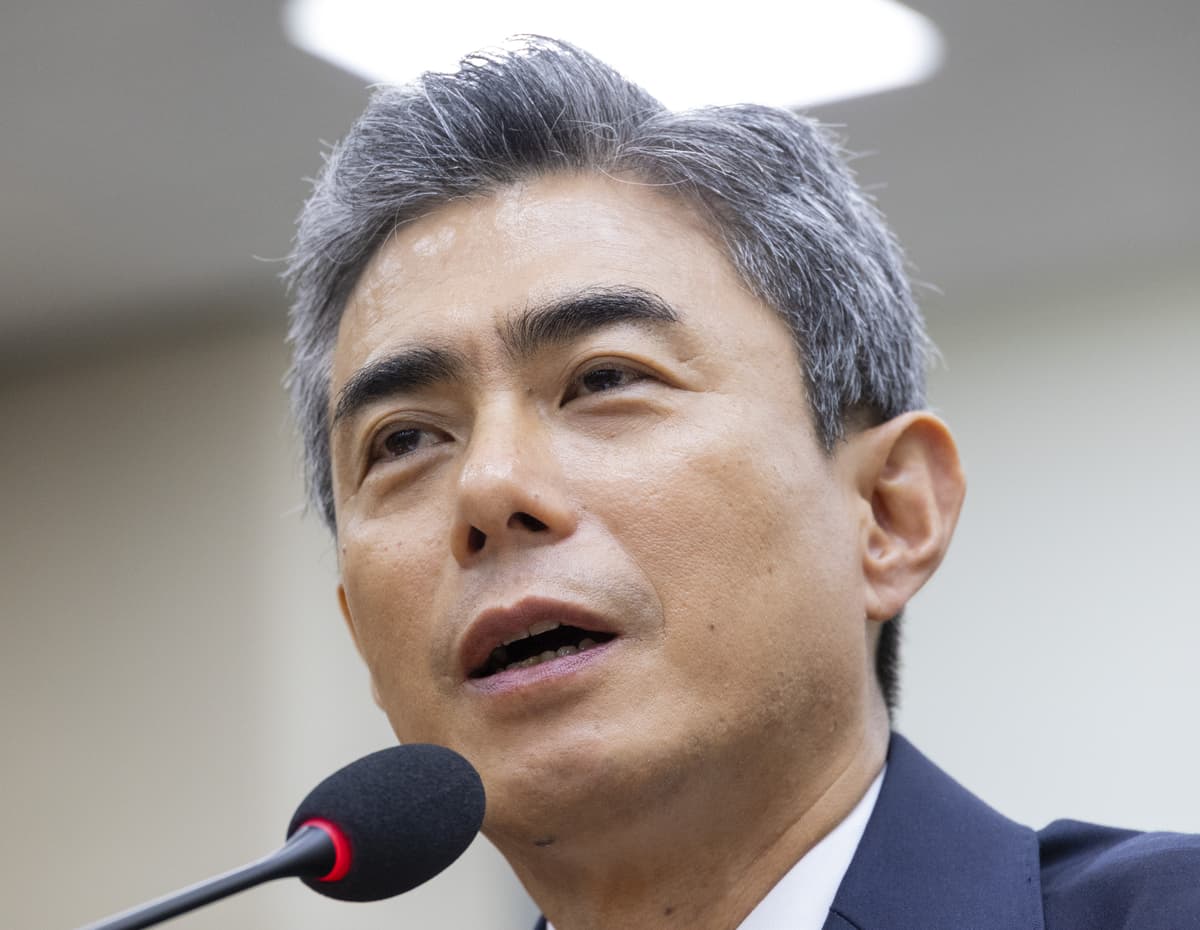
Defense Minister Kang Shin-chul said on Oct. 26 that South Korea and the United States are "closely consulting on completing the full operational capability (FOC) assessment and setting the year X," referring to the target year for transferring wartime operational control of South Korean forces.
Kang made the remarks at a comprehensive audit by the National Assembly's National Defense Committee, responding to Rep. Kim Byung-joo of the Democratic Party of Korea, who argued that the transfer timeline should be finalized at the South Korea-U.S. Security Consultative Meeting (SCM) in December.
On remarks by Gen. Xavier Brunson, commander of U.S. Forces Korea, that appeared to introduce new conditions for the transfer beyond those already agreed between the allies, Kang said the U.S. side had shown some understanding of Seoul's concerns. Asked by Kim whether Washington shared those concerns, Kang said, "I cannot disclose everything discussed between the two sides, but there were areas of shared understanding."
Asked whether the existing transfer conditions remain valid, given that the "new standards" Brunson mentioned were not agreed between the two countries, Kang replied, "That is correct. Broadly speaking, the three conditions remain the largest framework."
The three conditions agreed by Seoul and Washington are South Korea's acquisition of the capability to lead combined defense, the alliance's capability to respond to North Korean nuclear and missile threats, and a security environment on the Korean Peninsula and in the region conducive to a stable transfer.
Brunson, however, told a seminar in Washington on Oct. 14 that the security environment had shifted, citing North Korean missile threats, and said, "Conditions have changed and we have changed our plans, so there are new standards to be met." The comment prompted interpretations that the bar for judging whether the transfer conditions have been met may be rising.
Asked how Seoul would respond if Washington declines to agree on a specific transfer year at the SCM, Kang said, "Cooperation with the U.S. has been close so far," adding, "Various options could be considered, but for now we are working closely with the U.S. side."
When Kim argued that South Korea should consider declaring independent exercise of wartime operational control if talks with Washington fall through, Kang stressed, "My position in principle has not changed — the transfer should take place with trust assured."
Separately, Kang said the ministry's Oct. 23 proposal for inter-Korean military talks was timed around expectations that North Korean leader Kim Jong-un would travel to China. "As we tracked Chairman Kim, we projected the timing of his visit to China," he said. "We made the proposal under various strategic considerations that this was a moment when we should put something forward."
On the purpose of Kim's trip to China, Kang said, "The first element concerns North Korea-China relations in the context of North Korea-Russia ties," adding, "Beyond that, we assess that he traveled to China with multiple intentions, including matters related to North Korea-U.S. dialogue and the management of the Korean Peninsula amid the broader international situation."