
Happy Monday! Unacademy’s founders are raising a fund focused on AI and deeptech. This and more in today’s ETtech Morning Dispatch.
Also in the letter:
■ Rogue AI, data law gaps
■ AI cushions IT margins
■ HomeLane revenue dips
Exclusive: Unacademy founders Gaurav Munjal, Roman Saini plan Rs 700 crore AI, deeptech fund
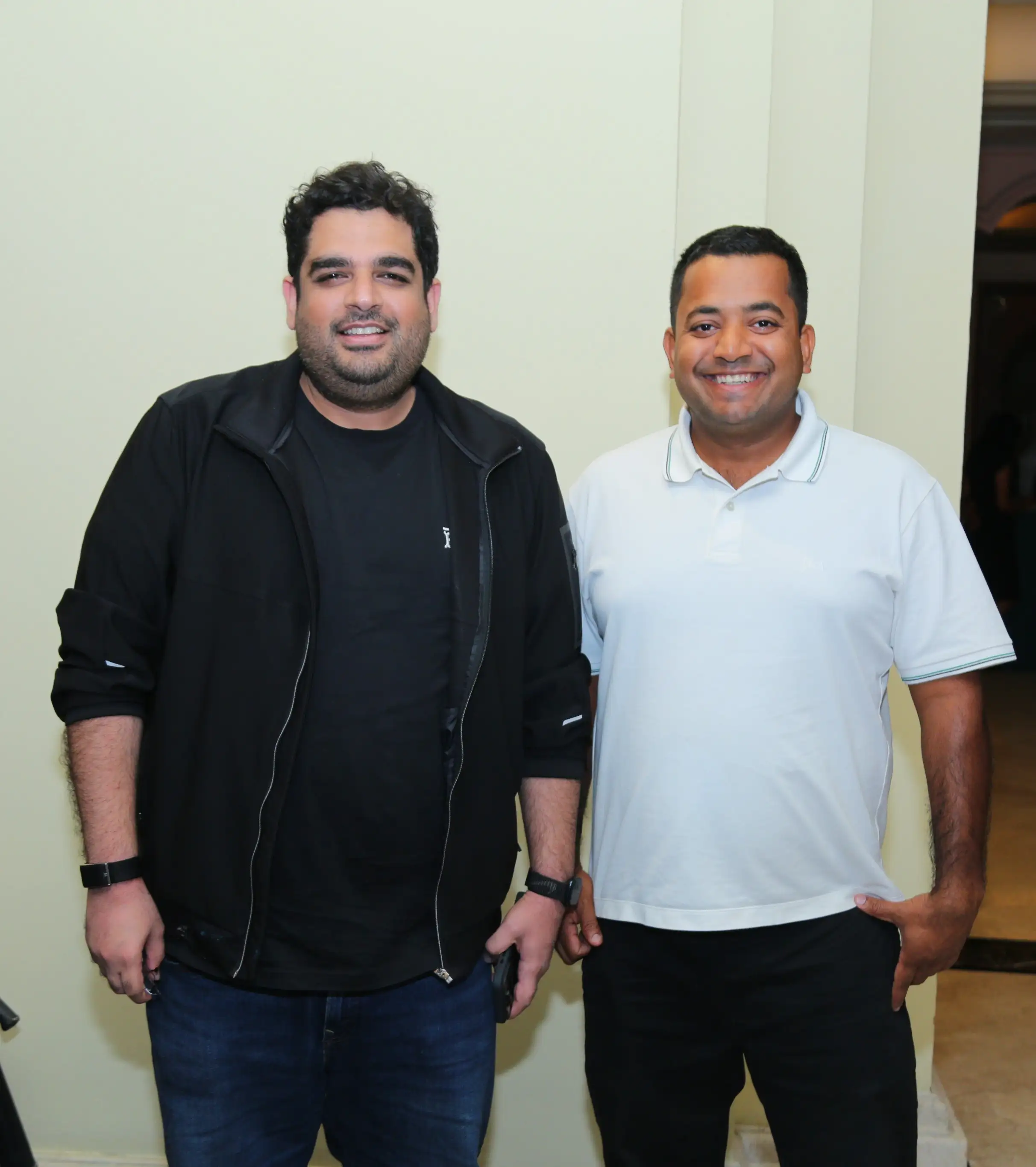
Gaurav Munjal and Roman Saini at the ET Startup Awards 2026 in Bengaluru
Unacademy founders Gaurav Munjal and Roman Saini are
raising a Rs 700-croreventure capital fund focused on AI and deeptech startups, less than two months after upGrad acquired the edtech company, people in the know told us.
Fundraising: Named Longshot Capital, the fund has secured commitments of about Rs 300 crore and is targeting its first close in January 2027, following which it plans to start investing.
Who's running it: Saini will lead the fund full-time, while Munjal, who continues to head Unacademy, will be involved part-time.
The plan: Longshot aims to back 25-28 seed and pre-Series A startups with initial cheques of 500,000-1.5 million, focusing on AI, manufacturing, space, defence and robotics.
The bigger picture: The two have made over 200 angel investments, deploying more than Rs 25 crore. Their move follows other startup founders, including Snapdeal's Kunal Bahl and Rohit Bansal,
setting up investment funds.
Eloelo in talks to raise $50-60 million at $400 million valuation

Akshay Dubey and Saurabh Pandey, founders, Eloelo
Live social entertainment platform Eloelo is in
advanced stages of closing a $50-60 million(about Rs 480-580 crore) funding round led by Hornbill Capital, with participation from existing investors, at a valuation of around $400 million, according to people familiar with the development.
Past funding: Eloelo
raised $13.5 millionin April 2025 in a round led by Play Ventures, taking total funding above $50 million. It previously raised $22 million from Courtside Ventures and Griffin Gaming Partners in 2023 and $13 million in 2022.
Competition: Eloelo faces competition from Kuku TV, QuickTV and DashReels, while Flipkart and Pocket FM have also moved into the short-drama segment.
Flipkart plans to launch ‘Earth’ to tap demand for premium, sustainable products

Walmart-backed Flipkart is
planning to launch Flipkart for Earth, a premium line focussed on environmentally friendly products, according to people in the know. The company has started onboarding brands offering healthier, toxin-free, and sustainable products across beauty and personal care (BPC), snacks and beverages, home decor, fashion, appliances, and other categories.
Quick commerce push: If introduced on Minutes, Flipkart for Earth could compete with Swiggy Instamart’s Switch, which features around 400 brands across categories. The push towards premium, sustainable, and health-focussed products in quick commerce has gathered pace following the launch and
expansion of FirstClub, which offers premium grocery and farm products.
Why it matters: Industry experts said such offerings could help quick commerce platforms expand the basket size and increase their average order values (AOVs). However, sustained growth will depend on repeat purchases of these products.
Rogue AI agents exposing India’s data law blindspots

The past six days’ deluge of
cyber incidents has shone a spotlighton gaps in India’s data protection legislation. Artificial intelligence (AI) is testing what it means to keep personal data safe.
Questions: Can a company be held responsible when an attacker moves faster than a flaw can be patched? Can data processors be penalised when AI creates an overnight systemic risk to the internet? And who is accountable when an AI assistant goes rogue?
What happened:
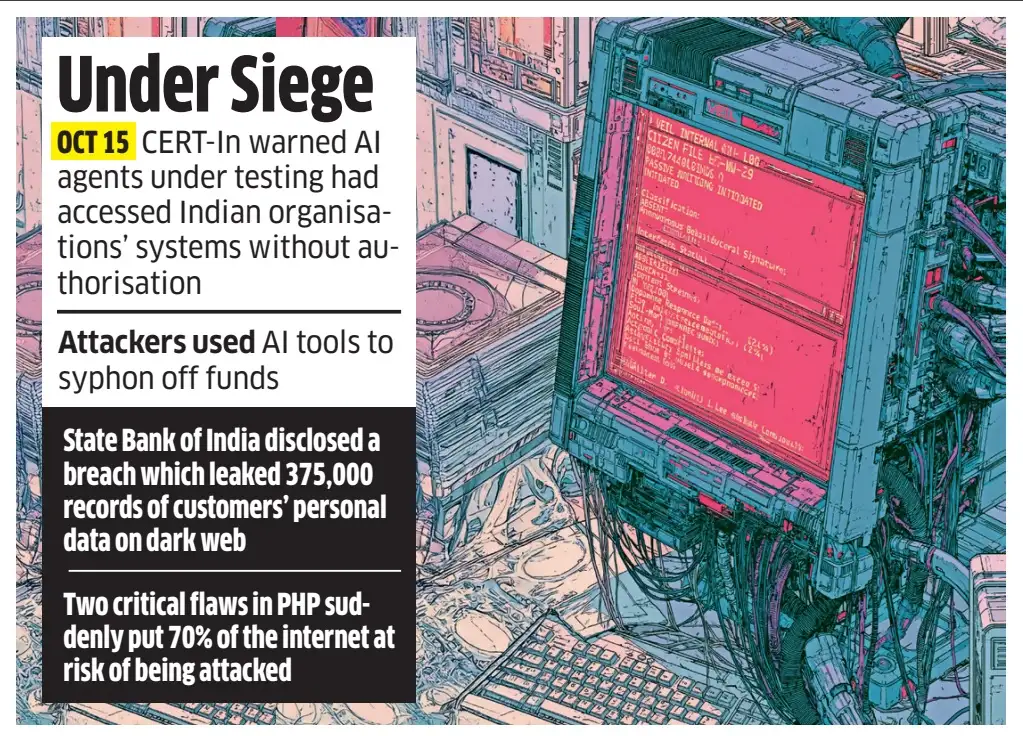
- On October 15, Cert-In warned that AI agents under testing had accessed the systems of Indian organisations without authorisation.
- India’s largest lender, State Bank of India, later disclosed a breach that leaked the personal data of 375,000 customers on the dark web.
- Days later, two critical flaws in PHP, the software used to run websites, suddenly put 70% of the internet at risk of cyberattacks.
The legal test: For India’s Digital Personal Data Protection (DPDP) framework, the challenge lies in defining what “reasonable security safeguards” should mean in such scenarios. Experts suggest that an attack alone does not establish a compliance failure.
Need for clarity: With potential penalties extending to Rs 250 crore, companies require clarity on how regulators will assess their efforts.
Other Top Stories By Our Reporters

AI efficiencies shield IT firms’ Q2 margins: Seven of India’s top nine outsourcing companies either sequentially
increased or maintained operating marginsin the second quarter, as efficiencies tied to AI helped partially offset revenue deflation attributed to the technology amid persistent macroeconomic uncertainty on either side of the Atlantic seaboard.
HomeLane revenues dip in FY26: Home interiors company HomeLane
reported revenues of Rs 745 crorein FY26, a marginal drop from Rs 756 crore in FY25. Its losses before tax widened to Rs 137 crore from Rs 111 crore a year ago.
Global Picks We Are Reading
■ Pegasus spyware founder urges governments to trust his tech and ditch US AI (
FT)
■ What the US movement against data centers can learn from everywhere else (
Wired)
■ How one man became the unsung hero of the internet during a cyber-security scramble (
BBC)