

Greece will display a range of military equipment, including unmanned ground vehicles, attack drones, anti-ship missiles and air defense systems, during Wednesday’s October 28 military parade in Thessaloniki. The annual parade, held to mark Greece’s entry into World War II in 1940, will feature equipment reflecting the armed forces’ growing emphasis on unmanned systems, electronic warfare and air defense.
Retired Army Chief of Staff Georgios Kampas outlined some of the systems expected to appear in the parade in an interview with Greek public broadcaster ERT. Among them are going to be Greek-made attack drones, known as loitering munitions, the Kentauros anti-drone system, Exocet missiles and Patroller surveillance drones, along with remotely operated vehicles designed to deliver supplies to troops on the front lines.
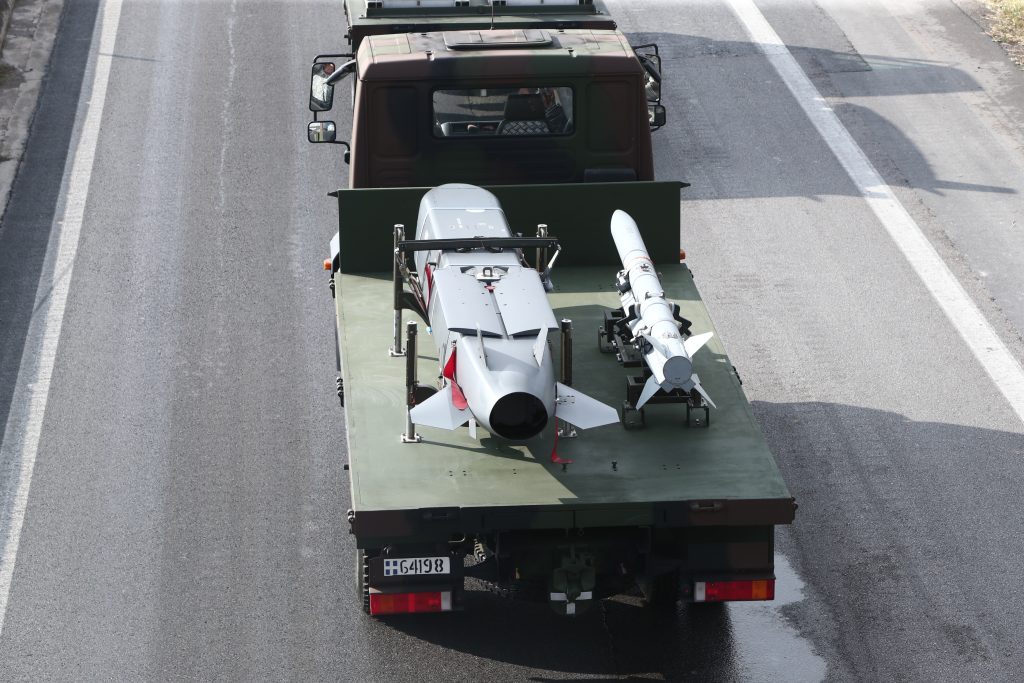
Military equipment is transported during rehearsals for Greece’s October 28 parade in Thessaloniki. (Sotiris Trypsanis/Eurokinissi)
Unmanned Vehicles and Greek-Made Attack Drones
One of the systems scheduled to appear is an unmanned ground vehicle designed to transport ammunition, food, spare parts and other military supplies. Some of these remotely operated vehicles can carry loads of up to 600 kilograms (1,320 pounds), allowing troops to resupply positions without sending personnel into potentially dangerous areas.
NEWSLETTER TABLE TALK
Never miss a story.
Subscribe now.
The most important news & topics every week in your inbox.
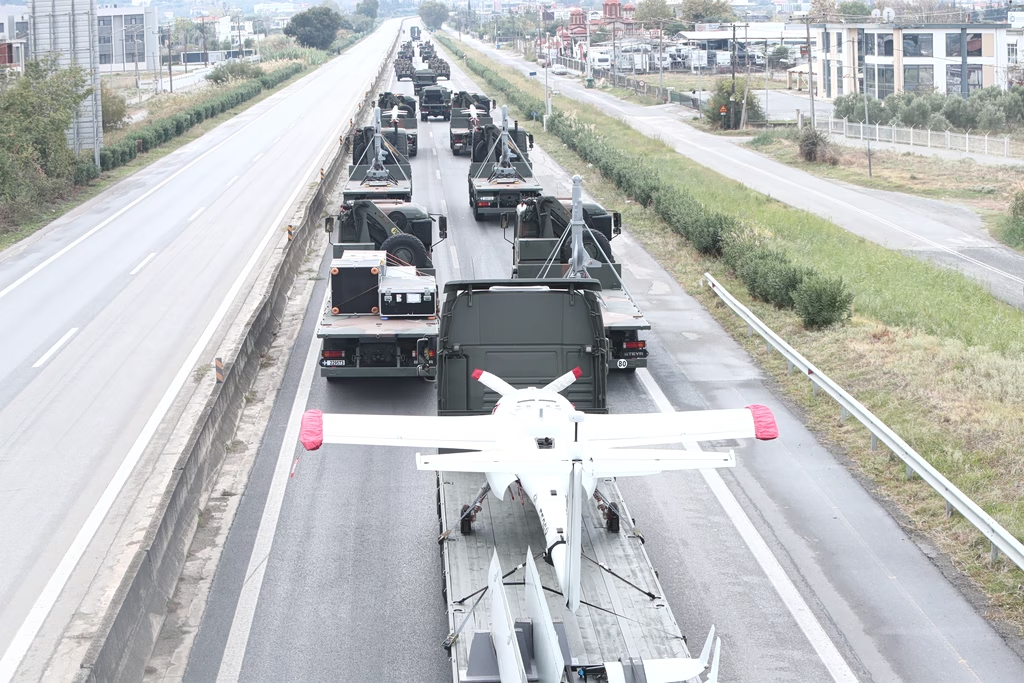
Military equipment is transported during rehearsals for Greece’s October 28 parade in Thessaloniki. (Sotiris Trypsanis/Eurokinissi)
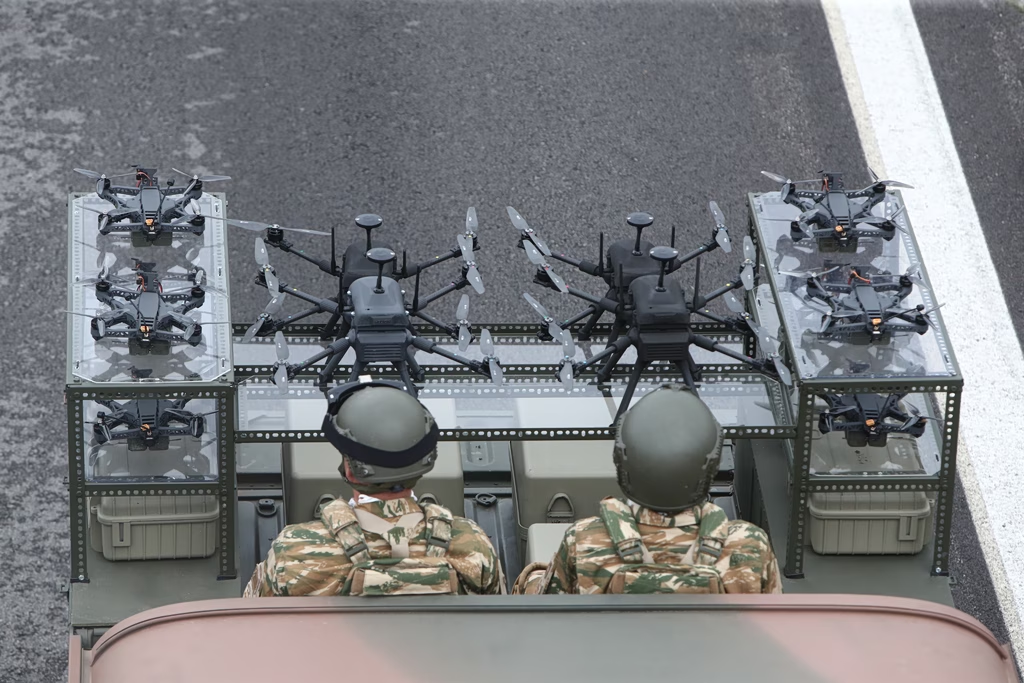
Military equipment is transported during rehearsals for Greece’s October 28 parade in Thessaloniki. (Sotiris Trypsanis/Eurokinissi)
The parade will also feature Greek-made loitering munitions. Unlike conventional surveillance drones, these weapons carry explosive warheads and are designed to crash into their targets. According to Kampas, one such Greek-made system can reach speeds exceeding 150 kilometers per hour (93 mph). Their relatively small size can make such drones difficult to detect by radar, depending on operating conditions and surveillance capabilities. Loitering munitions and other small drones have played an increasingly important role in the war in Ukraine, where they have been used to attack vehicles, military positions and other targets.
Kentavros: Greece’s Anti-Drone System
Another Greek-made system expected at the parade is Kentavros, an electronic warfare system designed to detect and neutralize drones. Developed by Hellenic Aerospace Industry (HAI), Kentavros uses radio direction-finding technology to detect unmanned aircraft and electronic jamming to disrupt their communication and navigation signals, including GPS, without physically destroying them.
The system has already been used in operations in the Red Sea and has attracted interest from other countries.
According to its manufacturer, Kentavros can be installed on military vehicles, naval vessels or at fixed locations. Plans are underway to equip Greek Navy frigates and other ships with the system, while its use at land-based installations is also under consideration.
Exocet Missiles and Patroller Surveillance Drones
The parade is also expected to feature Exocet anti-ship missiles, which can be launched from naval platforms or land-based systems.
Another addition is the Patroller unmanned aircraft, designed for surveillance and reconnaissance missions. Patroller drones can remain airborne for extended periods, gathering intelligence and transmitting information to aircraft, naval vessels and ground forces.
Kampas also described an unmanned aircraft capable of vertical takeoff and landing, with an operational range of up to 200 kilometers (124 miles). The aircraft can collect and transmit information about potential targets without requiring a conventional runway.
Air Defense and the ‘Achilles Shield’
Air defense equipment will also feature in the parade, as Greece develops alongside Israel a broader, multilayered defense network known as the “Achilles Shield.” The initiative is intended to integrate defenses against different types of aerial threats, including missiles and drones.
Among the equipment discussed by Kampas was a mobile air defense system equipped with radar to detect and track incoming targets and missiles to intercept them. Its radar has a reported detection range of up to 150 kilometers (93 miles), while interception ranges vary depending on the type of missile used.
The system is intended to form part of Greece’s wider air and ballistic missile defense network, with its mobility allowing it to be deployed to protect islands and critical infrastructure.
The October 28 parade will bring these systems together in a public display of equipment Greece is introducing or incorporating into its military planning, with particular emphasis on drones, electronic countermeasures and air defense.