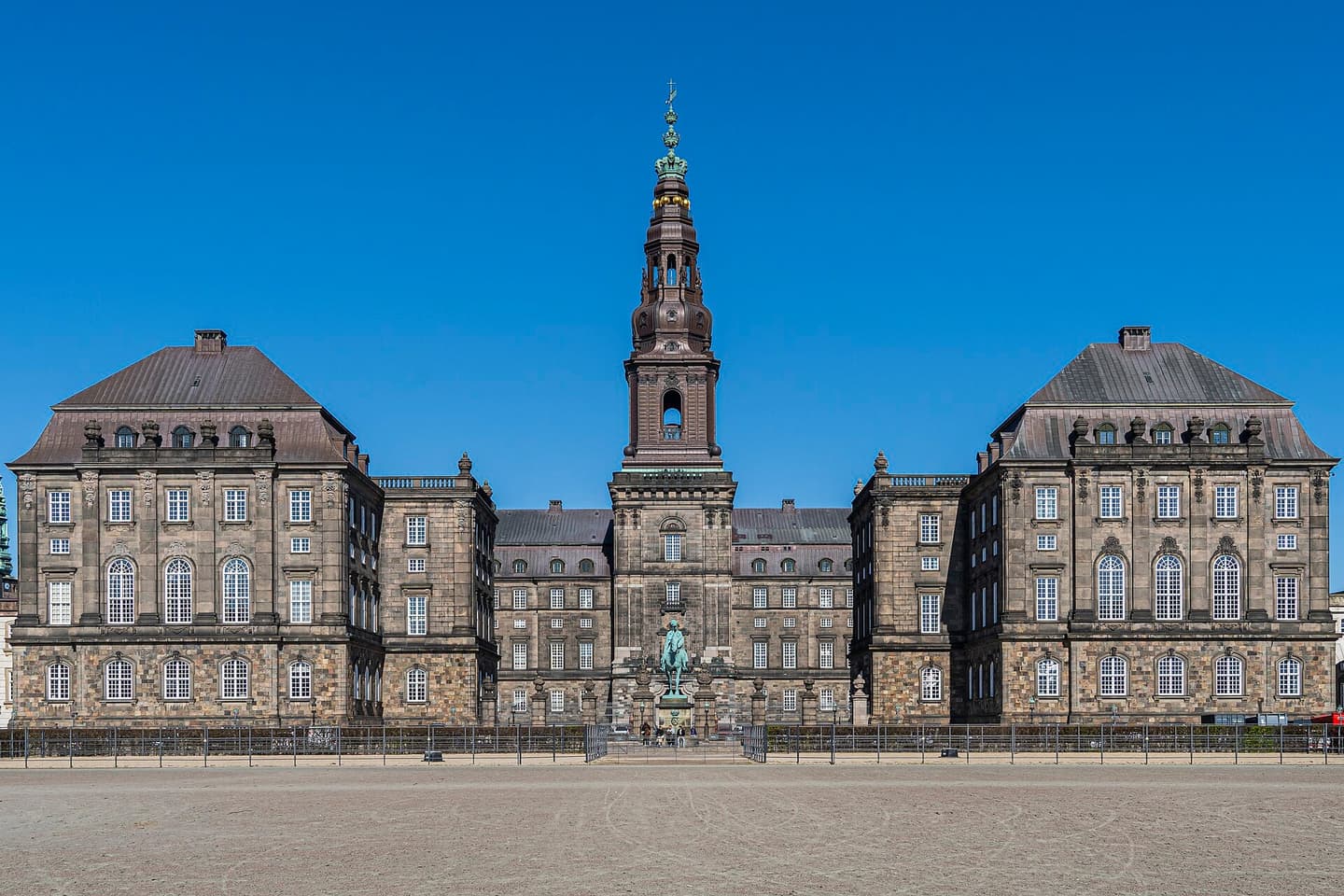
DENMARK · POLITICS
Key Facts
- —Prime minister Mette Frederiksen of the Social Democrats leads a four-party minority government, presented on 3 June 2026 after about 70 days of talks.
- —Election On 24 March 2026 her party won 21.85% of the vote, its worst result since 1903, but stayed the largest.
- —Parliament The Folketing, Denmark’s parliament, needs 90 of 179 seats for a majority; the four governing parties hold 82 of the 175 in Denmark proper.
- —Head of state King Frederik X, on the throne since 14 January 2024, has a ceremonial role.
- —Next election The next general election must be held within four years, by March 2030.
How Denmark Is Governed
Denmark is a parliamentary monarchy. The king signs laws, but the prime minister and cabinet decide policy.
This guide is part of The Rio Times series on European politics. See also our guides to Spain and Germany’s AfD debate.
The Folketing has 179 members: 175 from Denmark itself, two from the Faroe Islands and two from Greenland. A Danish government does not need a majority behind it, only no majority against it, a rule called negative parliamentarism that makes minority governments common.
The March Election and the Long Talks
Frederiksen called the election on 26 February 2026 and voters went to the polls on 24 March. Turnout was 84.0%, with 3.61 million of 4.30 million eligible voters taking part.
The result left no bloc with a majority. Twelve parties won seats in Denmark proper, and the Social Democrats took 38 seats, ahead of the Socialist People’s Party (SF) with 20.
Frederiksen presented the coalition programme on 2 June and her ministers on 3 June. The government combines the Social Democrats, SF, the centrist Social Liberals and the centrist Moderates.
A Government Without a Majority
Together the four governing parties hold 82 seats elected in Denmark proper: Social Democrats 38, SF 20, Moderates 14 and Social Liberals 10. The Moderates are led by Lars Løkke Rasmussen, a former prime minister, who is also foreign minister.
The Red-Green Alliance (a left-wing party, 11 seats) and The Alternative (a green party, 5 seats) are support parties outside the cabinet. The main opposition party is Venstre, the Liberal Party, with 18 seats.
Opposition Moves and a Russia Row
Venstre’s national board met in extraordinary session on Sunday, 25 October, at Nyborg Strand. It backed leader Troels Lund Poulsen’s plan for a greener, more modern liberal party.
A separate row concerns Jacob Harris, an independent member of the Folketing who was elected for the Citizens’ Party, a small populist party, and later left it. Politicians across the spectrum condemned him after he said he would meet Russia’s ambassador, Vladimir Barbin, on Tuesday, 10 November.
The MyDefence Spy Case
Two men, aged 18 and 21, were charged on 20 October under section 108 of the criminal code, which covers spying for a foreign power. Reports describe them as Ukrainian nationals, and they deny the charges.
They are accused of spying on MyDefence, a Danish maker of counter-drone systems. Russian involvement is suspected, according to reports.
What It Means for US Readers
Denmark is a NATO ally and a European Union member close to the Baltic Sea. The United States also operates Pituffik Space Base, a missile-warning and space-surveillance site, in Greenland, which is Danish territory with its own self-government.
A minority government means policy on trade and regulation comes from bargains with several parties, not from one fast decision. US companies should expect negotiation, not surprise decrees.
The spy case and the planned meeting with Russia’s ambassador show how Russia-related security stories shape Danish politics. Both involve Moscow, which makes them a NATO concern as well as a Danish one.
What Is Not Known
The courts have not ruled on the MyDefence case, and the suspects deny the charges. Whether Russia was involved is a suspicion, not a finding.
It is not known whether Harris will go ahead with the meeting on 10 November. This guide gives no current national polling, because we could not confirm recent figures from a named institute.
How long the four-party government will last is open. It depends on deals with the Red-Green Alliance and The Alternative.
Frequently Asked Questions
Who is Denmark’s prime minister in late 2026?
Mette Frederiksen of the Social Democrats leads a four-party minority government, presented on 3 June 2026. King Frederik X is head of state.
Does Denmark’s government have a majority?
No. The four governing parties hold 82 of the 175 seats elected in Denmark proper, and a majority needs 90 of 179. They rely on the Red-Green Alliance and The Alternative.
When is Denmark’s next general election?
The next election must be held within four years of the last one, by March 2030. The prime minister can call it earlier.
What happened in Denmark’s March 2026 election?
The Social Democrats won 21.85%, their lowest share since 1903, but stayed the largest party. Talks took about 70 days before the new government appeared.
Who are the two men charged in the MyDefence case?
They are aged 18 and 21 and were charged on 20 October with spying under section 108. Reports describe them as Ukrainian nationals, and they deny the charges.
Sources: Folketing, the Danish parliament; Statistics Denmark, general election 2026; Prime Minister’s Office of Denmark; Danish Prosecution Service.