
By: Mari Yamaguchi, The Associated Press Posted: Last Modified:
- Read Later
TOKYO (AP) — Legendary Japanese manga artist Tetsuya Chiba, who caused a national sensation with his boxing series “Ashita no Joe" or "Fighting for Tomorrow," a story about an orphan becoming a professional boxer, has died. He was 87.
Read this article for free:
To continue reading, please subscribe:
*Billed as $5.77 plus GST every four weeks. After 52 weeks, price increases to the regular rate of $19.95 plus GST every four weeks. Offer available to new and qualified returning subscribers only. Cancel any time.
TOKYO (AP) — Legendary Japanese manga artist Tetsuya Chiba, who caused a national sensation with his boxing series “Ashita no Joe" or "Fighting for Tomorrow," a story about an orphan becoming a professional boxer, has died. He was 87.
Read unlimited articles for free today:
TOKYO (AP) — Legendary Japanese manga artist Tetsuya Chiba, who caused a national sensation with his boxing series “Ashita no Joe” or “Fighting for Tomorrow,” a story about an orphan becoming a professional boxer, has died. He was 87.
Chiba’s masterpiece series became so popular that fans even attended a mock funeral for the protagonist Joe Yabuki’s rival.
Chiba died at a Tokyo hospital last Thursday, his publisher Kodansha Ltd. said Tuesday, without specifying the cause of his death.

While he depicted aspiring young athletes fighting for their life and career, Chiba was a vocal supporter of peace and freedom of expression, telling stories of his harrowing memories of war as a child in autobiographical stories and manga.
Months after he was born in Tokyo in January, 1939, his family moved to northeastern China and Chiba spent his early childhood there during Japan’s occupation in the region, where his father worked at a printing factory.
At age 6, Chiba and his family marked Japan’s surrender on Aug. 15, 1945, while they were still in China. There, they faced danger and hunger in the face of anti-Japanese riots, but survived with the help of his father’s Chinese translator who hid the family in an attic, where Chiba drew pictures for his three younger brothers.
The family eventually fled to China’s port city of Huludao and returned to Japan in 1946.
The harrowing memories later influenced his work and activity with an anti-war theme.
Chiba debuted as a manga artist in 1956, initially drawing comic books for girls and later moving on to works for boys in the early 1960s.
In 1961, he debuted in a boys comic magazine with a baseball manga “Chikai no Makyu (The Magic Ball),” paving the way for a new genre of sports-themed manga in Japan.
Chiba’s sports-themed mangas also included “Ore wa Teppei (I’m Teppei),” the story of a high school student training in the martial art of kendo, “Notari Matsutaro” about sumo wrestling, and “Ashita Tenki ni Naare (Let’s hope the weather’s fine tomorrow)” about a teenage golfer.
- Read Later
More Stories
Imagine being a young athlete who loves volleyball but attends a school without a net or even a ball.
For many students in Winnipeg, access to basic sporting equipment is something they rarely think about.
However, during my visit to Red Sucker Lake First Nation in northern Manitoba, I witnessed a very different reality. The local school did not have volleyball nets or balls. As someone who has had the opportunity to compete in volleyball across Canada and internationally, this experience made me realize how easily we take these opportunities for granted.
How can we expect young Indigenous athletes to discover their potential when they don’t even have the basic equipment needed to play? Talent and determination can exist in every community but without access to opportunities, that potential may never be realized.

Japanese manga artist Tetsuya Chiba, known for his boxing masterpiece ‘Ashita no Joe,’ dies at 87
Mari Yamaguchi, The Associated Press 2 minute read Preview
Japanese manga artist Tetsuya Chiba, known for his boxing masterpiece ‘Ashita no Joe,’ dies at 87
Mari Yamaguchi, The Associated Press 2 minute read Updated: 4:54 AM CDT
TOKYO (AP) — Legendary Japanese manga artist Tetsuya Chiba, who caused a national sensation with his boxing series “Ashita no Joe" or "Fighting for Tomorrow," a story about an orphan becoming a professional boxer, has died. He was 87.
Chiba's masterpiece series became so popular that fans even attended a mock funeral for the protagonist Joe Yabuki's rival.
Chiba died at a Tokyo hospital last Thursday, his publisher Kodansha Ltd. said Tuesday, without specifying the cause of his death.
While he depicted aspiring young athletes fighting for their life and career, Chiba was a vocal supporter of peace and freedom of expression, telling stories of his harrowing memories of war as a child in autobiographical stories and manga.

Jets players glad to have Hellebuyck trade behind them
Mike McIntyre 6 minute read Preview
Jets players glad to have Hellebuyck trade behind them
Mike McIntyre 6 minute read Saturday, Oct. 24, 2026
Relief? Regret? Rage?
How are the Winnipeg Jets feeling following Friday’s Connor Hellebuyck trade — particularly those with deep roots and strong bonds with the franchise goaltender who now finds himself a member of the New Jersey Devils?
“It was a bit of a cloud hanging over our heads,” captain Adam Lowry admitted on Saturday. “It’s nice we can look forward now. We don’t have to keep talking about it. We’ve got guys that want to be here.”
That was a bit of a common theme around the room following an outdoor practice at Princess Auto Stadium ahead of Sunday’s Heritage Classic game against the Montreal Canadiens.

Property tax hike included in Gillingham’s costed platform
Joyanne Pursaga 5 minute read Preview
Property tax hike included in Gillingham’s costed platform
Joyanne Pursaga 5 minute read Updated: Yesterday at 6:49 PM CDT
Mayoral candidate Scott Gillingham says property taxes will rise another 3.5 per cent in 2027, with no set cap on potential increases in each of the following three years, if he is re-elected as mayor on Wednesday.
A new property tax target would instead be determined by city council for the following three budget years, with a goal to keep annual hikes “close to inflation,” respect affordability and protect essential services, Gillingham said while releasing a costed election platform Monday.
“To say today we’re going to set a (property tax hike) target, set an amount without knowing where the inflationary rates would go would be irresponsible,” he said.
In his 2022 election campaign, Gillingham promised to raise taxes by 3.5 per cent per year. However, the city instead imposed a 5.95 per cent property tax hike in 2025, Winnipeg’s largest single-year increase since the 1990s.
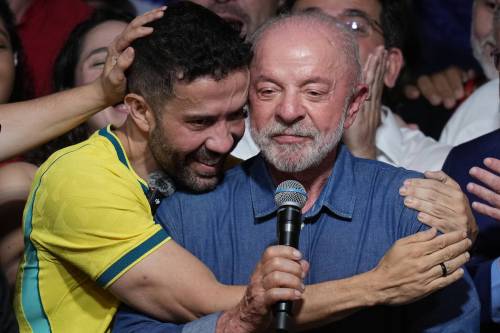
Lula’s historic Brazilian election victory
Peter McKenna 5 minute read Preview
Lula’s historic Brazilian election victory
Peter McKenna 5 minute read 2:01 AM CDT
This was supposed to go down as one of the closest presidential elections in Brazilian history — until it wasn’t. In the end, 80-year-old leftist President Luiz Inácio (Lula) da Silva of the Workers Party bested (by some four million votes) Flávio Bolsonaro, the hard-right Liberal Party leader and senator, by a lopsided 3.5 per cent of the popular vote.
Speaking of Brazilian history, it rarely happens that the second-place finisher in the first round ends up winning the second, run-off contest in such a decisive manner. More significant, Lula has now won an unprecedented (non-consecutive) fourth term as an elected Brazilian president.
While Bolsonaro has waffled on making a concession speech (like his father in 2022), the writing on the wall shows clearly that he lost badly. He has evidently taken issue with a ruling by a justice of the Supreme Court that extended polling hours country-wide by an additional two hours in light of high voter turnout and other interruptions.
Flávio’s supporters, many galvanized around the “never Lula” camp, were desperate for change — even if it meant the kind of change that could turn Brazil on its head. So Lula resorted to one of the oldest political tricks in the campaign handbook — namely, using fear of an anti-democratic Bolsonaro to swing voters to his side (along with a host of last-minute announcements involving financial incentives to Brazilians). With a right-leaning Congress, voters were understandably worried that Flávio would go about systematically dismantling Brazil’s democratic ethos and institutions.
DEAR MISS LONELYHEARTS: My husband died a while back, and I don’t miss him! He had grown old in a strange and cranky way, and I’m a cheerful person by nature. It was hard to hear him shoot down every idea I had to go out and do things together.
He wasn’t physically ill — just finished with having any fun. He had gotten depressed and wouldn’t take anti-depressants, although he was fine with getting drunk and critical towards me.
He was particularly negative about seeing friends and relatives, and living the active way we used to — always the first to get tickets to concerts and encouraging other friends to go with us for dinners at new restaurants. We also went to a lot of sports games, and visited friends and relatives. We arrive with lots of good food and drink.
So now when people ask me in that pitying voice used for widows, “Poor darling, how are you doing?” I respond, “He was miserable towards the end, and it was a relief when he died.” They look shocked, but it’s the truth, and they know it.