Today is the day that the government’s proposal for next year’s State Budget comes under debate in parliament – and, due to tensions focused on lack of housing, the event will be marked by a protest outside parliament, scheduled for early evening.
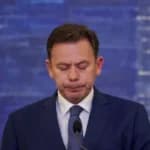
MPs will start the debate however at 3pm. After days in which the absence of any comments by the prime minister regarding housing protests that turned very ugly in the early hours of Sunday, the time for silence is up: Luís Montenegro will be opening the proceedings, with an address to the House.
This will be what is termed ‘the general discussion’ on a budget that PS Socialists have already said they will ‘wave through’, with an abstention vote (even though they do not agree with a lot of its contents).
The sessions, over today and tomorrow, are not expected to exceed 10 hours, and then the document will go on for detailed discussion in committee, until the final voting on November 24.
The atmosphere today is highly charged. The prime minister has had no public engagements since October 16 (having shown little sympathy for housing protests before that date), and opposition parties are highly critical of his lack of engagement, particularly over the police baton charge on protestors in Lisbon over the weekend.
Criticism is equally directed at President of the Republic, António José Seguro, who has said next to nothing about the situations playing out in squares in Porto and Lisbon in recent days.
“Where exactly are Montenegro and Seguro?” Questions SIC Notícias today.
The government, through Minister of Internal Administration, Luís Neves, has defended the police action which, at party level, received support from PSD and CHEGA (but none of the other parties).
Last week, in parliament, Finance Minister Joaquim Miranda Sarmento claimed that the current minority government has already taken “many measures” to address the housing crisis and that “practically everything has been done” already, warning that the initiatives will take time to have an effect.
His arguments do not appear to have been very convincing: GNR police are back on the streets later this week to protest their woes, which they have stressed relate totally with the lack of affordable housing.
But, back to today, the first round of requests for clarification on the budgetary proposals, with individual responses from Luís Montenegro, begins with the largest opposition party (CHEGA), followed by the remaining political parties, in descending order of representation, with a maximum of five minutes given to each.
As has been explained, votes in favor from the parties supporting the government, PSD and CDS-PP, and the announced abstention of the PS guarantee the document’s approval at this stage – albeit the budget proposal is seen very much as an exercise in careful accounting, rather than any promise of ‘better things to come’.
Only yesterday, JOrnal de Notícias reported how investment in housing for 2027 will drop by 63.55% as PRR- (Brussels’-based) funding comes to an end.
CHEGA has not yet formally announced that it will vote against the budget, nor has IL (Iniciativa Liberal), but both parties have already indicated that this is the most likely scenario.
On the left, PCP and BE (Bloco de Esquerda) have already confirmed that they will vote against, while LIVRE, PAN and JPP have not revealed how they will vote (last year, the latter two abstained in the general vote and voted against the final version).
The proposed 2027 State Budget, the third submitted by Luís Montenegro’s government, forecasts economic growth of 2,3% this year and 2,1% in 2027 and balanced accounts this year and a surplus of 0,1% in 2027.
Source material: SIC Notícias/ Lusa