Hanoi (VNA) – Once considered a laggard in attracting investment, Nghe An has emerged as one of Vietnam’s leading destinations for foreign direct investment (FDI).
The central province attracted more than 108.27 trillion VND (4.18 billion USD) in investment in the first nine months of 2026, including around 2.49 billion USD in FDI – ranking sixth nationwide.
In 2025, the Nghe An People’s Committee licensed 25 new FDI projects and approved additional investment for 20 existing projects, bringing total newly registered and additional capital to more than 1 billion USD. Several major projects in the Southeast Nghe An Economic Zone became operational, boosting exports and budget revenue while creating jobs and raising local workers’ incomes.
In 2026, the scale of FDI projects expanded significantly, with billion-dollar projects demonstrating the province’s investment appeal. A notable example is the Quynh Lap LNG-fired power plant project, worth nearly 2.2 billion USD and developed by a consortium comprising Petrovietnam Power Corporation (PV Power), the Republic of Korea’s SK Group and Nghe An Sugar Co., Ltd. (NASU). Industry and construction account for 34.05% of the province’s economic structure.
These figures reflect the continued shift towards industrialisation and modernisation, with manufacturing and FDI enterprises playing an increasingly important role in economic growth and competitiveness.
Nghe An's economy ranks 14th among Vietnam’s 34 provinces and cities, with industry, particularly manufacturing – processing and surging FDI inflows serving as major growth drivers. Foreign investment has helped expand production capacity, improve technological capabilities and support new industrial value chains, while creating jobs and enhancing the local economy's competitiveness.
The Nghe An provincial People’s Committee has taken concrete steps to improve the business environment. In late 2025, it approved a plan to simplify administrative procedures under the management of the Southeast Nghe An Economic Zone Management Board. In particular, procedures in the construction sector have been shortened by around 40%.
Economic experts say that together with available cleared land, an abundant workforce and ongoing infrastructure and logistics projects, streamlined and faster administrative procedures will make the province more attractive to foreign investors.
Dispong Pornchanoknart, Country Director of WHA in Vietnam, said the company is developing its second industrial park, covering around 250 hectares, as part of its long-term plan to develop approximately 2,000 hectares of industrial parks in Nghe An. Its first industrial park,
covering around 500 hectares, is located in Than Linh commune.
After nearly 10 years of operating in the province, the company considers its decision to invest there one of its soundest investment decisions in Vietnam, he said.
Teng Wei Hong, General Director of VSIP Nghe An Co., Ltd., praised the province for proactively helping investors expand their markets and access orders for high-tech, high-value-added products.
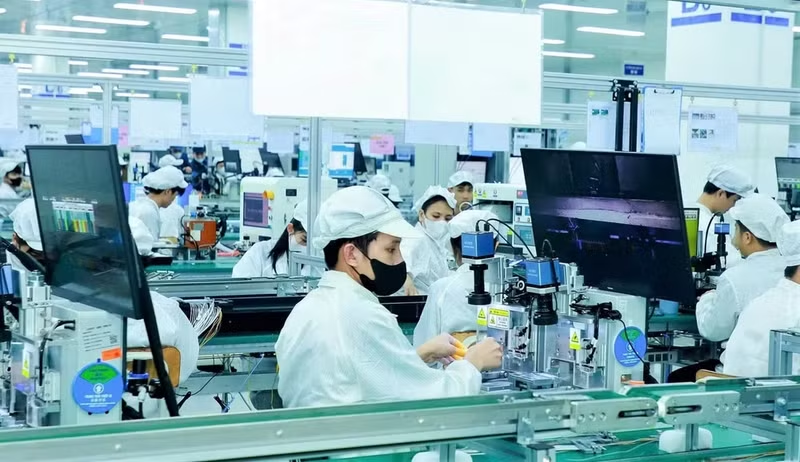
VSIP Nghe An 1 Industrial Park has an occupancy rate of 95% at present, hosting leading electronics and precision engineering enterprises. Its workforce has grown from around 2,000 before the COVID-19 pandemic to nearly 40,000.
Teng said artificial intelligence (AI), data centres, robotics, semiconductors, research and development (R&D), renewable energy, green technologies and high-tech supporting industries could generate new growth drivers for the province in the coming years.
Looking beyond its current achievements, Nghe An has adopted a plan to attract 6–8 billion USD in FDI during 2026–2030, equivalent to an annual average of 1.2–1.6 billion USD. It aims to secure 70% of total investment from developed economies with strong technological and financial resources and modern governance expertise.
By 2045, the province aims to become a manufacturing, services and innovation hub in central Vietnam, with deeper integration into global value chains.
The Nghe An provincial master plan for 2021–2030, with a vision to 2050, identifies three strategic breakthroughs in socio-economic development: improving institutions, policies and the business environment; developing human resources linked to science – technology, innovation and digital transformation; and building modern, integrated infrastructure.
The Southeast Nghe An Economic Zone is designated as the province’s main growth engine, with plans to develop it into a free economic zone focused on industry, logistics, seaports, urban development and the marine economy.
The recent expansion of the economic zone to 104,000 hectares is expected to help address shortages of industrial land and enable clearer functional zoning.
Meanwhile, the province is accelerating site clearance for VSIP Nghe An 3, Hoang Mai II and Tho Loc industrial parks.
Chairman of the Nghe An People’s Committee Vo Trong Hai affirmed that the province will continue building an enabling, action-oriented and service-minded administration, strongly reforming administrative procedures and improving governance to create a transparent, stable and favourable investment environment. It pledges support for businesses throughout the entire project lifecycle, from investment surveys and administrative procedures to site clearance, construction, production, business operations and further expansion./.