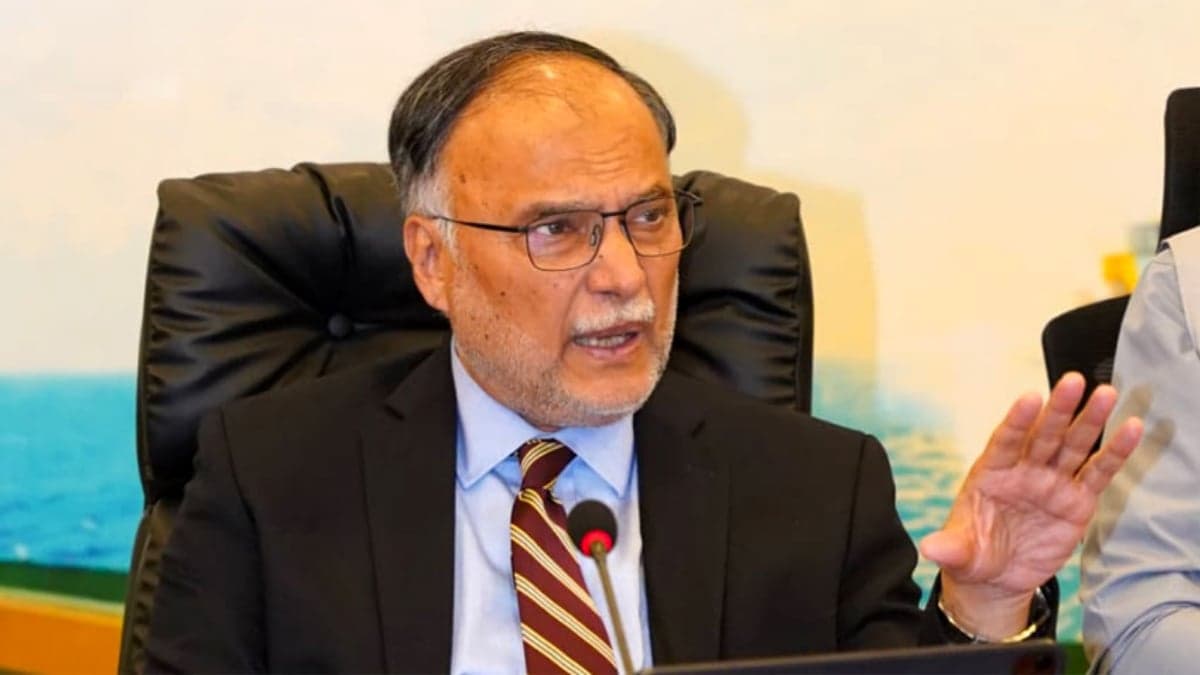
The minister for planning in Pakistan, Ahsan Iqbal, has called for urgent and timely use of satellite technology and early warning systems to protect vulnerable communities from climate change and natural disasters.
Speaking at the opening of an international conference organized in collaboration with the United Nations Office for Outer Space Affairs (UNOOSA) in Islamabad, he said timely access to satellite-based information could help save lives and reduce economic losses from floods, cyclones and glacial melting.
Ahsan Iqbal said Pakistan was disproportionately affected by climate change despite contributing less than one percent of global greenhouse gas emissions.
He cited the devastating floods of 2022 and 2025, which he said had caused economic losses exceeding $30bn.
He criticized the international response to Pakistan’s recovery needs, saying international partners and financial institutions had not provided sufficient new grant funding for reconstruction. Instead, he said, proposals had included redirecting previously approved loans intended for education and healthcare.
He described the approach as inconsistent with the principles of climate justice and called for reforms to the international financial system to ensure that developing countries received fairer access to climate finance.
He stressed that vulnerable nations should not be pushed further into debt to address a crisis they have contributed little to creating.
Highlighting Pakistan’s progress in space technology, Professor Ahsan Iqbal said the country had successfully launched five satellites over the past 18 months, reflecting its growing commitment to strengthening national capabilities in space science and technology.
He also announced that Pakistan was preparing to send its first astronaut into space in the near future.
Iqbal said satellite data should become a central part of national development planning, particularly when designing and building critical infrastructure such as roads, bridges and hospitals.
Using space-based information to assess risks, he said, could help authorities identify vulnerabilities, strengthen resilience and ensure public investment is more sustainable.
The Federal Minister outlined key priorities for strengthening the practical application of space technology, including integrating space-based data into government decision-making, improving secure information-sharing mechanisms among institutions, and investing in human resource development.
He particularly stressed the need to create greater opportunities for young people, especially women, in space science and geospatial technologies.
Ahsan Iqbal further emphasized the importance of fair climate financing, calling for grant-based assistance rather than debt-creating loans for countries suffering the consequences of climate change.
He also urged greater regional cooperation and the exchange of information on shared rivers, mountain systems and climate-related risks to improve preparedness and strengthen collective disaster response.
He noted that natural disasters transcend national boundaries and that timely access to reliable information, supported by regional collaboration, could significantly improve early warning, preparedness and emergency response.
Concluding his address, the Federal Minister expressed hope that the conference would produce practical and actionable recommendations to harness space technology for protecting human lives, mitigating the impact of natural disasters and advancing sustainable development. He subsequently formally inaugurated the conference.