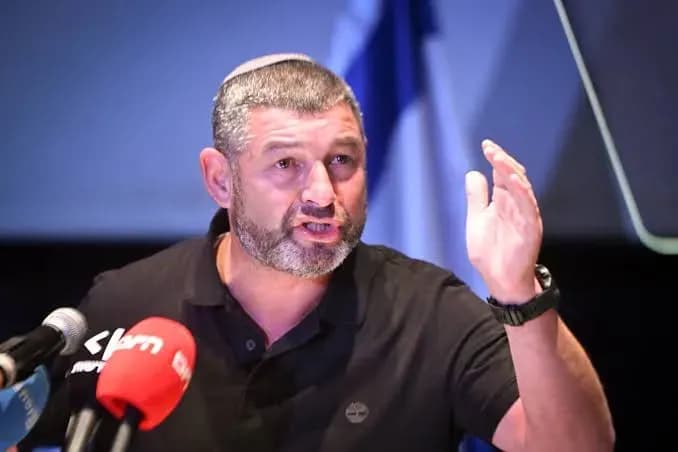

Does Israel need a new generation of leadership? And could Brigadier General (Res.) Ofer Winter be among those capable of helping shape its future?
Israel is living through one of the most challenging periods in its history. The events of October 7 and the war that followed have raised profound questions about national security, responsibility, leadership, and public trust in the country's institutions.
Against this backdrop, Brigadier General (Res.) Ofer Winter has emerged as a figure whose potential entry into national politics deserves serious consideration.
Throughout his military career, Winter commanded soldiers and officers in complex operational environments. To his supporters, he represents a model of leadership rooted in personal responsibility, leading by example, conviction, and the willingness to make difficult decisions.
Leadership Tested Under Fire
Winter's military career includes several significant command positions, including Commander of the Givati Brigade, Commander of the 401st Armored Brigade, and Commander of the IDF's Fire Formation.
Over the years, he earned recognition for his direct leadership style, his presence alongside soldiers in the field, and the personal relationships he sought to build with those under his command.
His career has also been accompanied by public controversy, particularly regarding the role of religious faith in military leadership. These debates are an important part of evaluating his suitability for public office, but they also reflect a broader national conversation about identity, values, and their place within Israeli society.
Military experience does not automatically translate into political success. Civilian leadership requires the ability to operate within a democratic system, build consensus, respond to criticism, and develop policies extending far beyond national defense.
Nevertheless, Winter's experience provides a meaningful foundation for considering his potential contribution to Israeli public life.
Between National Security and National Identity
One of the central challenges facing Israel's future leaders will be balancing military strength with social, economic, and moral resilience.
Winter's public profile is particularly interesting because it brings together extensive military experience and a values-based worldview emphasizing Jewish identity, Zionism, national service, and collective responsibility.
These are not abstract questions for Israelis, including those living in the United States who maintain strong personal and emotional ties to Israel. They concern the country's future, the security of their families, the relationship between Israel and Jewish communities worldwide, and the character of Israeli society for generations to come.
However, translating a worldview into a political platform requires clear positions on economic policy, education, religion and state, the judicial system, and Israel's relationship with the United States.
The Next Test: Civilian Leadership
The transition from military command to politics should never be taken for granted.
In a democratic country, a military commander can issue orders and expect them to be carried out. An elected representative, by contrast, must persuade, negotiate, build coalitions, and remain accountable to all citizens, including those who disagree with his views.
Should Winter decide to seek a seat in the Knesset, his suitability should be evaluated not only through his military record or his identification with Israel's national camp, but also through his ability to present a practical political and civilian vision.
Precisely because Israel faces such significant challenges, the discussion surrounding its future leadership should focus on the combination of values, experience, judgment, and the ability to deliver results.
Ofer Winter brings extensive command experience and a clearly defined worldview. The question now is whether he will choose to translate those qualities into a political mission — and, if so, what kind of civilian leadership he will offer the Israeli public.
It is a question worthy of serious, open, and thoughtful national debate.
© {{Year}} Latin Times. All rights reserved. Do not reproduce without permission.