
German chemicals giant strengthens Korean semiconductor materials hub as AI drives demand for advanced packaging, with new R&D center planned for 2027
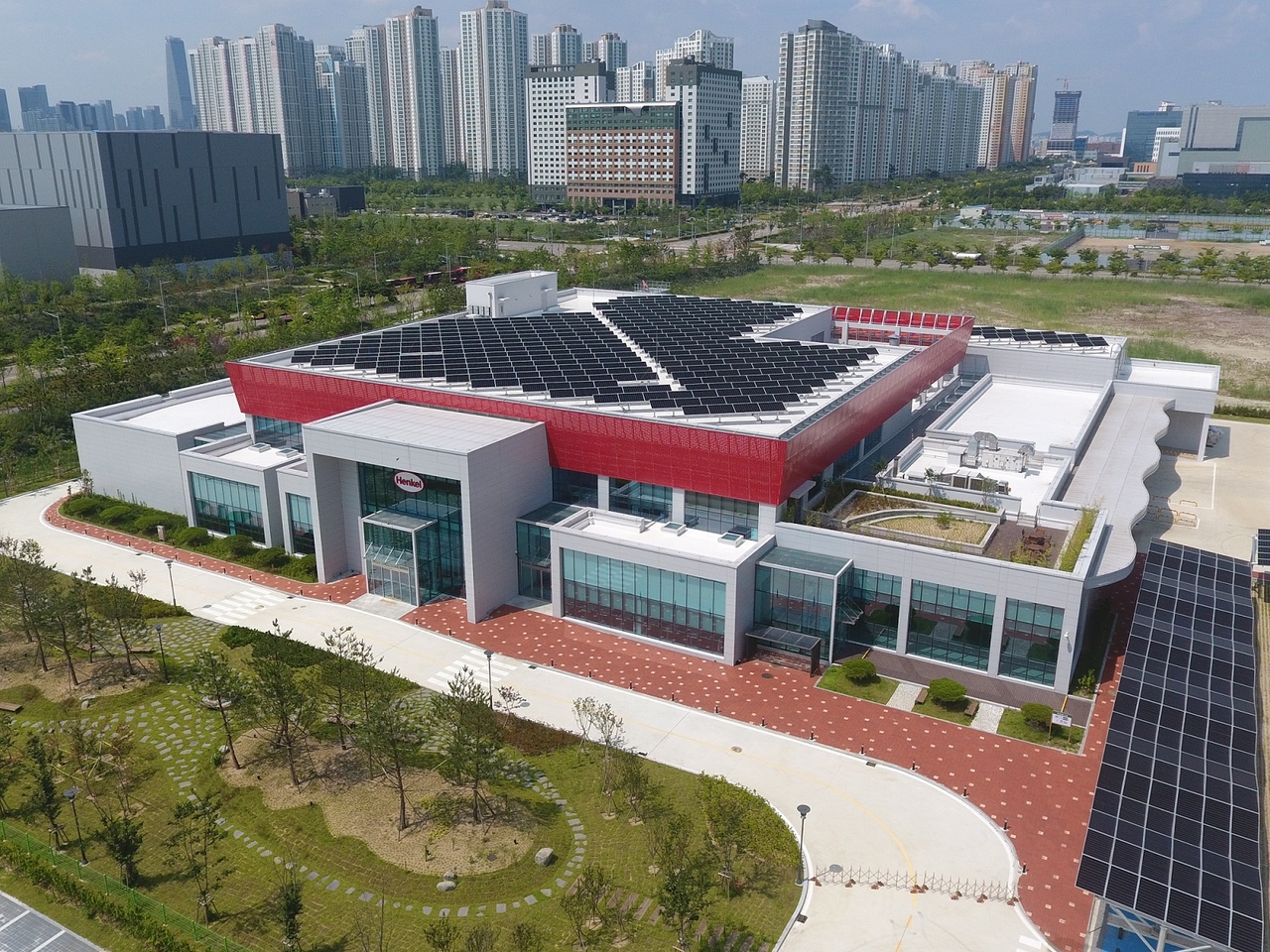
SONGDO, Incheon — Inside a tightly controlled factory in Songdo, German chemicals giant Henkel is producing a critical but often overlooked ingredient in AI chips: semiconductor adhesives.
Workers in cleanroom suits operate mixing equipment under strict temperature and humidity controls. Some rooms glow yellow, with ultraviolet light filtered out to prevent unwanted chemical reactions.
The materials produced here help hold chips together, protect delicate connections and dissipate heat — increasingly demanding tasks as AI requires more powerful processors and complex semiconductor packaging.
For Henkel, the Songdo plant is a strategic foothold in South Korea's semiconductor industry, home to memory giants Samsung Electronics and SK hynix, and a growing base for supplying chipmaking materials across Asia and beyond.
Completed in 2022 following a roughly 35 million euro ($39.2 million) investment, the 10,144-square-meter facility is the only one of Henkel's four Korean factories to produce semiconductor adhesives. It also represents the company's largest single investment in Korea, excluding acquisitions.
"This is one of the major, important production sites for the semiconductor industry for advanced packaging," said Hendrik Kohleick, Henkel's regional president for Asia-Pacific operations.
The plant has annual semiconductor adhesive production capacity of up to 250 metric tons. Its broader manufacturing portfolio spans more than 500 adhesive solutions for semiconductor packaging, electronic components and device assembly, the company said.
Henkel is also expanding its research presence in Korea. Kohleick said the company planned to open a new technical center, expanding its existing R&D operations in Seoul's Gasan Digital Complex, to meet growing demand for advanced adhesives as chipmakers pursue greater integration and confront increasingly difficult thermal management challenges.
The center is tentatively scheduled to open in March 2027 and will work closely with the Songdo production site, he added.
As chipmakers pack more computing power into increasingly complex packages, they must contend with heat, mechanical stress and delicate connections between components. Materials used to attach, protect and support those components must meet increasingly demanding specifications.
"Customers are seeking adhesives that flow more readily and can form thinner bonding layers as chips and the spaces between components shrink," said Chang Ho-jun, president and head of Adhesive Technologies at Henkel Korea. Such materials help reduce the space occupied by adhesives within a package, supporting thinner designs, he added.
For Henkel, a production base in Korea puts it close to major semiconductor manufacturers as they develop more advanced chips and packaging technologies.
"Since entering the Korean market, Henkel has built a solid business foundation over nearly 40 years," said Kim Young-mi, president of Henkel Korea. "With the recent growth of the global AI market and the strength of Korea's semiconductor industry, we expect the Songdo plant's role to become increasingly important."
Inside the factory, production proceeds through seven stages, from inspecting and weighing raw materials to mixing, milling additives, testing finished products and filling syringe-style containers.
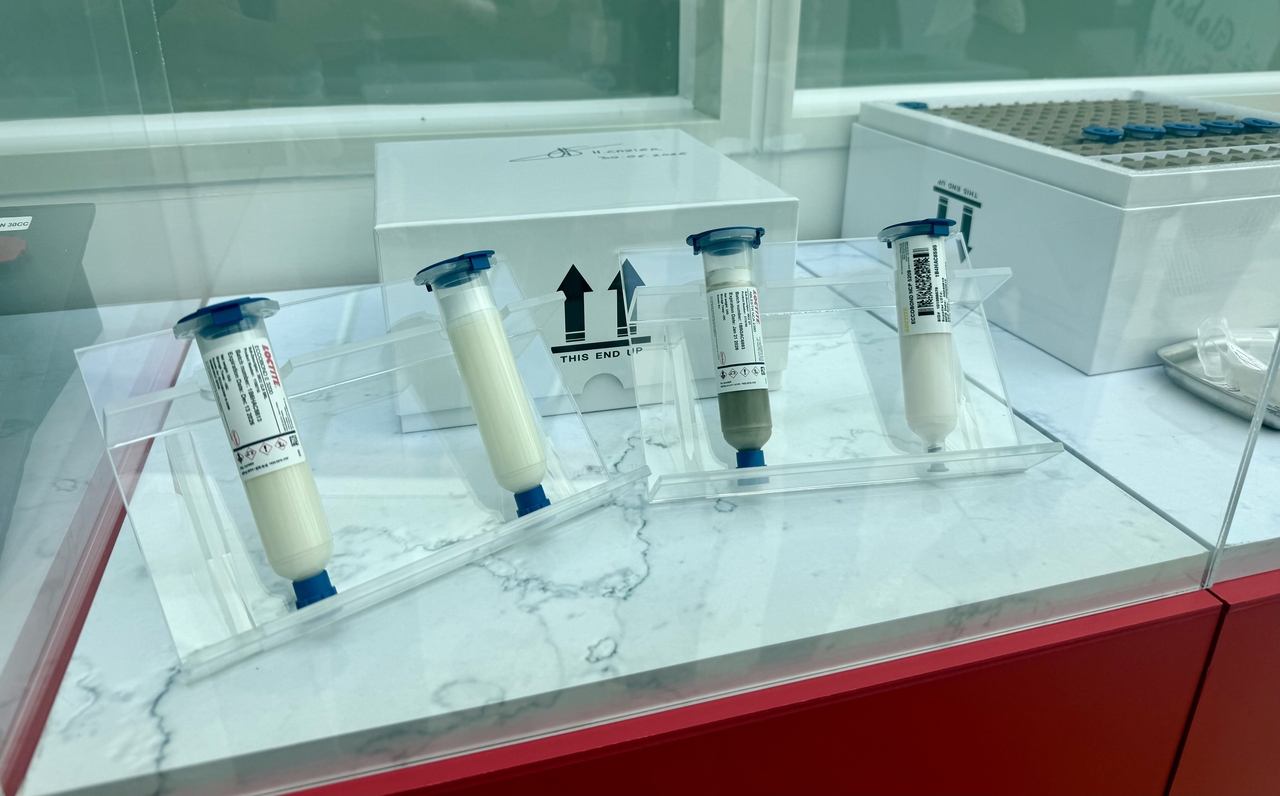
The finished adhesives are packaged in piston-operated syringes, with around 100 combinations of syringe barrels and dispensing caps available to accommodate customers' application requirements.
Consistency matters as much as formulation. The facility uses cleanrooms rated at Class 10,000, alongside systems that monitor production and collect process data. Statistical process controls help track variation during manufacturing, according to Henkel.
That infrastructure supports a business in which customers need materials that perform predictably within tightly controlled manufacturing processes. The planned Gasan expansion would add research capacity to support the development and application of those materials.
Songdo's location also helps explain the manufacturing investment.
Incheon International Airport is about 30 minutes away, giving the factory access to overseas customers. Much of its output travels by air, Kim said, adding that competitive cargo rates offered by major Korean airlines helped make Songdo an attractive production base.
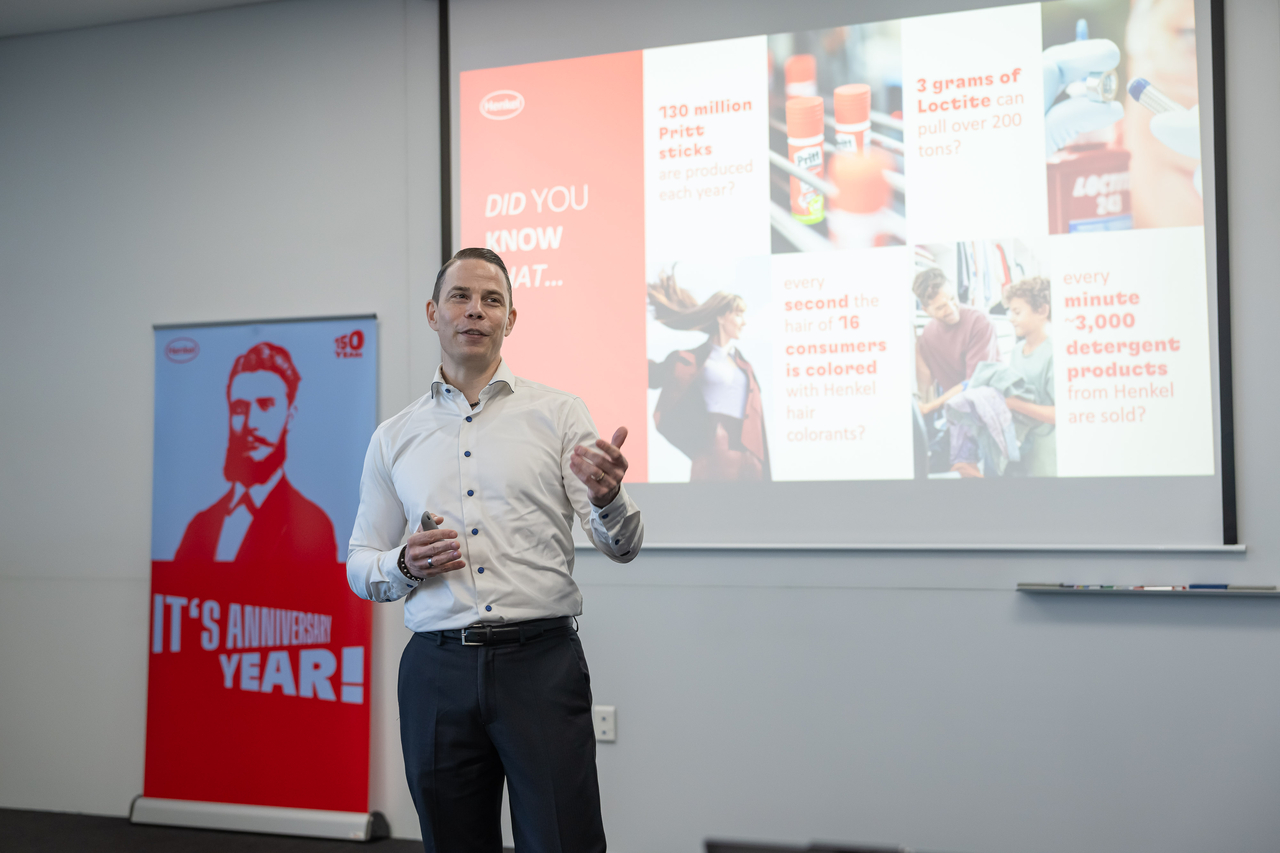
The company, which marks its 150th anniversary this year, is familiar to many consumers through brands such as Persil. Adhesive Technologies, however, is a major business in its own right, generating about 10.7 billion euros in sales last year, compared with about 9.8 billion euros for Consumer Brands.
Its semiconductor portfolio includes die-attach materials, which bond chips to supporting surfaces; underfills, which reinforce connections beneath chips; and encapsulants, which protect components.
Henkel says it is expanding that portfolio for AI and high-performance computing, including materials for larger dies and more complex packaging structures. Its recently introduced Loctite Ablestik CDF900 series of thermally conductive die-attach films targets applications including AI, high-performance computing and next-generation communications.
"Songdo will strengthen cooperation with customers as a supply base for advanced semiconductor materials and continue developing long-term partnerships," Kohleick said.
herim@heraldcorp.com