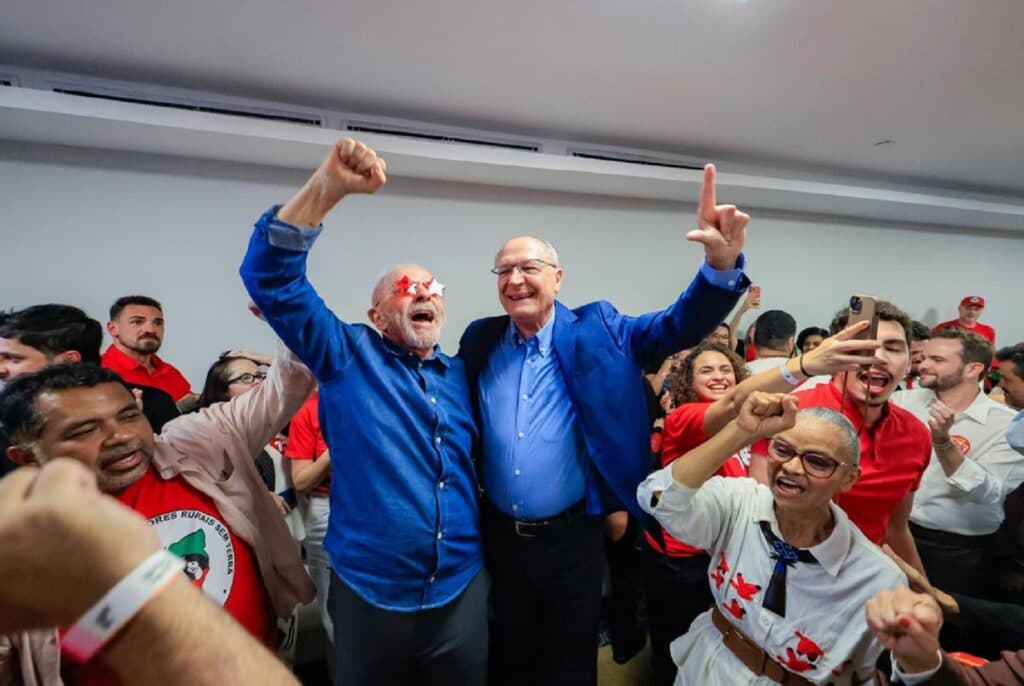

Luiz Inacio Lula da Silva’s victory in Brazil’s presidential election, held on Sunday, October 25, sparked mixed reactions among Colombian political leaders and once again brought the ideological polarization sweeping Latin America to the forefront.
While representatives of the left and progressive sectors celebrated the continuity of the Workers’ Party leader, right-wing figures questioned the legitimacy of the result and expressed doubts about the conditions under which the race was conducted.
With 99.9% of polling stations counted, Lula secured 51.77% of the vote, compared with 48.23% for far-right Senator Flavio Bolsonaro, son of former President Jair Bolsonaro, who is now convicted over the 2023 coup attempt. The outcome took on political significance beyond Brazil’s borders, amid a regional landscape shaped by competition between progressive and conservative agendas and by the influence the United States exerts over Latin American political disputes.
In Colombia, the reactions also reflected divisions among the country’s leading political figures and the support some had expressed during Brazil’s election campaign.
The left celebrates the ‘halt to fascism’ in Latin America
Former Colombian President Gustavo Petro was among the first political figures in the country to comment on the results, leading the left’s celebrations in an election that marks a setback for the far-right wave that has swept across the region since last year.
In a message posted on the social media platform X, Petro interpreted Lula’s victory as a blow to the far right and a sign of resistance against conservative forces across the region.
“Fascism has been stopped in Latin America, in Brazil,” Petro wrote Sunday night. He also argued that Brazilian voters had managed to curb the influence of false messages spread through digital networks and praised the neighboring country’s electoral system, which he credited with playing a key role in preventing irregularities.
The former president linked the result to the defense of social justice and sovereignty over natural resources. “This is a victory for humanity and a strategic defeat for the forces of darkness,” he added, in one of the day’s most forceful reactions.
His message reflects the close political affinity he has maintained with Lula and his support for cooperation among progressive governments in Latin America.
Se ha detenido el fascismo en America Latina en Brasil.
El pueblo brasileño libre logró frenar la avalancha de los bots falsos y el sistema electoral con software público y bien cuidado por la gente evitó fraudes, se salva la justicia social en Brasil y el intento extranjero de quedarse con sus recursos naturales.
Muy bien Lula.
Este es un triunfo para la humanidad y una derrota estratégica para las fuerzas de la oscuridad.
— Gustavo Petro (@petrogustavo) October 26, 2026
Other left-wing leaders in Colombia, including Representative Maria Fernanda Carrascal, former congresswoman Maria Jose Pizarro, and former President Ernesto Samper, who called Lula the “Pele of Latin American progressivism,” made similar statements to Petro’s.
Finally, centrist Senator Jennifer Pedraza took aim at former Colombian right-wing congresswoman Maria Fernanda Cabal, who openly backed Flavio Bolsonaro while in Brazil. “Go cry about it. Lula da Silva is President of Brazil and the continental voice of the fight for the sovereignty of Latin American countries,” she wrote on her X account, adding that “although Big Tech and Trumpism did everything they could to stop his victory, they failed.”
A llorar a la llorería.
Lula Da Silva Presidente de Brasil
y vocero continental de la lucha por la soberanía de los países latinoamericanos.
Aunque las big tech y del Trumpismo hicieron de todo para detener su victoria, no pudieron.
¡Lo que hace un gran liderazgo como el de Lula!
— Jennifer Pedraza Sandoval (@JenniferPedraz) October 26, 2026

The right questions the transparency of the election
In Colombia’s political right, the tone was markedly different. The harshest criticism came from Sen. Sara Castellanos of the far-right National Salvation Party, who alleged irregularities in Brazil’s election process and questioned the conduct of Supreme Federal Court Justice Cristiano Zanin, a former lawyer for Lula.
“They stole the election in Brazil,” Castellanos said on X. The lawmaker claimed that the rules had been changed during election day and warned that, in her view, Brazilian democracy was at risk. She also drew a comparison with Colombia, asserting that the country’s institutions had prevented a similar scenario from unfolding.
Hours later, Castellanos directed her criticism more squarely at the former Brazilian president’s Colombian counterpart. “No wonder Petro sees Lula as a role model. The Brazilian was able to do what he couldn’t. Steal the election!” she concluded.
Se robaron las elecciones en
.
El magistrado Zanin, abogado de Lula y coordinador de su campaña política en 2022, hoy ordenó cambiar las reglas de la jornada electoral en Brasil.
Se están robando la democracia en Brasil. Querían hacer lo mismo en Colombia, pero aquí tenemos una institucionalidad fuerte.
¡Ladrones, no pasarán!
— Sara Castellanos (@sarag12) October 26, 2026
Former congresswoman Maria Fernanda Cabal, a vocal supporter of Bolsonaro during the campaign, also did not issue her own statement congratulating Lula. Instead, she shared a message from media personality Luisa Gomez Grisales that questioned whether the president had won legitimately and portrayed him as a communist threat.
The controversy reflects the deep divide between the two camps’ interpretations of the outcome: for the left, the victory represents a defense of democracy against the far right; for its critics, it raises questions about the impartiality of Brazilian institutions. However, the allegations circulated on social media do not, in themselves, constitute evidence of electoral fraud.
Finally, Tomas Uribe, son of former President Alvaro Uribe, weighed in on what he called the “new right,” criticizing the approach taken by both this movement — which is led in Colombia by Abelardo de la Espriella and is now challenging the conservative establishment’s dominance in the country — and the left.
“The ‘new right’ has the same moral arrogance as ‘wokeism.’ Both are equally annoying. They lose their practical sense and common sense by getting caught up in ‘culture wars.’ Both forget basic principles that have benefited the human species: freedom, solidarity, diversity, efficiency. Two sides of the same coin,” he wrote on social media.
La "nueva derecha" tiene la misma arrogancia moral del "wokismo". Ambos igual de fastidiosos.
Pierden el sentido práctico y el sentido común por enfrascarse en "batallas culturales".
Ambos se olvidan de principios básicos que le han hecho bien a la especie humana: Libertad, Solidaridad, Diversidad, Eficiencia.
Dos caras de la misma moneda.
— Tomas Uribe Moreno (@tomasuribeEco) October 26, 2026
De la Espriella and his reference to the will of the people
On Monday morning, Colombian President Abelardo de la Espriella weighed in, recalling the support expressed on both sides of the border during Brazil’s elections and Colombia’s own elections a few months ago. “Neither Lula decides for Colombians nor do I decide for Brazilians. THE PEOPLE DECIDE! And when the people speak at the ballot box, their will must be respected because it is sacred. That is what democracy is all about!” he said.
“President Lula and I have major and profound political and ideological differences, but we agree on something fundamental: Brazil and Colombia need each other,” he added, emphasizing the need to work together on issues such as “mutual respect, sovereignty and cooperation,” which “must guide our relations, along with the fight against narco-terrorism and illegal mining, the protection of the Amazon and the well-being of our citizens.”
En la campaña presidencial colombiana, el presidente Lula apoyó abiertamente a Iván Cepeda y gané yo. En la campaña brasileña, apoyé a Bolsonaro y ganó Lula.
Ni Lula decide por los colombianos ni yo decido por los brasileños. ¡DECIDE LA GENTE! Y cuando el pueblo se pronuncia en las urnas, su voluntad se respeta porque es sagrada. ¡En eso consiste la democracia!
El presidente Lula y yo tenemos grandes y profundas diferencias políticas e ideológicas, pero coincidimos en algo fundamental: Brasil y Colombia se necesitan mutuamente.
Ninguna consideración puede estar por encima de los intereses de nuestras naciones. Colombia y Brasil son países hermanos, con enormes desafíos y oportunidades compartidas.
Tenemos mucho por hacer y trabajar en beneficio de nuestros pueblos. El respeto mutuo, la soberanía y la cooperación deben marcar nuestras relaciones, así como la lucha contra el narcoterrorismo y la minería ilegal, la protección de la Amazonía y el bienestar de nuestros ciudadanos.
¡Firme por la Patria!
¡Que viva Cristo Rey!
(A.D.L.E)

— Abelardo De La Espriella (@ABDELAESPRIELLA) October 26, 2026
