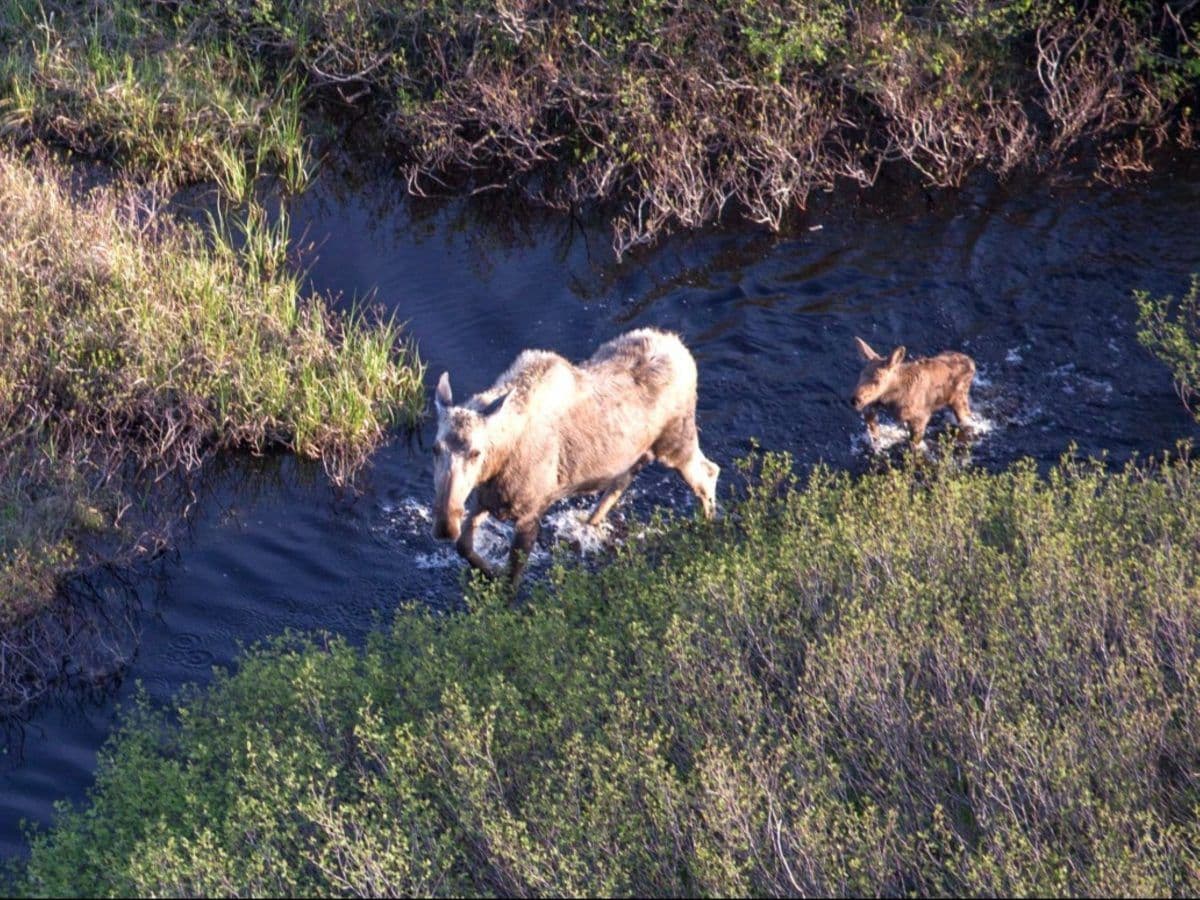
'Something needs to be addressed ... (otherwise) we are going to lose this gem that we call moose here in Cape Breton'
Despite a moratorium in place suspending the hunting and harvesting of moose in Cape Breton, a local wildlife group is warning that if these measures continue to be ignored, it puts a major threat on conserving the remaining moose within the island’s Highlands region.
Subscribe now to access this story and more:
- Unlimited access to the website and app
- Exclusive access to premium content, newsletters and podcasts
- Full access to the e-Edition app, an electronic replica of the print edition that you can share, download and comment on
- Enjoy insights and behind-the-scenes analysis from our award-winning journalists
- Support local journalists and the next generation of journalists
Subscribe or sign in to your account to continue your reading experience.
- Unlimited access to the website and app
- Exclusive access to premium content, newsletters and podcasts
- Full access to the e-Edition app, an electronic replica of the print edition that you can share, download and comment on
- Enjoy insights and behind-the-scenes analysis from our award-winning journalists
- Support local journalists and the next generation of journalists
Create an account or sign in to continue your reading experience.
- Access additional stories every month
- Share your thoughts and join the conversation in our commenting community
- Get email updates from your favourite authors
Sign In or Create an Account
During recent visits to zones within the Cape Breton Highlands where moose were most likely to be found, members of the Port Morien Wildlife Association (PMWA) documented what its president, Jeff McNeil, describes as a “deeply troubling” discovery of harvesting activity reportedly to have taken place.
On the association’s social media page, McNeil said his team encountered “gut piles, dead moose (left to rot) and indications of repeated harvesting during (another) year of a conservation closure.”
“It has become a slaughter in the Highlands — a free-for-all,” McNeil told the Cape Breton Post. “Seven guys belonging to our team spent a week up there, going around — 24 hours a day, seven days a week — documenting what was happening. And the sights they saw … (the images are) just way too graphic to show you.
“Also, when our guys were up there, they noticed people were calling moose trying to get them out to hunt … with rifles close by. They heard gun shots at night and saw trucks leaving with moose.”

In mid-July 2024, the province’s Department of Natural Resources announced it was suspending the licensed Cape Breton moose hunt for three years because of a significant drop in the moose population across several zones through the highlands region.
At the same time, the Assembly of Nova Scotia Mi’kmaw Chiefs said it was also putting a moratorium on their rights-based moose harvest for at least two years until population numbers became more sustainable. In July 2026, the assembly announced it would be extending moratorium on moose harvesting for another year, based on recommendations from the Moose Management Committee and community members.
According to data provided by the assembly, and also from the province, aerial surveys calculated that the moose population in northern Cape Breton in 2024 fell from roughly 1,500 down to 835, well below the sustainable target threshold of 3,000 to 3,600 animals.
A 2025 survey showed a slight rebound to about 1,900, prompting an extension of the conservation measures.
Natural Resources also noted in its 2024 news release that the Cape Breton moose hunt usually takes place in five moose management zones in Victoria and Inverness counties. Most years, about 345 licences are issued through a lottery in the spring.
And according to the Moose Conservation Association of Nova Scotia, legal harvesting generally takes place in late summer (for licensed Indigenous hunters) and early fall (non-Indigenous hunters).
“There is no hunt on the mainland because the mainland moose population is endangered,” the 2024 Natural Resources release read. The department’s website also notes that Cape Breton moose are considered a separate sub-species than those on the mainland.
Still, with the PMWA’s recently documented discoveries of moose remains, McNeil fears a an endangered scenario could occur among the Cape Breton moose population.

In 2025, Mi’kmaw protestors blockaded access to Hunters Mountain, claiming forestry is responsible for the moose population decline. Meanwhile, some non-Indigenous people are blaming the drop on what they claim had been a poorly monitored and unregulated Mi’kmaq moose hunt. Others point to a Parks Canada cull of the species within the national park that ended six years ago.
On PMWA’s social media page, McNeil noted that “there are individuals on all sides who disregard conservation responsibilities, just as there are responsible people on all sides who genuinely want to protect the resource.
“We have had First Nations elders and community members reach out to us directly, asking for assistance in bringing attention to conservation concerns and encouraging meaningful action.”
As McNeil told the Post, “When there are mechanisms like R. v. Sparrow (a landmark Supreme Court of Canada decision from 1990 regarding Indigenous and Aboriginal rights under Section 35 of the Constitution Act, 1982), there has to be justification for using that, as well as a ministerial order.
“The justification there is we can’t allow one species to be hunted. And self-policing for a moratorium doesn’t work. So something needs to be addressed … (otherwise) we are going to lose this gem that we call moose here in Cape Breton.”
McNeil said he wants to see “First Nations leaders, provincial and federal governments, wildlife biologists, conservation organizations, hunters, and other knowledgeable stakeholders be part of a genuine effort to develop and implement solutions.”
The Post contacted the Assembly of Nova Scotia Mi’kmaw Chiefs, as well as the Unama’ki Institute of Natural Resources (UINR), for comment on the harvesting discovery, but no one was made available from either department to speak on the matter.
Instead, a UINR spokesperson told the Post via email that “our moose team will be meeting with our mainland partners in the coming week, and we will know more about what is happening, and what our response will be.”
Similarly, in a separate email, an assembly spokesperson told the Post “the Moose Management Committee responded that they would like the opportunity to discuss the matter among themselves before speaking publicly. They do have a meeting coming up.”
The Post also reached out to the province’s Natural Resources department to address the concern.
In an emailed statement, the department responded that “the Assembly of Nova Scotia Mi’kmaw Chiefs established the moratorium on rights-based moose harvesting in Cape Breton in 2024. The Assembly maintains responsibility for enforcing the moratorium, and we are committed to working with them to address non-compliance.
“We share the deep concern for Cape Breton’s moose. We fully support the moratorium and, since 2024, have also suspended licences for the hunt. Conservation officers continue to enforce the Wildlife Act and monitor the situation closely.”

Al Muir, acting president of the Moose Conservation Association of Nova Scotia, said while he recognizes that court decisions have been made stating there are regulated rights for Indigenous communities and individuals to hunt there, “at the same time, individual rights can infringe on community rights if the community wants to retain this resource,” he said.
“In certain case situations, conservation can trump that right, and I think that’s the situation we’re in now. And there is a legal mechanism to correct this.”
Muir added that the province’s Natural Resources department can provide “mechanisms, personnel and legal authority to police the non-Indigenous (hunting) population, and it (also) could be transferred to the Indigenous (hunting) population” to ensure the moratorium is upheld and not abused by Indigenous and non-Indigenous hunters.
“If they could make that enforcement agreement, then they’d have a mechanism to enforce it (the moratorium),” Muir said. “So yes, the government and the Indigenous community could certainly work together to do this.”
— With files from Aaron Beswick
This website uses cookies to personalize your content (including ads), and allows us to analyze our traffic. Read more about cookies here. By continuing to use our site, you agree to our Terms of Use and Privacy Policy.