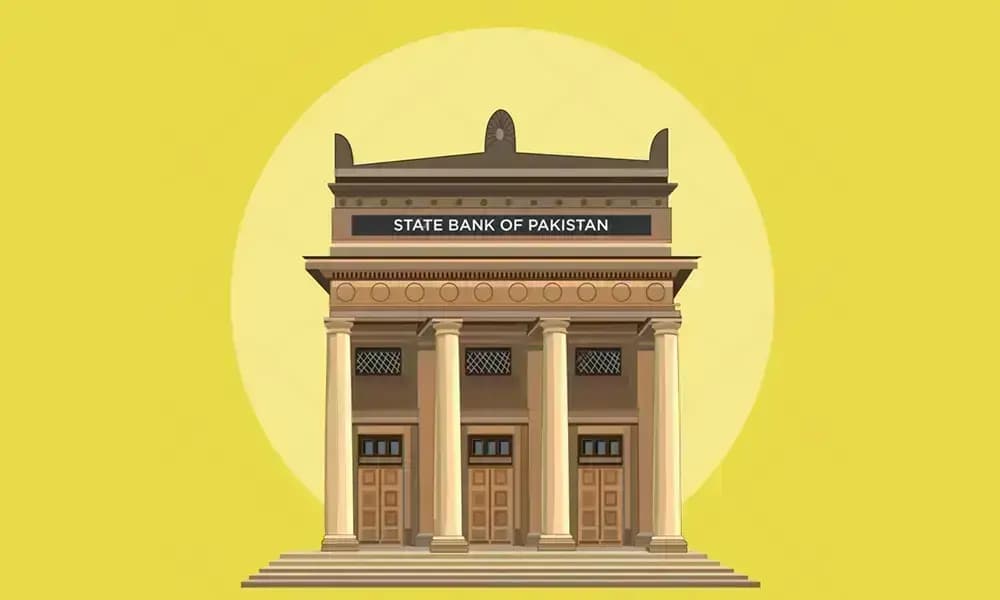
The State Bank of Pakistan (SBP) Monetary Policy Committee (MPC) on Monday raised the policy rate by 50 basis points (bps) to 12%, in line with market expectations.
The decision was taken at the MPC’s third meeting of fiscal year 2026-27.
“The inflation outlook deteriorated significantly because of the ongoing geopolitical crisis, including the US-Iran conflict, and other developments in the Middle East,” said Governor SBP, Jameel Ahmad.
The central bank chief cited rising energy prices, as oil prices have stayed above $100 per barrel, as key factors that led to the policy rate hike.
SBP Governor said that nine members out of 10 voted in favour of the policy rate hike.
Previous MPC
At its previous meeting on September 14, the central bank’s MPC decided to keep the policy rate unchanged at 11.5%.
“The Committee noted that the recent intensification of the prolonged Middle East conflict has led to further increase in already elevated global commodity prices, while supply chain disruptions have persisted,” read the MPC statement.
“However, recent domestic macroeconomic data turned out broadly in line with the MPC’s expectations. Headline inflation increased to 11.1% y/y in August from 9.2% in July, while core inflation was slightly lower than expectations.”
A number of analysts had expected the SBP to hike interest rates.
“Given continuing uncertainty over the global geopolitical situation and its impact on the global energy supply chain, we expect SBP to raise the policy rate by 50bps to help mitigate any prolonged inflationary and external shock,” said Topline Securities.
Similarly, in a poll conducted by Topline Securities of market participants, 61% of respondents expected the policy rate to rise. Of these, 54% believed a 50bps rise, whereas 7% believed a 100bps increase.
Meanwhile, a sizable 39% expected the policy rate to remain unchanged.
Similarly, Foundation Securities also expected a 50bps hike by the central bank.
“We expect the MPC to raise the policy rate by 50bps to 12.0% at its meeting on Monday, 26 Oct’26.
“In our view, though, persistent above-target inflation driven by oil price volatility amid war in the Middle East, rising inflation expectations, a thin real interest rate and a pickup in growth argue for a measured, pre-emptive hike.
“A 50bps hike would lift the ex-post real interest rate to ~2.5% on our Oct’26 inflation estimate, from ~1.2% in Sep’26,” it said.
On the other hand, the Pakistan Institute of Development Economics (PIDE) urged the SBP to maintain status quo.
“While the balance of risks has shifted toward tightening, current macroeconomic conditions do not yet establish a compelling case for an immediate rate increase,” PIDE said.
It noted that Pakistan’s inflation outlook remains challenging but mixed.
“Headline inflation moderated to 10.26% in September, while non-food non-energy inflation also eased. However, elevated trimmed-mean inflation, weekly price pressures, and rising household inflation concerns warrant continued vigilance. Importantly, available evidence does not yet demonstrate generalised demand overheating or sufficiently broad-based second-round inflation pressures,” it said.
“PIDE’s assessment therefore favours a conditional hold rather than pre-emptive tightening,” it said.