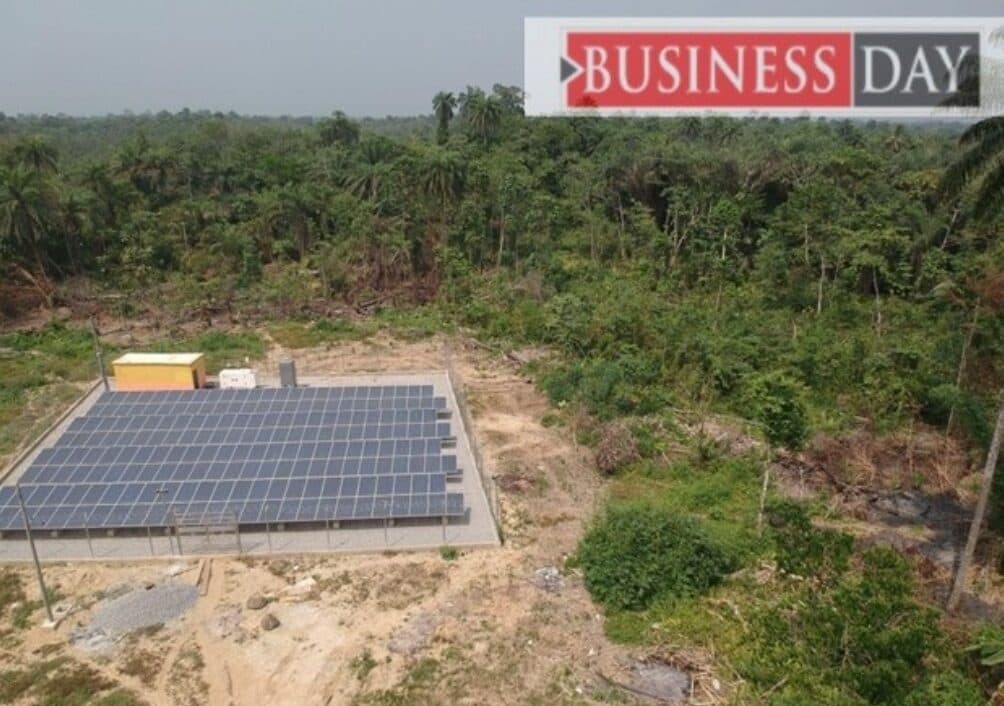
Two farming communities in Kano State, northern Nigeria, have electricity for the first time in more than 16 years. A private company switched on a pair of solar mini-grids, a model the government is counting on to narrow the world’s widest power-access gap.
The Rural Electrification Agency (REA) commissioned a 195-kilowatt-peak system in Ballagaza and a 70-kilowatt-peak system in Marayar Rogo, both in Warawa. Together they will serve 2,222 households.
Why it matters
Nigeria still has more people without electricity than any other country, Abba Aliyu, managing director of REA said at the commissioning ceremony in Kano.
The agency has set a target of electrifying 17 million households and plans to build or install 1,350 mini-grids nationwide to get there. Mini-grids are small, local power networks. They serve communities that are too remote or too costly for the national grid to reach.
Aliyu tied the Kano projects to the Renewed Hope Agenda, the federal government’s goal of connecting more than 17 million Nigerians.
Read also: Nigeria bets on solar mini-grids to unlock rural businesses, jobs
Who paid for it
The financing is the main point of the story. Alfuttaim Nigeria Limited built both systems with its own money and will own and operate them for years to come. The state’s contribution came through the DARES programme, which the REA delivers with World Bank support. It subsidised part of the cost so that the power is affordable for residents.
“The Federal Government did not build these mini-grids and hand them over,” Aliyu said. He called the project an example of what public-private partnerships can achieve.
DARES is working toward the 1,350-mini-grid goal, he said, and has already brought new or improved electricity to more than five million Nigerians. He argued that no single agency or programme can close the gap. In his view, it will be closed community by community, when private companies are willing to invest and residents take ownership of what is built for them. “The government’s job is to keep its word to both,” he said.
He also thanked Abba Kabir Yusuf, governor of Kano State, for treating electricity as a key deliverable of his administration and for creating a conducive environment for the work.
What changes on the ground
The Gabazawa community is known for groundnuts, millet, sorghum and soya, as well as its blacksmiths, weavers and dyers. Reliable power should let farmers press groundnuts into oil and kuli-kuli with electric machines instead of processing by hand. They can then sell the products at better prices.
The mini-grid will also supply the community’s primary healthcare centre, which has until now operated without power.
The developer’s view
Nabilah Sani, co-founder of Alfuttaim, said the project would do more than light homes. It should also lift agricultural productivity, she said. She thanked the Federal Government for facilitating the funding that made the build possible.
Ballagaza and Marayar Rogo are only two of ten sites the company is developing in Kano, she said. She urged residents to treat the infrastructure as their own and to shun vandalism, a reminder that equipment protection is a practical concern for operators of remote, decentralised systems.
What to watch
The announcement did not say what households will pay per unit of electricity. Tariffs often decide whether mini-grids last, because the economics must work for the owner and for customers with low incomes. Subsidies from DARES are meant to bridge that gap, but how far they go, and for how long, will matter as the programme scales.
The other eight Kano sites will show whether this one was a template or a one-off. The national test is larger. Reaching 1,350 mini-grids will depend on private operators continuing to put up their own capital alongside public support.
For now, in Ballagaza and Marayar Rogo, the lights are on.
Related News

