
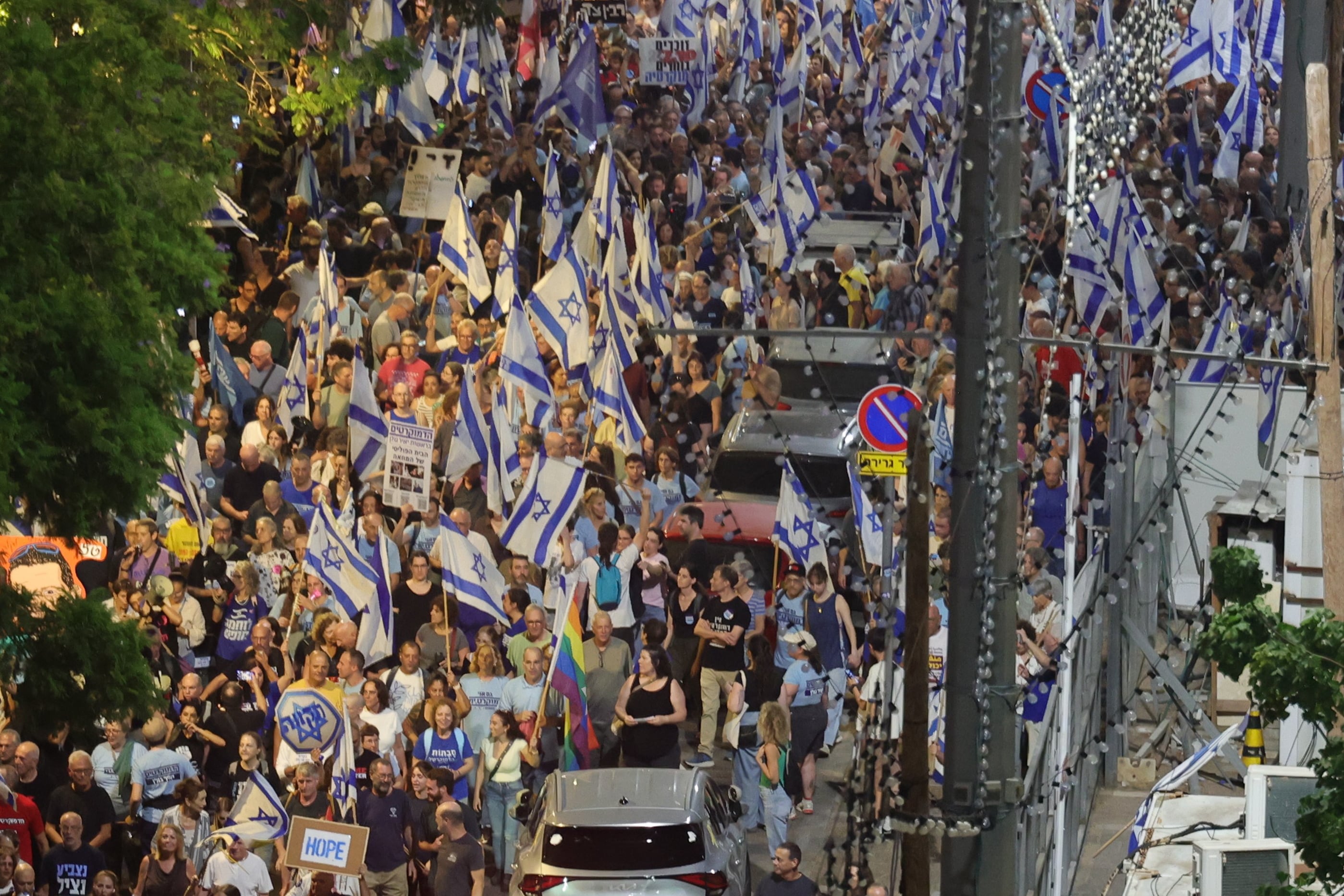
Supporters of Israel's opposition took to the streets of Tel Aviv at the weekend in a final show of force before polls open on Tuesday, in what many observers are calling the most important elections in the country's history.
Tens of thousands of demonstrators took to the streets in upmarket neighbourhoods of the city as opposition figures made the case that the country’s future was at risk if Prime Minister Benjamin Netanyahu won yet another term in office. Four years of his ultranationalist government has plunged the country into wars across the Middle East, deepened internal divisions and fractured Israel's reputation abroad.
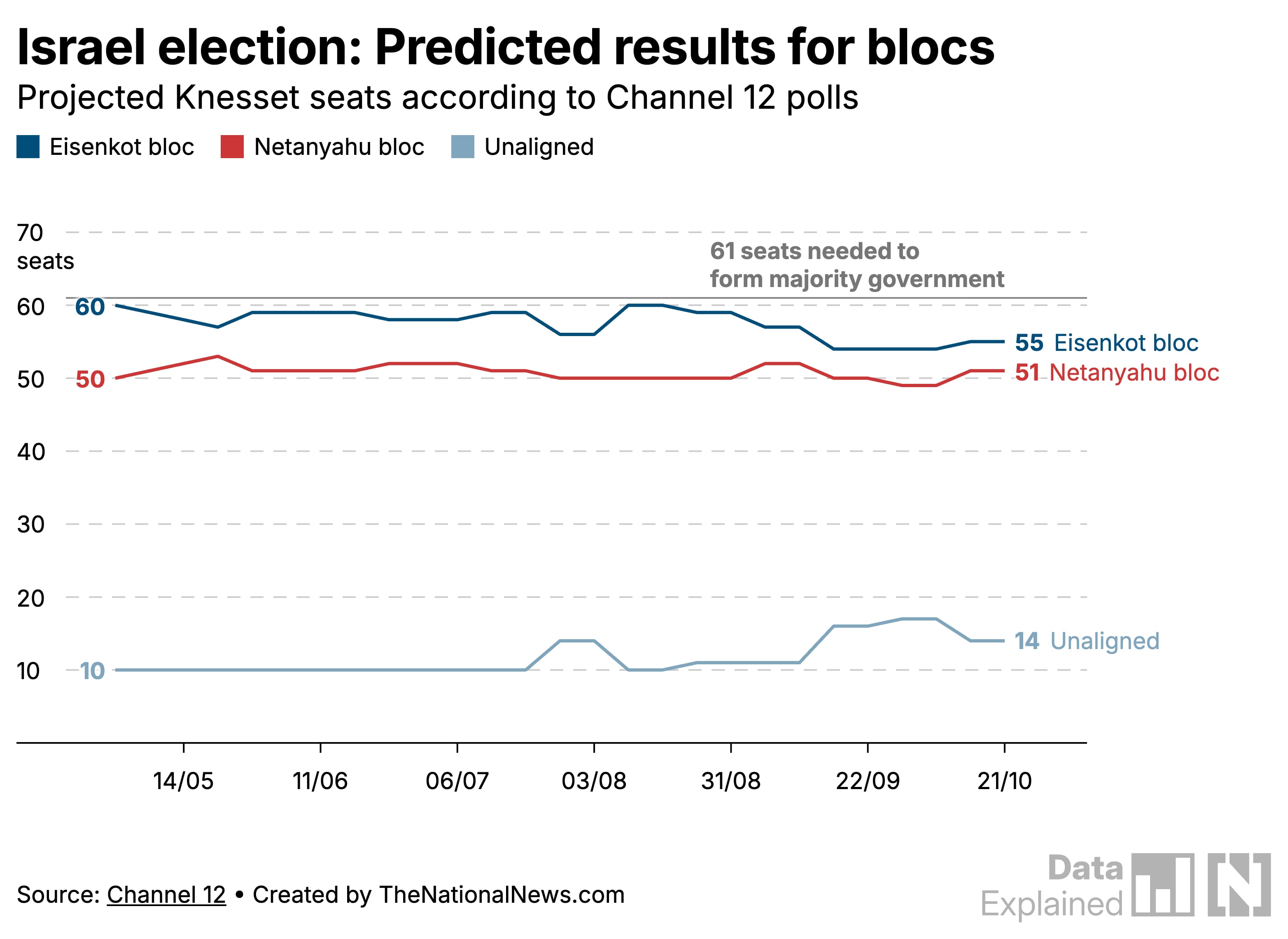
Mainstream polls have predicted for months that the opposition will gain more seats than Mr Netanyahu’s right-wing bloc, which relies heavily on the most extreme wings of Israel’s settler movement and the ultra-Orthodox community. But neither side is predicted to have a majority, raising the prospect of weeks of complicated negotiations to form a coalition. Mr Netanyahu would remain as a caretaker prime minister during that time.
There are fears that the Israeli leader might use such a deadlock to his advantage. There is also the prospect of renewed fighting with Iran before the elections take place, as Mr Netanyahu escalates his rhetoric on social media. On Sunday, there were reports in Israeli media of a stand-off between Mr Netanyahu and the military's leader described as an "unprecedented confrontation" at the top of the Israeli state.
Chief of Staff Lt Gen Eyal Zamir resisted carrying out Mr Netanyahu's instructions for unspecified military action in recent days, fearing it would provoke Iran to launch an attack on Israel before polls open, broadcaster Channel 12 reported.
“If Benjamin Netanyahu wins again, I’m genuinely scared for this country. I don’t think I have a future here,” Romy Schlegel-Cohen, 17, told The National in Hostage Square on Saturday evening, as she handed out campaign flags to passers-by.
Organisers of the rally, who are calling for a state commission of inquiry into the Hamas-led attacks on October 7, 2023, said 100,000 people attended. Some had dressed up, one as Mr Netanyahu with a Pinocchio nose, others as repairmen with tools, symbolising the need to fix Israel.
“I can’t vote yet, but I want to be able to show people who can vote that what they’re doing is important – they’re voting for me,” Ms Schlegel-Cohen said. “Change is needed right now. It was needed long ago. If I can convince even one person, it’s enough.”
Hostage Square, next to the Tel Aviv Museum of Art and the headquarters of the Israeli military, is a fortress for the anti-Netanyahu protest movement. Soon after Hamas attacked southern Israel in 2023, the area hosted regular protests calling on the government to secure the release of those taken hostage.
Since the last Gaza ceasefire was announced last year, that movement has grown to call for a state commission of inquiry, the highest level of investigation in Israel, into how the catastrophic security failure came about. Mr Netanyahu’s far-right government has consistently opposed such an investigation.
Ofri Bibas, the sister-in-law of Shiri Bibas, who was killed along with her two young children in Gaza after being taken hostage during the October 7 attacks, told The National that she wanted the elections to be about the day her family members were abducted.
“No one who was in a position of power on October 7 should still be in their job. The Prime Minister and the government should have resigned on the day,” she said. “The thing that’s most difficult for me to understand is the hypocrisy. If any other prime minister had been in position on October 7, they would never have considered staying in their job. Just because it’s Netanyahu doesn’t mean he can’t be replaced, or that Israel can’t continue without him. After 20 years, we have to look for something new, for a change and for a better life.”
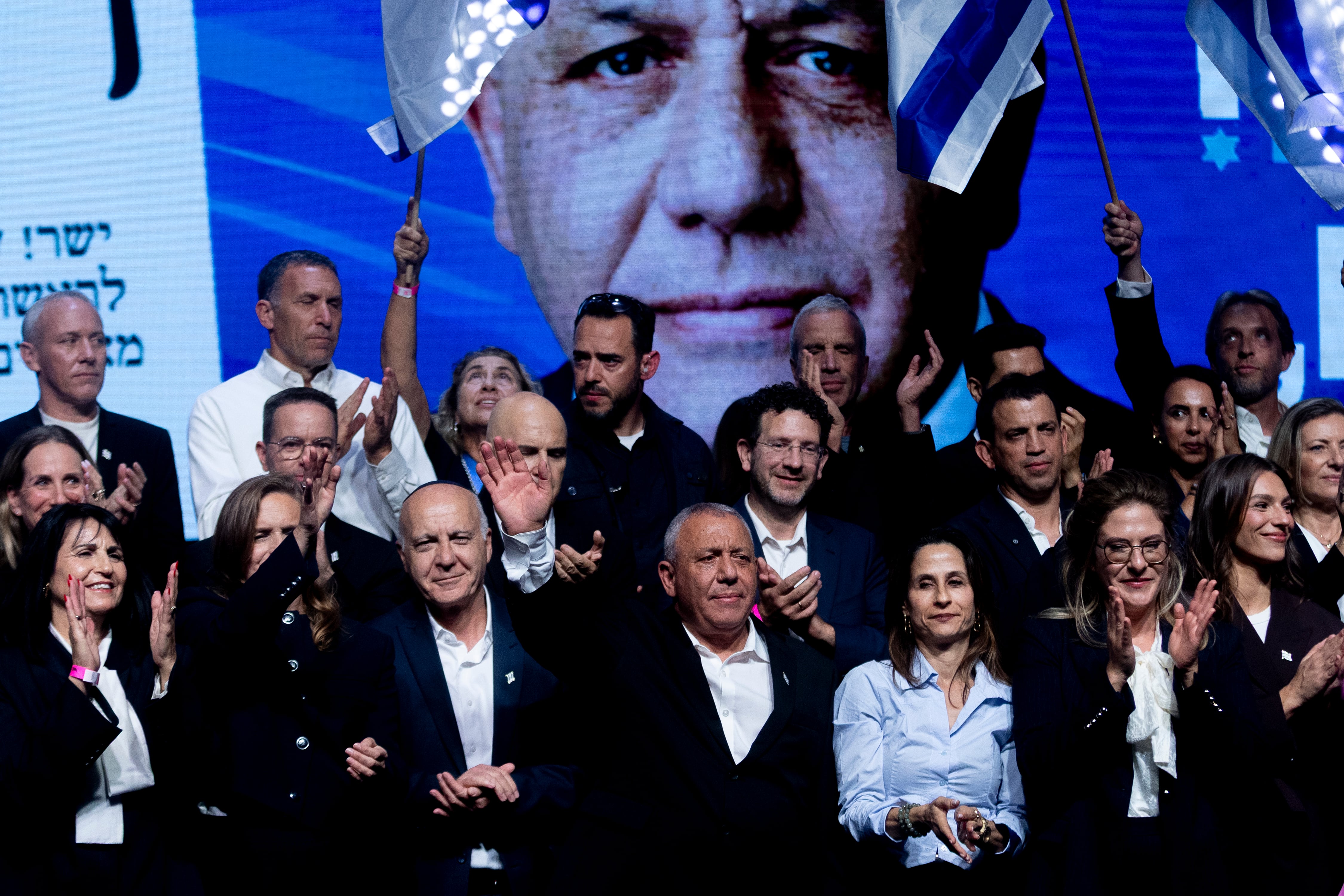
On Sunday evening, the man most likely to realise such hopes for new leadership, Gadi Eisenkot, drew hundreds of people to a large hall in the north of the city.
Supporters of his Yashar party say that only an opposition victory can rehabilitate Israel’s position in the world. Support has plummeted since the outbreak of the Gaza war and escalating settler and military violence in the occupied West Bank.
Mr Eisenkot, a former military chief of staff, is not opposed to Israeli settlements and has condemned what he described as a “handful of thugs” when talking about the violence in recent months. He lost close relatives in the Gaza war and has vowed to end it if he wins, without setting out a detailed plan.
“These are the most dramatic, important and historic elections of all time in Israel,” Lianne Pollak-David, a candidate on Yashar’s electoral list, told The National. “Gadi Eisenkot is not only a top-notch strategist, not only a very brave leader, but simply the kind of person who can unify the country, who can bring us back to where we should be: a model nation among the family of nations.
“My message to the Arab world is clear: we’re here for regional integration and we’re here to expand the Abraham Accords. We’re here to drive Israel and the region to be a much more secure, stable and prosperous place. We need to be working together − all the moderate forces. Israel should be at the forefront of that effort.
“If we continue with Benjamin Netanyahu’s leadership, it will lead us to being a pariah state.”