
First published October 25, 2026
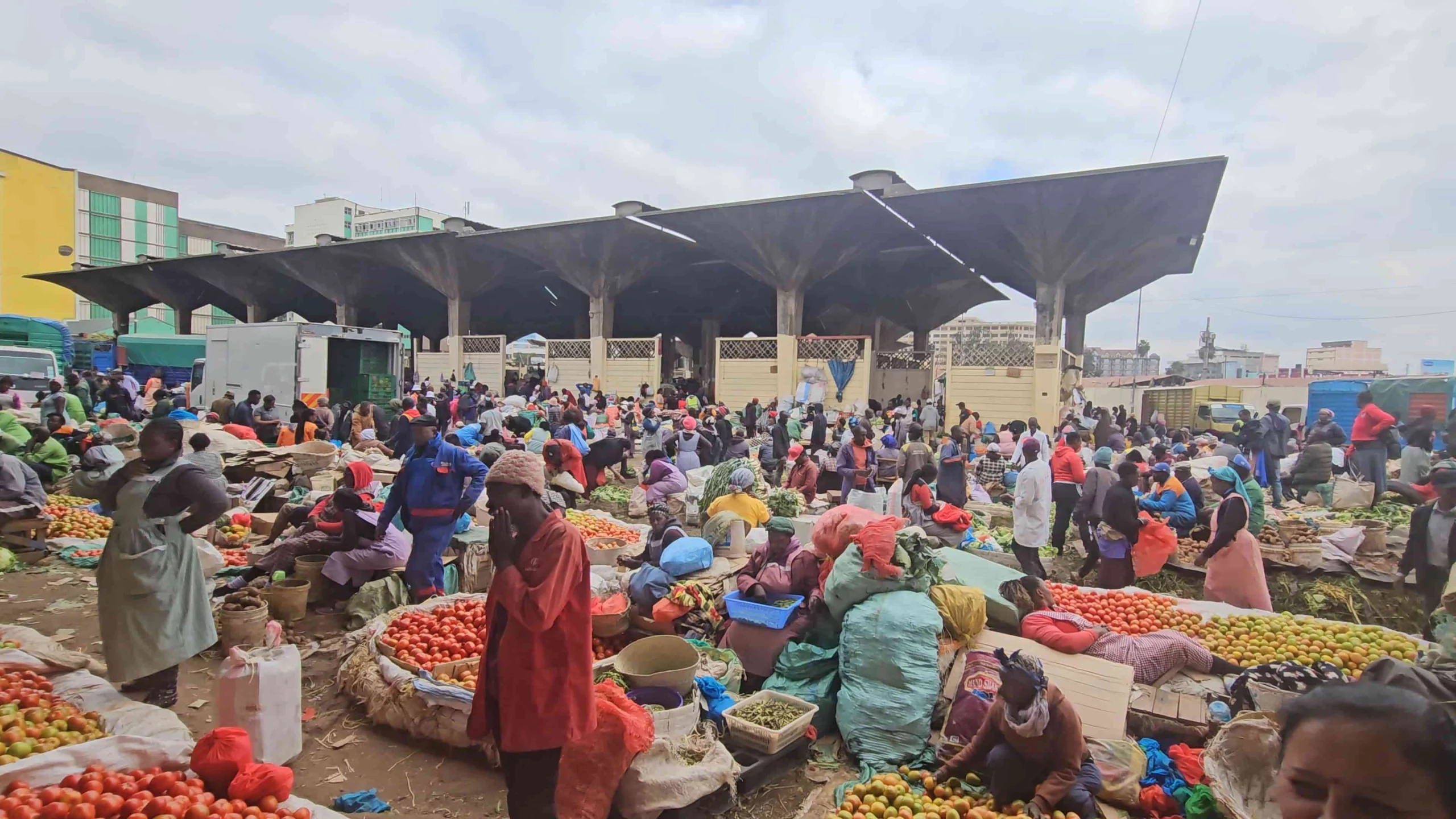
Marikiti market in Nairobi, Kenya. Image: Eastleigh Voice
At 4 AM, Marikiti, Nairobi’s largest wholesale fresh produce market, is already trading. Lorries arrive overnight carrying potatoes, tomatoes, onions, and cabbages from farms across Kenya and neighbouring countries. Brokers match sellers with buyers, negotiate prices, and move perishable stock before it loses value.
This machinery feeds Nairobi, operating in one of the city centre’s busiest trading hubs without the warehouses, payrolls, and corporate overheads of a venture-backed distributor. Twiga Foods raised more than $185 million trying to formalise fresh produce distribution in East Africa. What did venture capital misunderstand about the market it wanted to replace? .
Twiga’s failure is now playing out in insolvency proceedings. GT Flow Limited, formerly Twiga Foods One Limited, entered statutory administration in August 2026. In September, its parent, Twiga Foods Limited, renamed Templar Field Limited, followed. Mohamed A. Mohamed of Maawiy Financial Advisory Services was appointed administrator of both companies, taking control of their assets and affairs as creditors submitted claims.
The corporate unwind preceding statutory administration reveals the stark contrast between venture capital expectations and operational realities:
- In December 2023, Twiga secured a $35 million convertible bond from Creadev and Juven, alongside $1 million in personal capital from co-founder Peter Njonjo, primarily to settle mounting debts with trade suppliers.
- Njonjo resigned from the board in 2024, handing management to former Jumia executive Charles Ballard, who cut over 600 roles between 2023 and 2025.
- In mid-2025, Twiga abandoned its custom-built distribution hub at Tatu City and acquired controlling stakes in three traditional fast-moving consumer goods (FMCG) distributors—Jumra, Sojpar, and Raisons—to pivot away from volatile fresh produce.
- Internal documents leaked in April 2025 outlined an alleged plan to transfer the Twiga brand and core assets into a clean corporate shell (“NewCo”) while leaving legacy liabilities behind in renamed entities.
Twiga’s financial unwind exposes the cost of building a distribution business around heavy fixed commitments and thin margins. Its logistics infrastructure, technology costs, and long-term leases created obligations that were difficult to sustain as the business struggled to fund day-to-day operations.
The group’s 2025 acquisitions of FMCG distributors Jumra, Sojpar, and Raisons added more businesses to a corporate structure already struggling to turn distribution volumes into enough cash to service its debts.
Read smart insights about Francophone Africa’s tech ecosystem—weekly.
Marikiti’s edge
At Marikiti, time costs money. Tomatoes soften, cabbages wilt, and yesterday’s asking price can become today’s loss. Brokers manage this by adjusting prices throughout the day and matching produce with buyers before it loses more value.
A centralised distributor has less room to manoeuvre. It buys produce, moves it through warehouses, sorts it, and delivers it to retailers. Every step adds costs, from fuel and labour to storage and inventory management. Those costs remain even when prices fall, or a shipment arrives damaged.
The margins leave little room for mistakes: at a gross margin of 5% to 8%, a badly damaged shipment can wipe out profit from several successful deliveries. The distributor must absorb the loss, discount the stock, or risk losing the customer.
Marikiti’s brokers can respond faster: if tomatoes start softening, they cut prices and redirect the stock to food vendors who can use it that day. As the market thins, prices fall further. The goal is to turn produce into cash before it becomes waste. Brokers earn commissions without owning every crate they move.
Their advantage is the ability to reprice, reroute, and find another buyer before the clock runs out. A centralised platform has to recover the cost of its entire operation from each transaction. At Marikiti (or any other big market), prices can change in minutes, but overheads cannot.
Moonshot 2026 is almost here! Get 30% off all tickets during our FLASH SALE and join us in Lagos, Nigeria on October 28–29.
Get your tickets now!Why informal credit outperforms fintech
The secondary flaw in the B2B tech model involves the mechanics of informal trade credit. Informality in retail is a rational risk-management framework designed around severe cash flow volatility.
A kiosk operating a roadside stall buys inventory on morning credit from a supplier, sells produce throughout the day, and settles the bill in the evening. When tech platforms try to digitise this credit relationship through formal financial technology rails, they run into a fundamental enforcement problem.
If the platform extends trade credit via a mobile app and the vendor experiences a poor sales day, the vendor simply defaults on the digital wallet (Copia tried this model, and it failed too). The platform cannot repossess two bags of greens, nor can it economically pursue a micro-vendor through formal legal channels.
The informal broker manages credit through relational capital and immediate market exclusion. The broker knows where the vendor lives, where her stall is located, and which family members operate adjacent shops. If a vendor defaults on a broker, she/he is instantly blacklisted across the entire physical wholesale market cluster. Because access to daily inventory is her sole livelihood, the vendor prioritises paying her informal broker above all other obligations. .
Furthermore, the informal broker executes an asymmetric risk transfer that corporate startups cannot replicate. When wholesale prices collapse, the broker pushes the loss backwards onto the producer. If a broker commits to collecting tomatoes from a farmer but wholesale prices fall overnight, the broker simply delays arrival or demands an immediate 40% price reduction on the spot. Facing total crop rot within 48 hours, the farmer has no leverage and accepts the reduced payout.
A venture-backed startup, bound by supply agreements, public relations, and corporate governance, cannot easily renege on promised farmgate prices without destroying its brand reputation or facing litigation.
This failure mode is systemic across Kenyan market tech:
- MarketForce raised $42 million to digitise informal retail ordering before shutting down its B2B e-commerce platform RejaReja due to unsustainable trade credit defaults.
- iProcure raised tens of millions to digitise agricultural input supply chains before entering insolvency proceedings after burning capital on inventory distribution hubs.
- Wasoko and MaxAB executed a defensive merger across North and East Africa to trim operational burn rates after recognising that scaling B2B retail distribution multiplied losses.
Attempts to cut out middlemen in informal produce markets have repeatedly underestimated what brokers do. At Marikiti, they set prices, extend credit, connect buyers and sellers, and clear stock before it spoils. These relationships are part of the market’s infrastructure.
Technology firms need to understand how they work before building products for the traders who depend on them. Payments, messaging, and route-planning tools can help brokers run their businesses without buying produce, holding inventory, or running an expensive distribution network. Twiga’s lesson is to understand the market’s economics before trying to rebuild it.
Kenn Abuya
Senior Reporter, TechCabal
Thank you for reading this far. Feel free to email kenn[at]bigcabal.com, with your thoughts about this edition of NextWave. Or just click reply to share your thoughts and feedback.
We’d love to hear from you
Psst! Down here!
Thanks for reading today’s Next Wave. Please share. Or subscribe if someone shared it to you here for free to get fresh perspectives on the progress of digital innovation in Africa every Sunday.
As always feel free to email a reply or response to this essay. I enjoy reading those emails a lot.
TC Daily newsletter is out daily (Mon – Fri) brief of all the technology and business stories you need to know. Get it in your inbox each weekday at 7 AM (WAT).
Follow TechCabal on Twitter, Instagram, Facebook, and LinkedIn to stay engaged in our real-time conversations on tech and innovation in Africa.
If you liked this edition of Next Wave, please share with your friends. And feel free to reply with thoughts and feedback. We welcome those.



|
|
|
|
|
|
17, Eniyansoro Beyioku Street, Ajao Road, Off Ogunlana Drive, Surulere, Lagos 101212, Nigeria |
View in Map |
| You received this email because you signed up on our website or made purchase from us. If you no longer wish to receive these emails, please unsubscribe |