British International Investment has expressed interest in participating in an investment fund being developed by Nigeria’s sovereign wealth manager and Japan’s development agency, Finance Minister Taiwo Oyedele has said.
- British International Investment has expressed interest in an NSIA fund developed with Japan’s JICA.
- NSIA has previously identified the investment vehicle as a $50 million Impact Innovation Fund.
- Finance Minister Taiwo Oyedele says promising Nigerian businesses face financing and skills constraints.
- The disclosure came as food, agriculture and healthcare businesses won NSIA innovation awards.
The potential participation would bring another international investor into an initiative intended to finance Nigerian businesses addressing economic and social challenges. The Nigeria Sovereign Investment Authority (NSIA) has previously described the vehicle as a $50 million Impact Innovation Fund.
Oyedele disclosed the British institution’s interest in remarks delivered by his special adviser on investments, Marie Ukpere, at the fourth NSIA Prize for Innovation in Abuja on Saturday, October 24.
He said the authority was developing the fund with the Japan International Cooperation Agency (JICA), while also backing venture capital funds to attract institutional investment into Nigerian enterprises.
The minister described its position as an expression of interest, rather than a funding commitment.
In a September update, NSIA identified the $50 million fund as an initiative supporting technology-enabled businesses across priority sectors. JICA separately confirmed that it signed project implementation agreements with Nigeria in February and would jointly provide capital with NSIA.
Financing beyond bank loans
The investment plans come as the government acknowledges that promising Nigerian businesses struggle to obtain the funding and expertise needed to expand.
“We recognise, however, that ambition and good ideas alone are not enough. Too many promising businesses struggle to grow because they cannot access financing, skills or institutional support they need to succeed,” Oyedele said.
He argued that conventional lending could not meet every business’s needs.
“They need patient capital, experienced investment partners and networks that can help them enter new markets and achieve scale,” he said.
NSIA has said the Japan-backed fund will target early-stage businesses in agriculture, healthcare, education, energy, and waste and water management, combining patient financing in local currency with technical assistance.
Businesses earning revenue in naira can face rising repayment costs when they borrow in foreign currency and the naira depreciates. A government explanation of the initiative identified naira-denominated investment and capital to absorb initial losses as features intended to reduce currency risks and attract private investors.
JICA has also identified a commercial objective for Japan, expanding the pool of potential Nigerian partners for Japanese companies and supporting collaboration between businesses in both countries.
For Nigeria, Oyedele linked business expansion to the government’s broader economic ambitions.
“Our ambition to build a trillion-dollar economy will depend in no small measure on our ability to help small businesses become medium-sized enterprises, medium-sized enterprises become large companies, and Nigerian companies become competitive players across Africa and the world,” he said.
NSIA takes a longer investment view
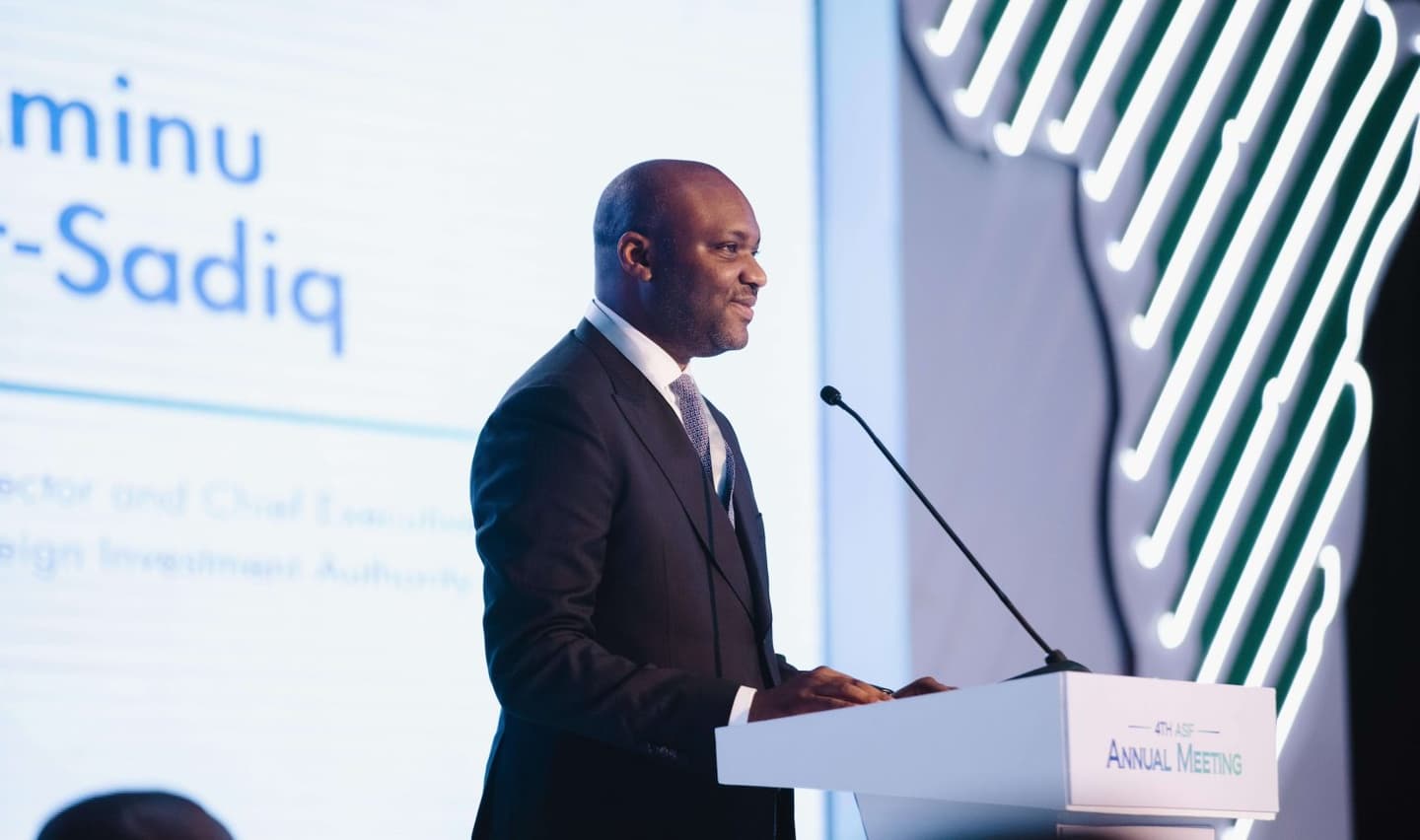
Speaking separately to journalists, NSIA Managing Director and Chief Executive Officer Aminu Umar-Sadiq said supporting entrepreneurs formed part of the authority’s investment strategy alongside infrastructure financing.
He said the innovation programme combined equity investment, education and exposure to investors and markets. This year’s focus on healthcare, manufacturing and food systems reflected their potential to create jobs and support business expansion.
Asked how NSIA monitored investment outcomes, Umar-Sadiq said its involvement continued after companies received funding.
“When the equity injection goes into these companies, we work very, very closely with the management teams to enhance their value proposition, enhance their governance,” he said.
He cited Money Africa and Sycamore as examples of successful previous winners but said investments needed time to produce results.
“It’s difficult for you to show traction at the scale that we want in a year or two,” he said.
He did not provide figures on revenue growth, employment or subsequent fundraising by previous winners during the interview.
Food and healthcare businesses win awards
Saturday’s competition provided a smaller funding route for businesses in the sectors NSIA is targeting.
Come Again Foods, which manufactures packaged snacks using locally sourced agricultural produce, won the $100,000 top prize, according to the authority.
Protein Kapital, which produces protein and biofertilisers through insect farming and organic waste processing, placed second with a $70,000 award.
Instant Rad Inc., an artificial intelligence-enabled teleradiology platform connecting hospitals and diagnostic centres with radiologists across Africa, placed third with a $50,000 award.
The 12 finalists emerged from 6,000 applications, NSIA said.
Oyedele told the entrepreneurs that the awards themselves would not establish whether the programme had succeeded.
“The real measure of your success will not be the prize you receive today, it will be the businesses you go on to build afterwards,” he said.