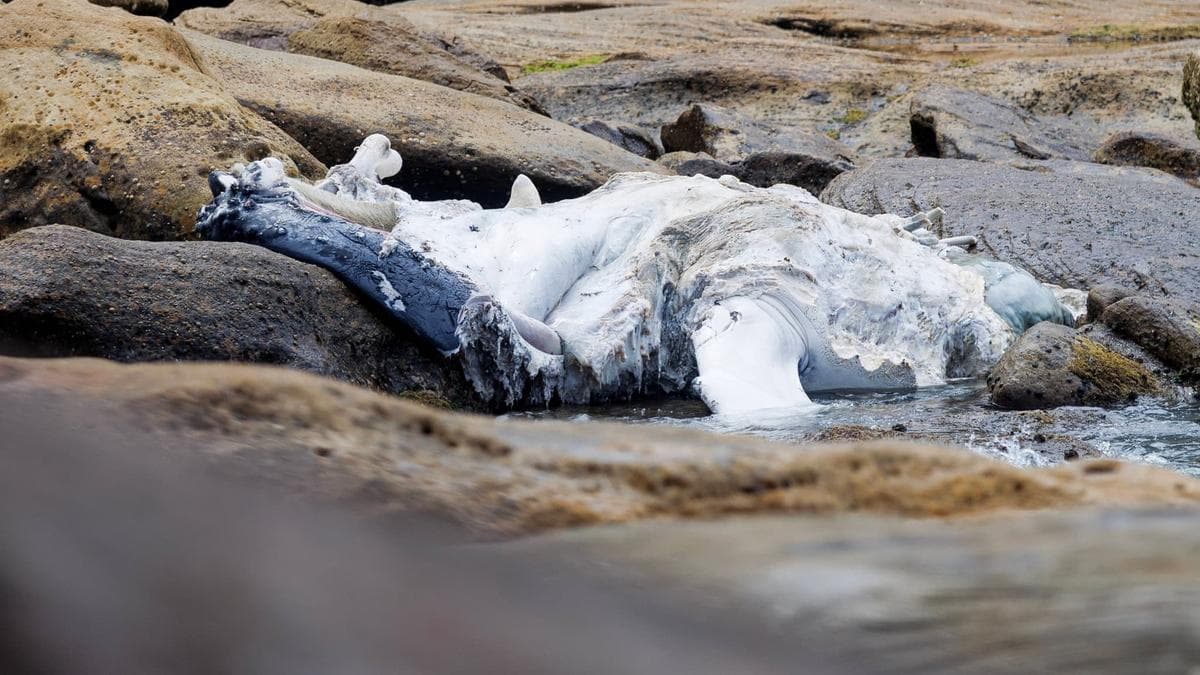
The same whale carcass has washed onto a Sydney beach for the third time, again forcing swimmers out of the water for fear of sharks.
The whale calf carcass this time made landfall about 8km south of Bondi and Malabar on Monday.
Coogee and Maroubra beaches were shut on Thursday last week, as the rotting carcass became stuck against the rocks in between the popular beaches at Lurline Bay.
The whale’s body had previously been dragged out to sea from one of Sydney’s northern beaches in the days prior, Gamay Rangers manager Uncle Robert Cooley said, evidenced by the rope around its fin.

On Tuesday, Randwick Council workers moved the carcass up the beach out of the water, roped off the remains and shut Malabar Beach.
While at the last landing spot the carcass was mostly intact, at Malabar it is only a segment of the whale that was washed ashore.
A council spokesperson confirmed it was the same animal.
“Strong currents have moved the juvenile whale carcass, previously at Lurline Bay, to Malabar Beach, where it has now washed ashore,” they said.
“Council lifeguards have closed the beach and barricaded the area to keep the public safe. Council staff will remove and dispose of the carcass tomorrow morning, Tuesday 27 October.
“Malabar Beach will remain closed until further notice.”

The carcass has been pulled up onto the sand, roped off, and a “beach closed” sign has been planted.
The Indigenous ranger group Gamay Rangers helped the NSW Department of Primary Industries figure out what to do with the whale from the rocky coastline at Lurline Bay.
The whale is a culturally significant totem animal to the local Bidjigal people, and there are specific Indigenous disposal practices for the creatures in the event they wash up on local beaches.
Mr Cooley said last week because the whale was decomposing and machines could not get to it, the best course of action was to let nature take its course.