
WHEN The Sun Also Rises was published on 22 October 1926, its harshest critic wasn’t a critic at all. It was the author’s mother.
Grace Hemingway wrote to tell her son that he had produced “one of the filthiest books of the year”.
Her book club was talking about nothing else, she said, and every page made her feel ill. (The book club, presumably, read every page anyway.)
A century later, my Olive Press colleague Michael Coy has reopened the case, though on rather different charges.
Grace thought her boy had been far too honest about the people he drank with.
Michael thinks he wasn’t honest enough: an ambulance driver dressed up as a warrior, a tourist dressed up as an aficionado, a myth that has run its course.
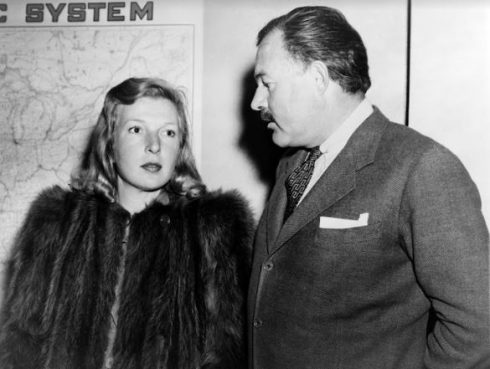
It’s a fair question to put to a man who spent his later years playing Papa to an adoring public.
But the trouble with calling The Sun Also Rises the work of a fake is that almost all of it happened.
In July 1925, a 25-year-old newspaperman went to the Sanfermines for the third summer running.
He took his wife Hadley and a gang of expat friends from Paris.
Among them were Lady Duff Twysden, a recently divorced English aristocrat with a bob and a thirst, and the writer Harold Loeb, who had lately been away on a romantic getaway with her.
It went about as well as you’d expect.
By the end of the week Hemingway and Loeb had come to blows in public.
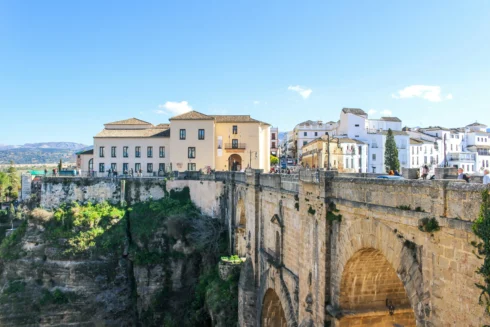
In the ring, meanwhile, a young matador from Ronda called Cayetano Ordóñez was dazzling Pamplona, and he presented Hadley with the ear of one of his bulls. (Michael lives in Ronda, so he may enjoy knowing that the novel’s one spotless hero, the bullfighter Pedro Romero, was a rondeño.)
READ MORE: FROM THE ARCHIVES: Chasing American literary titan Ernest Hemingway in the hills of Andalucia
Hemingway began writing on his 26th birthday, barely a fortnight after the fiesta ended.
In the first drafts he didn’t bother much with disguises: Jake was called “Hem” and Brett was called “Duff”.
That clears up one small mix-up in Michael’s piece.
Brett isn’t Agnes von Kurowsky, the nurse who broke Hemingway’s heart in Milan.
Agnes had to wait three more years for her turn, as Catherine in A Farewell to Arms.
There was just one problem: his friends were all in it.
Expat Paris spent the following winter playing guess-who with the characters, and Loeb never quite forgave him.
The thing about fakes is that they flatter themselves.
Hemingway wrote himself into his first novel as a man who cannot make love to the woman he adores.
He watches her go off with his tennis partner and then a teenage bullfighter, and he ends up picking up everyone’s bar bill.
If he was building a legend, he picked a very odd way to go about it.
Michael reads Jake’s war injury as Hemingway’s admission that the war had unmanned him. The real story is more interesting.
On the night of 8 July 1918, an 18-year-old Red Cross volunteer was at a forward post on the Piave at Fossalta, handing out chocolate and cigarettes to Italian soldiers, when an Austrian trench mortar landed beside him.
He was riddled with shrapnel, and Italy awarded him the Silver Medal of Military Valour.
He was an ambulance driver, yes, but nobody gets a medal for valour for staying in the garage.
What he did with it afterwards was what novelists do.
He asked: what if?
What if the wound had been worse, and in the one place that would make love impossible?
Taking something real and pushing it one step further is not fakery.
Hemingway learned his trade as a cub reporter at the Kansas City Star, whose style sheet told him to keep his sentences short and his English vigorous.
In Paris, Ezra Pound taught him to distrust adjectives.
When Scott Fitzgerald suggested he tighten the novel’s slow opening, Hemingway didn’t tighten it. He cut the first 30 pages altogether.
What came out of all that cutting was the iceberg theory, which he later set out in Death in the Afternoon.
A writer who truly knows his subject can leave most of it out, and the reader will still feel it. A writer who leaves things out because he doesn’t know them just leaves holes.
You feel it on every page.
Jake hardly mentions the war, but it sits in every café he walks into. Hemingway never tells you he loves the hills above Pamplona. He just sends Jake and Bill up to Burguete, where they dig for worms, cool the wine in the stream and rib each other for five days in the beech woods, and those chapters are among the happiest pages in American fiction.
Then there’s Romero in the ring, working the cape so slowly and so close that it looks almost tender.
And then there’s Madrid.
Jake has three martinis before lunch at Botín, gets through three bottles of wine with Brett, and the two of them take a taxi down the Gran Vía.
READ MORE: Ronda statues to honour American artists Hemingway and Welles
You can still do that route today. I’d go easier on the martinis.
The phrase “Lost Generation”, for the record, wasn’t Hemingway’s.
It was Gertrude Stein’s, and she’d borrowed it from a Paris garage owner grumbling about his young mechanics.
Hemingway put her line at the front of the novel and set a passage from Ecclesiastes directly beneath it, almost as a reply.
He told his editor, Max Perkins, that the book wasn’t really about a generation being lost.
His characters had been knocked about, but the point was that the earth abides.
None of this makes him a saint, or the book flawless.
Robert Cohn, the group’s Jewish outsider and Loeb’s fictional double, is drawn with an antisemitism that should make any modern reader wince.
The novel’s romance with the bullfight is one Spain is now rethinking for itself.
But even the ugliest pages are the work of a man describing a real crowd, warts and all, not polishing a myth.
If you still suspect a fraud, look at where the money went.
Hemingway left Hadley while he was finishing the book, and he gave her its royalties.
Thirty years later, Hollywood finally filmed it with Ava Gardner as Brett, and those royalties went to Hadley too.
The white-bearded lookalikes may have gone, as Michael says. The book hasn’t. It has been in print for a century, and the earth, as the man said, abideth.
So next July, when the bulls run in Pamplona, spare a thought for the young newspaperman who wrote down what he saw there, and got almost all of it right.
Click here to read more Opinion News from The Olive Press.