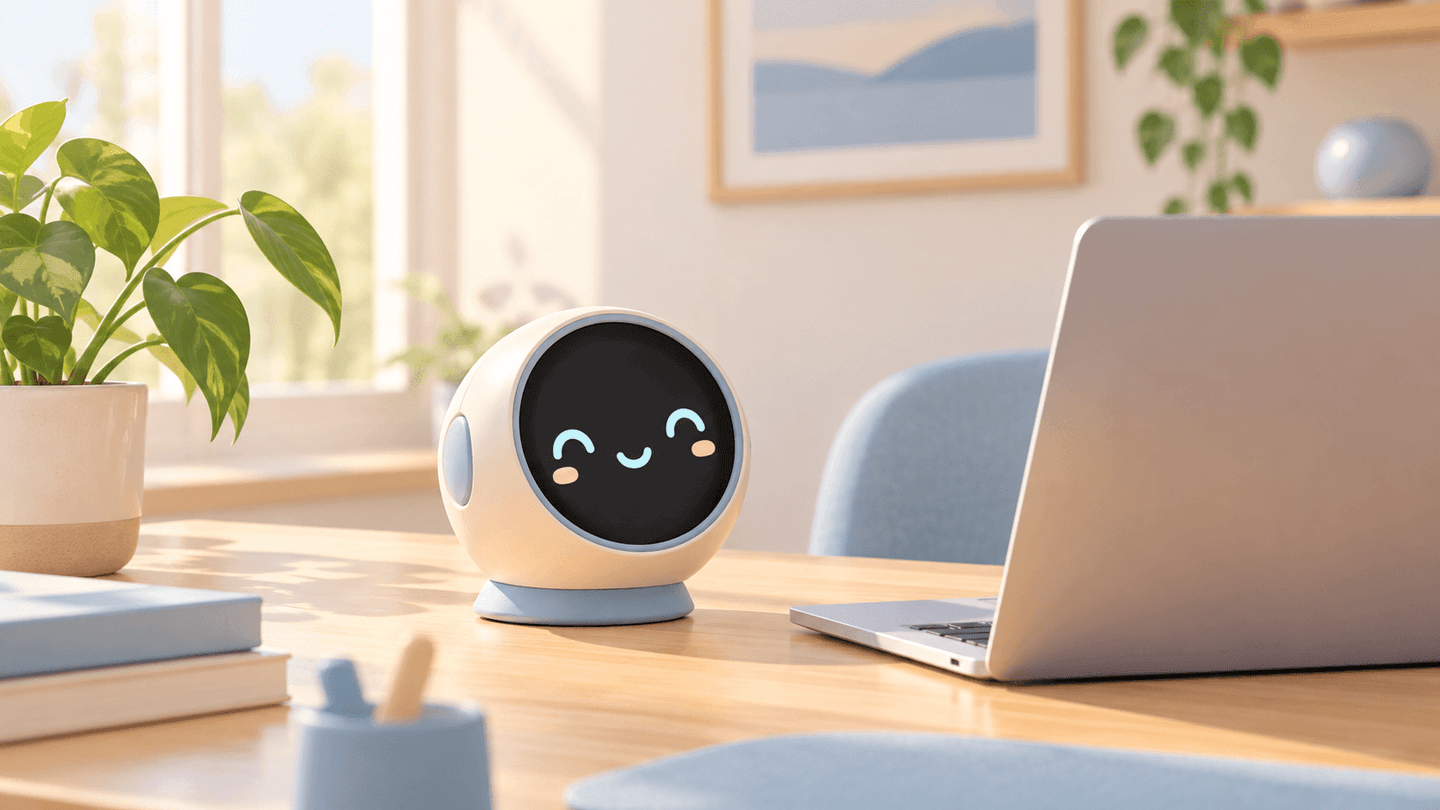
An innovation team incubated by Xiaomi's technology committee has shown HachimoDock, a small desktop AI device that users can build themselves and modify as they like. The device appeared at the 2026 Guancha Conference on October 26, according to IT Home and Sina Tech.
The team says the hardware costs about 150 yuan to make at home. Its aim is to lower the barrier to AI hardware and make HachimoDock a first device for people getting into vibe coding, where users describe what they want in plain language and let AI write the code.
HachimoDock combines a customizable desk pet, voice control of computer agents, smart home control and user-built components in one small body. When a user speaks to the desk pet, it turns the request into tasks and hands them to agents running on the computer, such as Codex and WorkBuddy, for jobs like looking up information, organizing files or writing code. The screen shows whether a task is thinking, running or waiting for confirmation, and the pet signals progress with expressions, movements, short prompts and sounds. Sensitive operations that need authorization are still confirmed in the relevant desktop client.
Voice control extends to the home through Xiaomi Miloco, the company's open-source smart home AI framework. The small screen can switch into a home control panel showing device status, lighting controls and camera feeds, so one desktop device works as an entry point for both PC agents and smart home devices.
Users can also ask the AI to generate and run new components on the spot. That lets HachimoDock act as a voice input microphone, a small game console, an FM radio, a second screen for checking AI task progress and computer status, or a smart home hub.
The software source code is public on GitHub, along with a hardware bill of materials, structural part models and assembly guides. There is an important limit, though: the project is source-available rather than open source in the usual sense. Its license allows personal, non-commercial replication, modification and component creation, but commercial use, commercial integration or separate product development requires written permission from the rights holders. Third-party parts, including Xiaomi Miloco, keep their own licenses.
"We want to leave the space to define HachimoDock to each user," the head of the team said, so that more people can enjoy making AI hardware at low cost.
SEE ALSO: Xiaomi Open-Sources Miloco 2.0 Smart Home AI · Xiaomi Open-Sources MiDashengLM-Spatial