The Federal Government says Nigeria could declare the Ebola outbreak over as early as December 7, 2026, if no further confirmed or probable cases are detected.
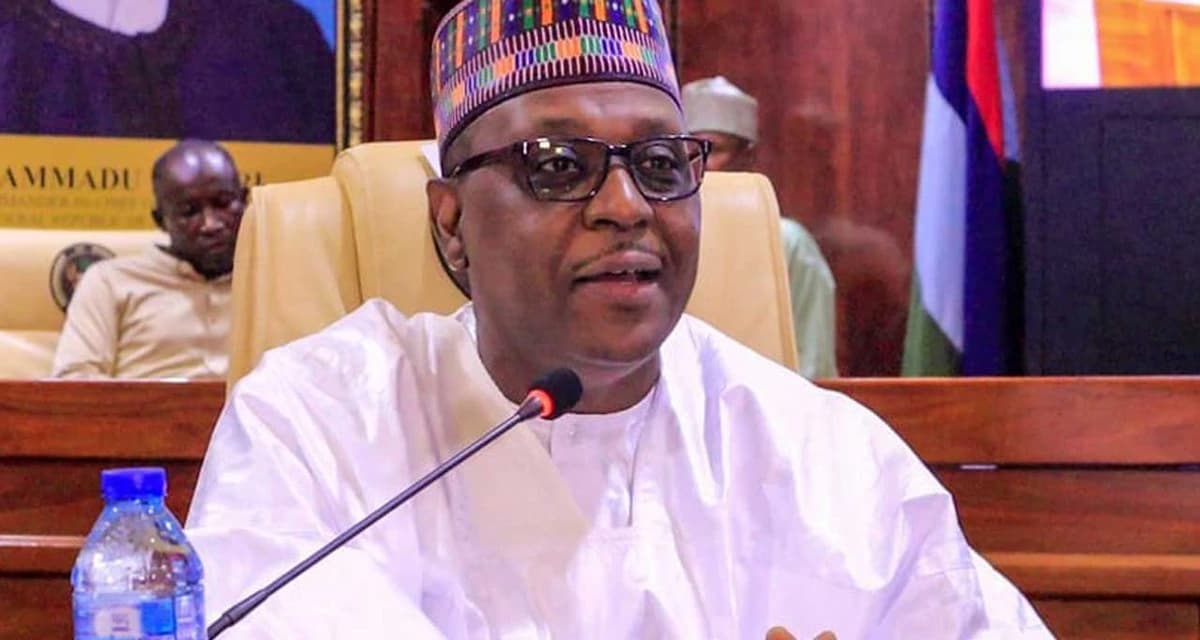
Nigeria’s Minister of Health, Professor Muhammad Ali Pate, disclosed this in a post on his official X page on Monday, October 26, 2026.
He said the proposed date depends on the Nigeria Centre for Disease Control and Prevention (NCDC) and the World Health Organisation (WHO) validating the required 42-day countdown, warning that any new case would restart the process.
The announcement follows the medical evacuation of Nigeria’s imported Ebola index patient and her husband to Switzerland, leaving the country with no remaining Ebola cases according to the WHO. However, authorities must continue surveillance and contact tracing before the outbreak can officially be declared over.
Nigeria targets December 7 for Ebola-free status
Pate said the government’s immediate priorities following the medical evacuation of the imported Ebola index patient include monitoring identified contacts, investigating alerts and strengthening preparedness across health facilities.
He explained that December 7 remains a provisional date, subject to ongoing surveillance and validation by the NCDC and WHO.
- “Following the imported Ebola index patient’s medical evacuation from Nigeria today, 26 October, our immediate priorities remain active monitoring of all identified contacts, prompt investigation of alerts and strengthened readiness across our health facilities.”
- “If no further confirmed or probable cases are detected, Nigeria could progress towards declaring this outbreak over under @WHO criteria, potentially as early as 7 December 2026,” the post read in part.
The minister added that government teams were working with the Federal Capital Territory Administration (FCTA), state health authorities and development partners to contain the outbreak and prevent community transmission.
He also urged Nigerians to remain calm, cooperate with contact-tracing teams and follow public health guidance as authorities continue their response.
Under WHO criteria, an Ebola outbreak can generally be declared over after 42 consecutive days without new cases, counted from the second negative test of the last confirmed patient or the patient’s death, where applicable.
Nigeria reports no remaining Ebola cases
The WHO has confirmed that Nigeria currently has no Ebola cases following the medical evacuation of the index patient and her husband to Switzerland on Monday.
The WHO Regional Director for Africa, Professor Mohamed Janabi, disclosed this in a statement on his official X account, commending Nigerian health authorities for their response to the infection.
The woman, who was diagnosed with the Bundibugyo strain of Ebola, was flown out of Abuja alongside her husband after her condition improved sufficiently to permit the transfer under strict medical supervision.
- Janabi said Nigerian healthcare professionals had stabilised the patient after managing her through the most severe stage of the illness, allowing arrangements for her continued treatment in Switzerland.
- “With the evacuation of the patient and her husband, Nigeria currently has no Ebola cases,” he stated.
- Nigeria is maintaining surveillance of 52 identified contacts, while Swiss health authorities have assumed responsibility for the patient’s ongoing treatment and monitoring of her husband, who was listed as the 53rd contact.
The WHO official stressed that the evacuation did not end Nigeria’s public health response, as authorities must continue monitoring individuals who may have been exposed to the virus.
Nigeria’s Ebola countdown depends on surveillance
Nigeria confirmed its first imported case of Bundibugyo Ebola virus disease on October 20, 2026, after laboratory investigations established that a 42-year-old woman who had recently returned from Uganda contracted the infection.
- According to the NCDC, the woman arrived in Abuja on October 3 after travelling through Addis Ababa and began experiencing symptoms four days later. Her condition subsequently worsened, leading to hospitalisation at a private medical facility in Abuja before laboratory tests confirmed the infection.
- The source of the infection remains uncertain. However, genomic sequencing results released on October 23 showed closely related viral strains in the Nigerian patient and Kenya’s first confirmed Ebola patient.
- The outbreak has also affected parts of the Democratic Republic of Congo, Uganda and Kenya, raising concerns about cross-border transmission and the risk of further infections.
Uganda was declared Ebola-free in August 2026 after completing the required observation period without additional confirmed cases, while Kenya has reported nine confirmed infections and two deaths.
- Nigeria must now complete the required monitoring period before the outbreak can officially be declared over. The continued surveillance of contacts is intended to identify possible infections early and prevent further transmission.
The proposed December 7 date depends on no additional confirmed or probable cases emerging and the NCDC and WHO validating the countdown. Any new case would require a fresh countdown in line with WHO criteria, potentially pushing back the date for declaring the outbreak over.