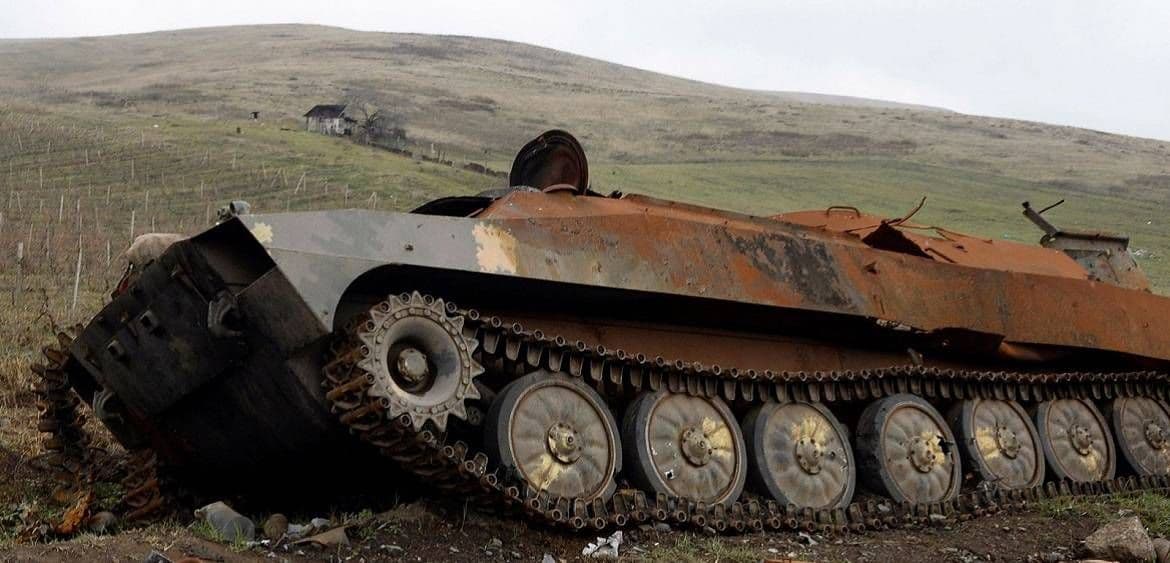
For years, Armenia sought to explain away its defeat in the 2020 war by pointing to military support for Azerbaijan from Türkiye, Pakistan and Israel, as well as from alleged European and African countries with no direct involvement in the conflict, rather than confronting the realities of its own military capabilities. This narrative portrayed the conflict as an unequal confrontation between Armenia and a broad international coalition. However, this interpretation overlooks a fundamental military reality: Azerbaijan’s victory resulted from its powerful armed forces, decades of strategic preparation and Armenia’s deep-rooted institutional weaknesses, including corruption within its military establishment.
Wars are decided through a combination of firepower, intelligence, logistics, economic capacity, leadership and the ability to sustain combat operations. Tanks, aircraft, drones and precision-guided weapons attract public attention, while supply chains, transport infrastructure, maintenance facilities and military reserves determine how effectively those weapons perform. Azerbaijan invested heavily in these interconnected capabilities, while Armenia entered the conflict carrying the consequences of decades of political mismanagement and economic limitations.
Armenia’s defeat therefore deserves examination through the condition of its own military institutions and the infrastructure supporting its defence strategy. For approximately three decades, Armenian forces controlled 20 per cent of Azerbaijan’s internationally recognised territories. That period offered substantial opportunities to develop fortified positions, transport networks, supply depots, maintenance facilities and resilient logistical corridors. The resulting military infrastructure, however, proved insufficient to withstand Azerbaijan’s modernised armed forces during the 2020 campaign.
The contrast carries a powerful strategic lesson. Territorial control creates an opportunity for military preparation, while effective governance determines whether that opportunity becomes a lasting defence advantage. Fortifications require regular investment, supply routes require maintenance, equipment requires servicing, and soldiers require reliable provisions. Military strength depends on an integrated system capable of sustaining operations under pressure.
Thus, Armenia’s former defence establishment raises further questions about the management of resources during this period. A recently circulated account describes the transfer of railway infrastructure and other civilian assets to Armenia’s Defence Ministry, followed by their alleged disposal through scrap-metal sales. Among the examples cited are a roughly 40-kilometre section of the Mehri–Kapan railway and 5,688 tonnes of rails reportedly transferred to the ministry following the dismantling of Yerevan’s tram system.
According to that account, just 137 tonnes of the tram rails reached the army, while the remaining 5,551 tonnes were allegedly sold to a company called Meteksim at scrap-metal prices. The account also raises questions about the ownership connections surrounding the company and the potential beneficiaries of these transactions. These allegations require verification through official records, contracts and financial documents. Their strategic significance, however, deserves serious scrutiny: military institutions depend on transparent procurement, responsible asset management and the disciplined allocation of public resources.
Every railway line, transport vehicle and industrial asset can contribute to a country's wider economic and logistical capacity. Selling infrastructure for short-term financial gain can weaken the foundations supporting defence, particularly when the proceeds and their ultimate beneficiaries remain subjects of controversy. A country preparing for a prolonged security challenge requires institutions capable of preserving strategic resources and directing public expenditure towards measurable military objectives.
The comparison with Azerbaijan is particularly revealing. Over the years, Baku combined energy revenues, infrastructure investment, international cooperation and defence modernisation to strengthen national resilience. Oil and gas income supported the broader economic base, while investment in roads, railways, ports and other transport connections enhanced the country's strategic connectivity. Military procurement formed part of this wider development model, giving Azerbaijan an increasingly sophisticated set of capabilities before the 2020 war.
The outcome demonstrated the importance of combining technological superiority with organisational effectiveness. Azerbaijan's forces used intelligence, drones, artillery coordination and manoeuvre operations to exploit weaknesses in Armenian defensive positions. Operational momentum, effective command and sustained logistical support helped transform battlefield advantages into territorial gains.
Armenia’s experience offers a lesson extending beyond the South Caucasus: military defeat often reflects years of decisions concerning institutions, investment priorities and national strategy. International assistance can strengthen a capable state, while domestic governance determines how effectively resources become operational power.
Azerbaijan’s victory consequently stands as an achievement of military preparation, national resilience and strategic planning. Explanations focused exclusively on foreign partners overlook the central role of Azerbaijan’s own armed forces and the institutional shortcomings that weakened Armenia’s defence. The deeper lesson concerns the foundations of national power: modern weapons deliver their greatest impact when supported by reliable logistics, sound administration, economic strength and accountable leadership.