
KRIS Whitefoot and his wife, Melissa Hidalgo, moved to Spain in February this year after selling their house in London in September 2025.
But moving to Malaga was anything but an easy task as they were trapped in a stagnated property market for 18 months in the UK capital.
Their terraced house in leafy Barnet had been put on sale in March 2024 and after rapidly receiving two ‘excellent’ offers Melissa and their dog, Parker, moved to her parent’s home in Mijas.
But, the offers weren’t ‘true offers’ and it took another year (and three more offers) for Kris to finally be able to sell the house.
“For one year we were constantly travelling between the UK and Spain, until we got a real offer and finally sold the house,” the media sales executive recalls.
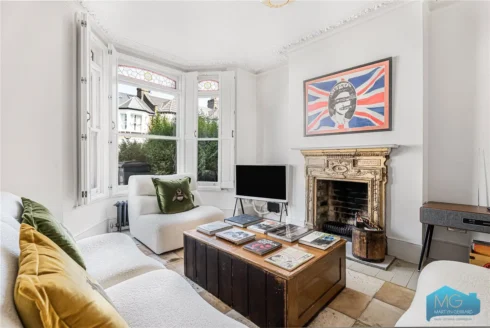
It ended up being an ‘incredibly difficult and stressful year’ in a complicated London market that is making buying and selling properties increasingly hard.
The couple are part of a much larger wider group who have left London since Covid, in numbers large enough to affect the capital’s population figures.
According to the Office for National Statistics (ONS), London was the only region in England to see its population fall in 2025. The capital’s population fell 0.3% in 2025 compared with 2024, while every other region recorded growth.
Many High Net Worth individuals are coming south to Spain and, in particular, Portugal and Italy, which has introduced some large lucrative inducements for wealthy British migrants.
Spain meanwhile has extended its Beckham Law’s provision via the Spanish Start-Ups act which means that for up to six years new Digital Nomad arrivals, ‘remote company employees and founders’ are taxed at a flat 24% rate on employment income up to €600,000 per year.
Given normal tax rates spike up to 47% (and higher depending on the region), the savings for high earners are massive. Any income above €600,000 mind, is taxed at the top 47% bracket.
READ MORE: Foreign buyers lead Spanish property market slowdown, but latest numbers offers some hope
Adam Neale, director of Terra Meridiana real estate agency in Estepona, blames the UK government’s ‘socialist’ policies as one of several possible reasons for the exodus.
“One reason that people are running from London is the inheritance tax of 40%. Another reason is the abolition of the non-dom tax regime,” he says.
Neale, who has lived on the Costa del Sol for over two decades, insists the new policies can make staying in the UK more expensive for the wealthy, encouraging some to move abroad.
Many are sensibly moving to popular holiday spots like Marbella, Ibiza and Monaco.
These include big names like Jim Radcliffe (INEOS), Revolut owner Nik Storonsky and Lakshmi Mittal, the steel merchant, who long lived in London, but who recently slimmed down his operation to save taxes.
Giant hedge fund billionaire Chris Rokos also just announced his decision to head to Greece, which will cost the government billions of pounds in lost tax revenue. He paid more than £300m in tax last year alone.
As Neale continues: “The UK government has targeted the rich and entrepreneurs, which is outrageous. Why should they work all their lives just to pay huge amounts in tax?”
It’s certainly telling that this year’s Sunday Times Rich List one in six of those subjects have now dropped out or moved away from the UK.
Other reasons for the exodus include stricter mortgage lending, house prices that are high compared with incomes, and rising interest rates.
After the credit crunch in 2008, London became a safe haven for property investors. International money flowed into the capital and property prices soared and reached their peak in 2015.
Now, after 10 years, the prices are still on a ‘correcting’ course. Average prices in prime central London (PLC) have fallen 23% since their 2015 peak and are still following.
Neale says the ‘correcting phase’ is still ongoing and he doesn’t think prices have yet reached rock bottom.
“In 1995, house prices ranged from 3.2 to 4.4 times median annual income, depending on the region. By 2012–13, that range had risen to between 6.1 and 12.2 times income.
“Buying a home has remained difficult since then, with condominium fees, stamp duty and council tax adding to the pressure,” he says.
READ MORE: Spain’s most expensive areas to buy or rent property are revealed – and the rock bottom cheapest
So exactly how bad is the situation now?
Although lower prices are enticing some buyers to think about buying in London again, the prices are still falling along with the myth that London is a safe haven for property investors.
The worst-hit areas are, curiously, the wealthy neighbourhoods of inner London where property prices fell by 6.8% in the year to July to around £624.000.
In Westminster, prices are at their lowest level since 2013.
According to the Evening Standard, nearly £250,000 was wiped off the average central London house price in a year.
And, according to the Times, London housing market is forecast to flatline for three years.
The data is apparently so gloomy that you need to read it twice to believe it.
According to official statistics, flats have been hit the hardest.
After Covid, many people wanted more space, and those who could afford it sold their flats and moved into houses. As a result, flat prices have performed worse than those of other property types in London.
If you bought a flat in London in 2016, according to the latest statistics, you are unlikely to make much profit if you sell it now. But if you bought a terraced house you could expect to make a larger profit.
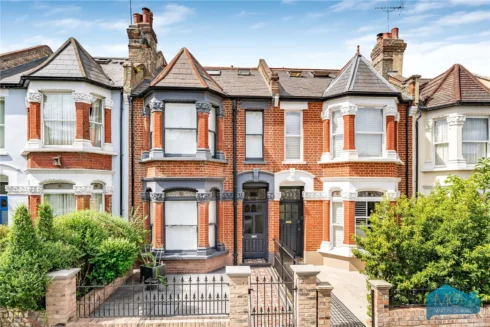
This is what happened to Kris and his wife: They bought their terraced house in Arkley, just outside Barnet in 2021 for £600,000 and sold it for £765,000 in September 2025 after extensive renovations.
What now?
Across the city the market is lifeless and many properties are on sale but not sold.
According to official data, house prices in the capital fell 3.3% in the year to July. This trend has been going on for 11 straight months.
If you are a seller, you need to bring down the price of your property and join 12.7% of home owners who have done so between October and December last year, according to the property platform Zoopla.
According to Rightmove property portal: “Sellers face a lot of competition, with more homes currently available to buy than we’ve seen in 12 years, and the number of buyers enquiring is 9% lower than this time last year.”
And if you want to run away from the ‘socialist government’ as Neale puts it and avoid a property market that might stay like this for years to come, you could follow Kris, Melissa and their dog, Parker, and say hello to the Costa del Sol, with its property market still reasonable and promising.
It can only be good news for Spain.
Click here to read more Property News from The Olive Press.