
On 15 October, the Armenian government approved a draft law on ‘Ensuring Equality and Protection against Discrimination’, along with a package of related draft legislation.
In response to OC Media, the Justice Ministry noted that the ‘non-exhaustive’ list of protective characteristics specified in the draft legislation included: ‘sex, race, colour, ethnic or social origin, genetic characteristics, language, religion, beliefs, political or other opinions, membership of a national minority, property status, birth, disability, age, sexual orientation, health status, or other personal or social circumstances’.
This appears to be the first time discrimination on the basis of sexual orientation has been explicitly mentioned as part of the draft legislation. The initial version of the draft law, which had been under development at the Justice Ministry since 2017 and which was published on the e-draft platform two years ago, had no such description.
The omission of this provision drew criticism from civil society and queer activists, who noted queer people in Armenia are frequently targeted in efforts to advance various political agendas.
For example, during the 2026 parliamentary election campaign in Armenia, queer people once again became a target of political rhetoric, when ahead of the vote, several Facebook pages created to support the opposition claimed that Armenia’s potential EU membership would lead to the loss of the country’s ‘traditional values’. In this context, queer people became a frequent subject of manipulation and political messaging.
Armenia’s constitution fails to explicitly prohibit discrimination on the basis of sexual orientation, an omission often leaves room for interpretation within the legal system.
Although the current authorities have expressed their intention for years to adopt a new constitution, it remains unclear whether the provision prohibiting discrimination will be amended and, if so, whether discrimination based on sexual orientation would be explicitly prohibited or remain included only under the broader category of ‘other circumstances’.
Queer activists have repeatedly argued that this legislative gap is one of the reasons discrimination remains widespread in Armenia:
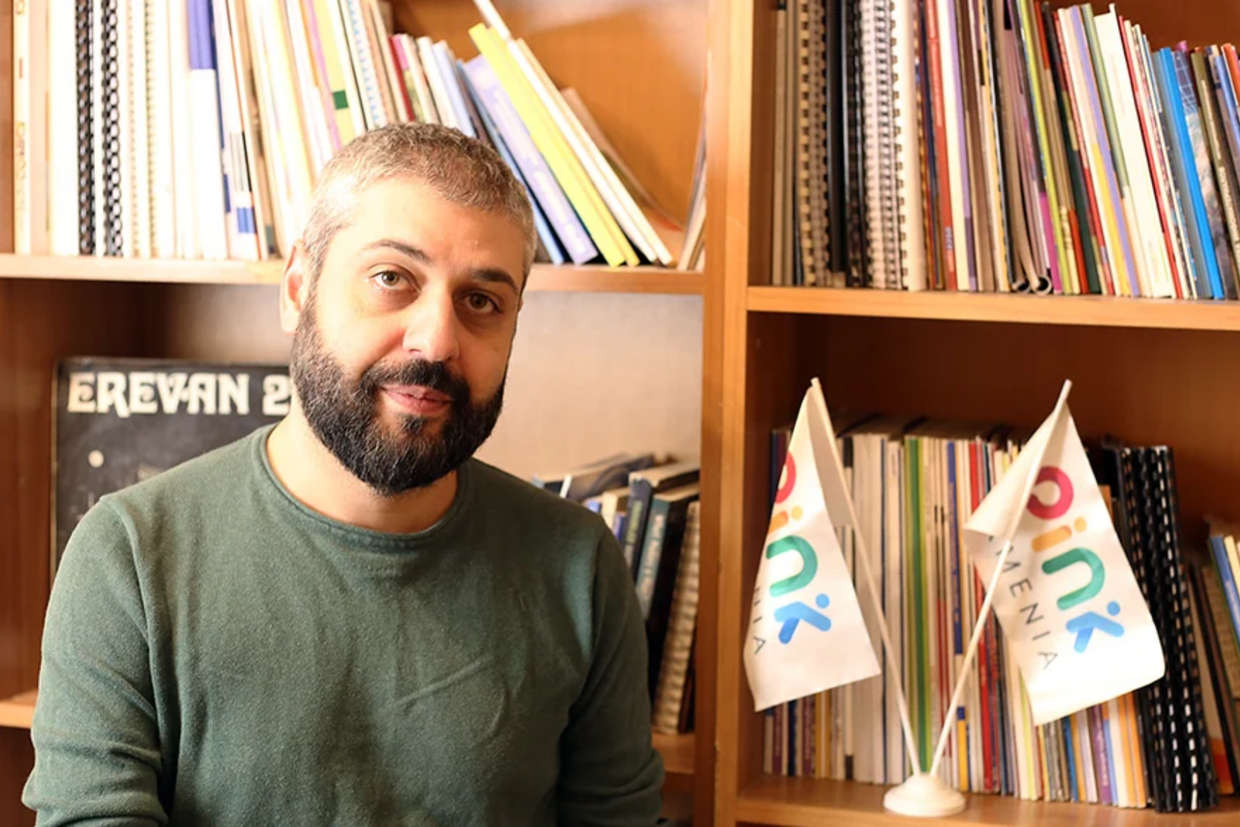
‘The experience of other countries shows that when there is legislation, it somewhat restrains both people and state institutions’, says queer activist Mamikon Hovsepyan. ‘On the other hand, the law becomes a mechanism through which justice can be restored for people who have faced discrimination.’
The absence of an anti-discrimination law also affects Armenia’s international commitments. Most notably, the Armenian–EU visa liberalisation action plan requires the effective implementation of a National Human Rights Strategy, strengthening anti-discrimination policies, protecting minority rights, ensuring access to justice, guaranteeing religious freedom, and increasing awareness about racism and xenophobia.
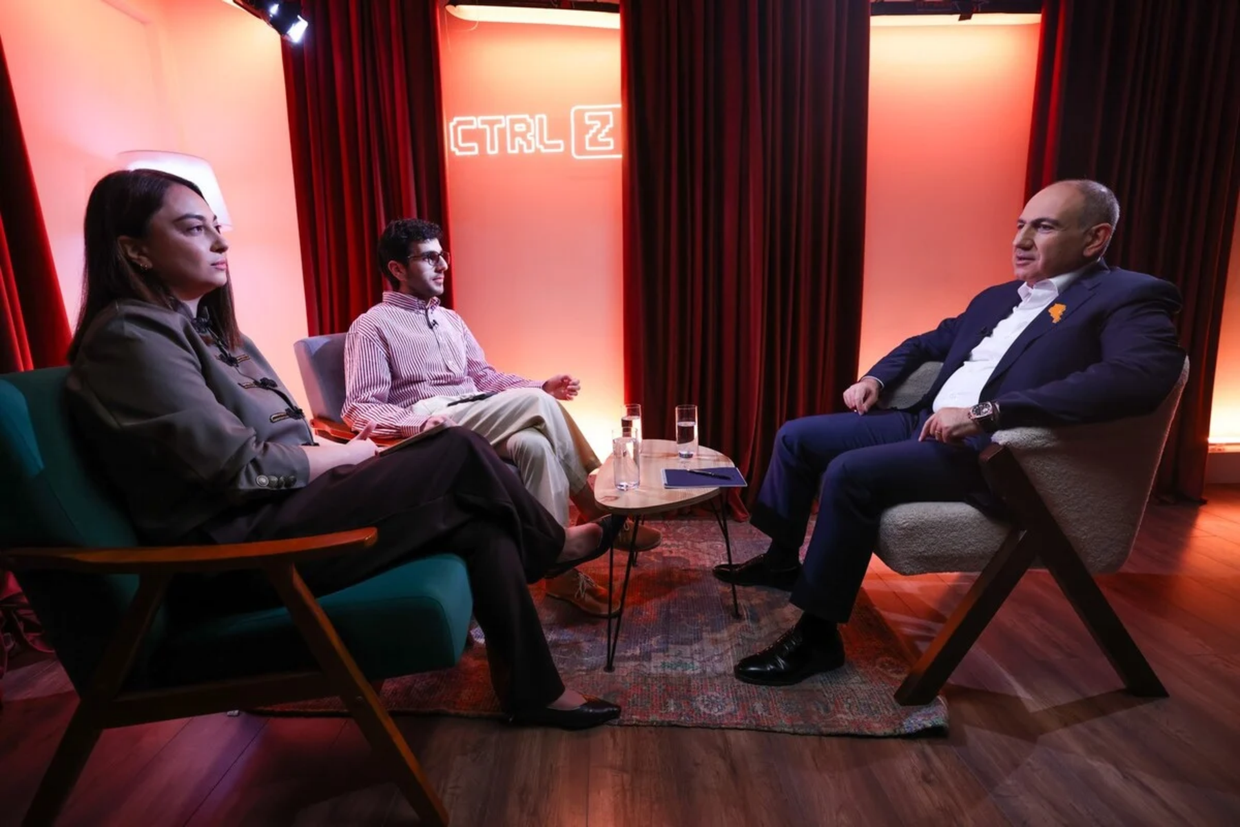
Speaking on the CTRL Z talk show earlier in October, Prime Minister Nikol Pashinyan said ‘we need to put the draft law into circulation, discuss it, face criticism and attacks, be called anti-national and so on. The more criticism we can withstand, the more we will let it remain’.
When pressed to discuss the impression that the current government was continuously avoiding the inclusion discrimination based on sexual discrimination into constitutional legislation, Pashinyan responded: ‘The government keeps avoiding it because that is where the greatest pressure on this issue comes from’ — no clearer answer was provided.
While it appears sexual orientation has now been included in the draft text, the bill must still be debated in parliament, and will only become law if approved.
Pashinyan in power: A history of avoidance?
According to the International Lesbian, Gay, Bisexual, Trans and Intersex Association (ILGA), Armenia ranked second to last on Europe’s homophobia map when Pashinyan swept to power in 2018, with a score of 7%, ahead of only Azerbaijan. ILGA’s 2025 report shows little improvement: Armenia’s score increased to 9%. This time, Armenia ranks below not only Azerbaijan, but also Turkey, and Russia. Even neighbouring Georgia, despite adopting a recent anti-queer law, remains ahead of Armenia in the ranking.
Lilit Martirosyan, the founder of the local trans rights organisation Right Side NGO, told OC Media that years of experience had shown that no matter who is in power, both the government and opposition forces have tended to avoid openly addressing queer issues. And since the Velvet Revolution, she says, there has been no positives in terms of the adoption of relevant legislation.
‘We still cannot achieve tangible results. Perhaps this was due to the war, COVID, and the peace agenda. LGBTQ+ issues are always pushed back; they fall into the background’, she says.
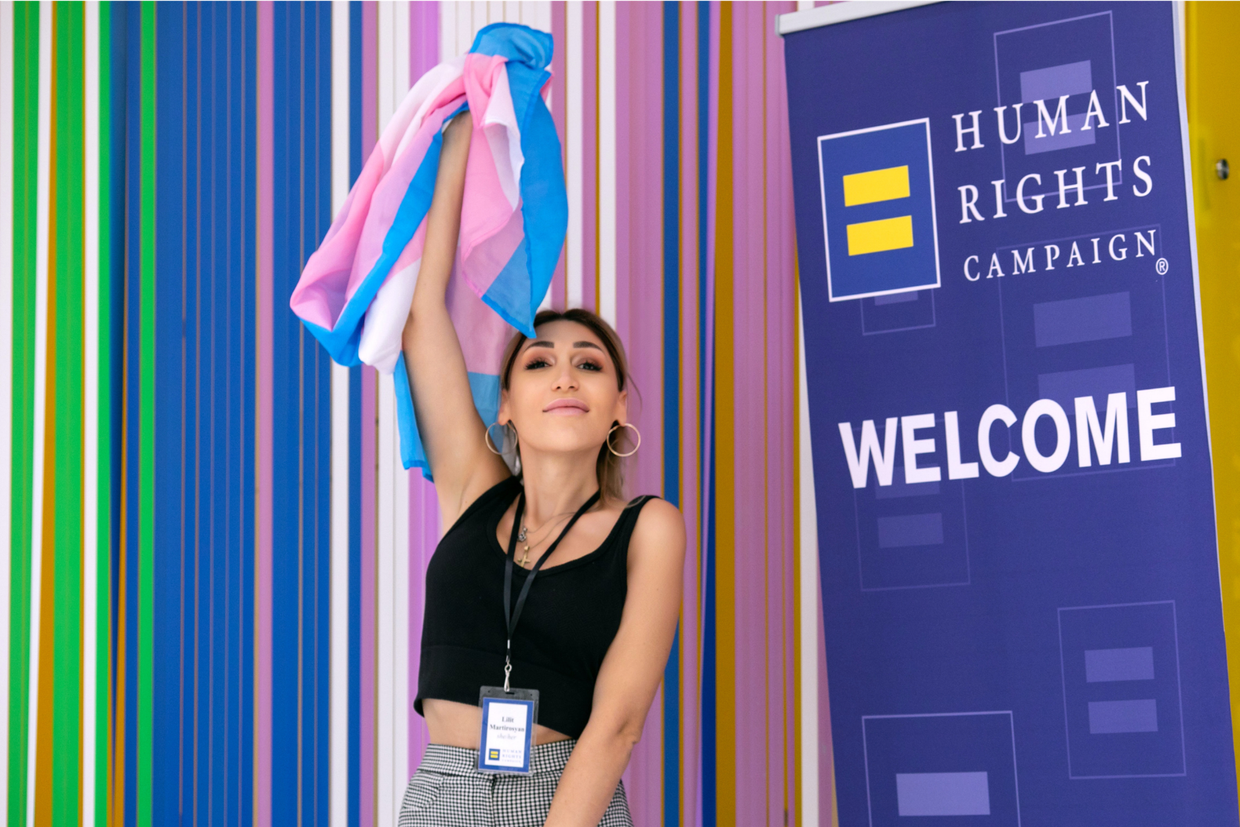
Martirosyan, a trans woman, first gained prominence when in April 2019 she addressed the Armenian parliament. ‘Perhaps a few months ago, it would have been impossible even to imagine what has become reality today in post-revolutionary Armenia’, Martirosyan said at the time.
Following the speech, however, various initiatives and groups began making homophobic statements, accusing the ruling political force of promoting ‘LGBTQ+ propaganda’. A protest was also held outside parliament, with participants objecting to Martirosyan’s speech and even demanding that a priest be brought to the building to perform a blessing.
In response, Pashinyan turned the incident into a political debate:
‘In 2015, Armenia’s conservative authorities, the authorities that called themselves the protectors of family traditions and family values, took the passport of Armenian citizen Vagharshak Martirosyan and gave him a passport as Armenian citizen Lilit Martirosyan. Moreover, they issued a passport where it said: Lilit Martirosyan, sex: male. Is it an accepted practice within the ranks of the Republican Party of Armenia that the name of a male person is Lilit?’, Pashinyan questioned at the time.
Martirosyan emphasises since then, civil society organisations such as hers have increased visibility of the topic. The issue, she says, is that the government has not kept up the same pace.
Indeed, the most recent report by Armenia’s Human Rights Defender notes that complaints submitted to the institution, online platforms, and studies conducted by human rights groups indicate the continued presence of intolerance, discriminatory treatment, and hate speech against queer people based on sexual orientation and gender identity.
The report also documents cases of hate speech involving public figures, as well as instances where the competent authorities have demonstrated stereotypical and insensitive approaches.
 OC MediaArshaluys Barseghyan

In terms of legislation, the report highlights the lack of explicit anti-discrimination measures, calling for sexual orientation to be included in the relevant statutes.
While the Human Rights Defender has not conducted a comprehensive study on the issue, the queer community-based organisation Pink Armenia noted in its 2025 annual report that their social workers and lawyers had received 402 requests for assistance, with 56 cases involving human rights violations linked to discrimination based on sexual orientation or gender identity. Of those, 30 involved domestic violence, including continuous violence by family members or intimate partner violence, while 26 involved other types of violations.
Victims reported only eight of these cases to law enforcement, and only some of those cases progressed further, with investigations currently at the trial stage.
Despite the fact that the Human Rights Defender and several civil society groups and international organisations have noted that cases of discrimination and violence against queer people have not decreased in number, high-ranking Armenian officials have previously avoided discussing both the adoption of an anti-discrimination law or queer rights more broadly.
Indeed, during the 2025 Armenian Democracy Forum, human rights expert Andranik Shirinyan asked Pashinyan about equality rights — in response, Pashinyan avoided the question, saying that he had already answered it six years earlier. Pashinyan’s response appeared to be a reference to his 2019 comments about a film on queer Armenian weightlifter Mel Daluzyan, during which he claimed Daluzyan was ‘under his personal protection’.
‘I think the prime minister’s response to my question during the forum was a very good illustration of why the equality law has not been adopted, or more broadly, how the government approaches the protection of LGBTQ+ people’s rights, that is, trying to avoid addressing the issue as much as possible’, Shirinyan told OC Media shortly after the event. Officials, he said, ‘continue to avoid using terms such as “gender” and “sexual orientation”, again taking into account the public reaction to these issues’.
Shirinyan claimed that Armenia lacks even a ‘declarative-level protection of LGBTQ+ people’, recalling the murder of a transgender woman in Yerevan in 2023. He emphasised that in cases like this, it is rare to see government officials or MPs publicly speak about such incidents, let alone condemning them.
Meanwhile, organisations specifically focused on queer rights often remain marginalised.
‘On the one hand, there is egoism — who is going to loudly speak about this and there is nothing behind it, emptiness; they just shout or make some Instagram post saying that they are doing this or that work, but unfortunately, there is no foundation behind it, and that is why cooperation is very weak’, queer activist Mamikon Hovsepyan tells OC Media.
‘And when it comes to whether the government takes into account what NGOs say, or what international organisations say, this is where the difficult question emerges, because they say: “We are not going to discriminate, we have to listen to everyone’s opinions”. And as a result, they have to mix together both quality and poor-quality recommendations’, he continues.
OC MediaOC FORGE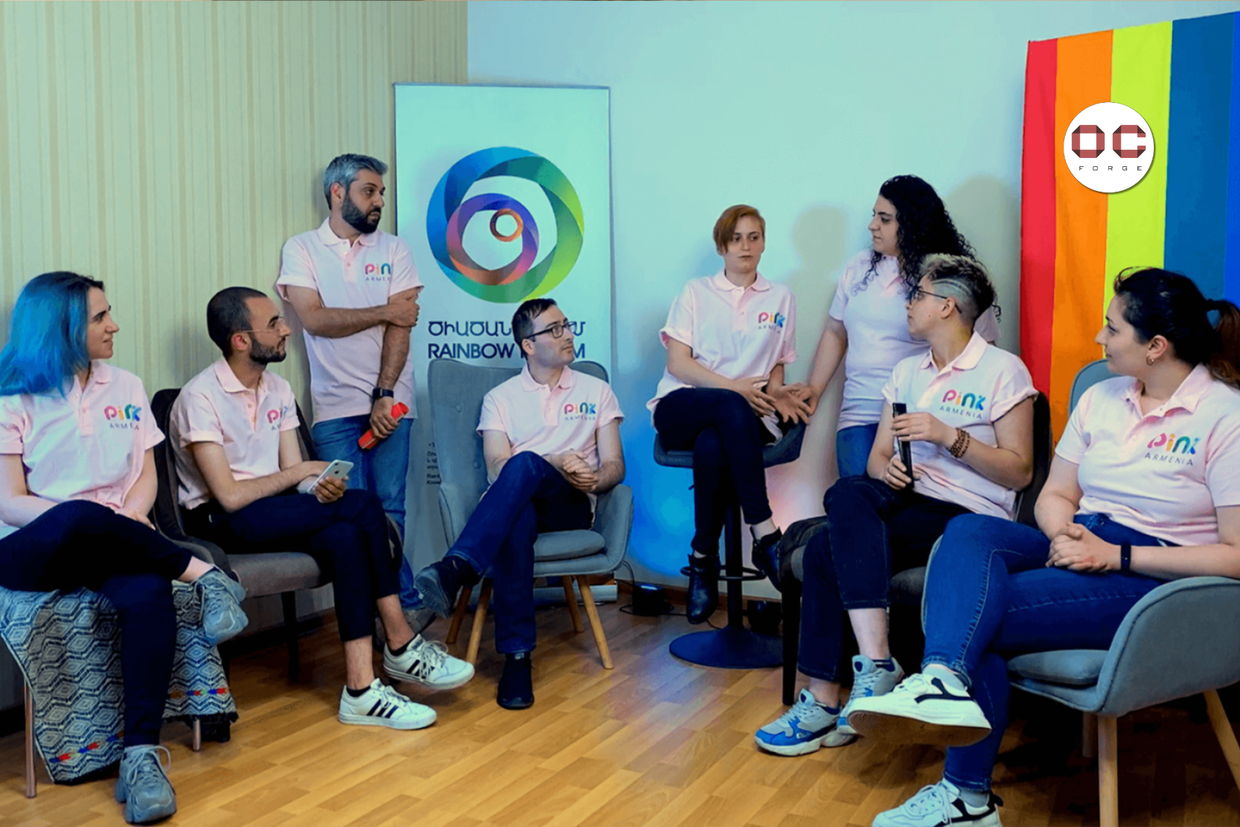
Hovsepyan also highlights that many victims do not want to report violations to the police because they fear facing further discrimination within the system itself: ‘A person may be mocked, asked very intimate questions about their private or sexual life that have nothing to do with the case’.
As a result of this, Hovsepyan emphasises, important things, such as updates to the anti-discrimination legislation, remain missing.
On the other side, ruling Civil Contract MP Zaruhi Batoyan told OC Media that she does not believe homophobic attitudes in Armenia are increasing.
‘On the contrary, I think we have a phenomenon here, and for the first time in Armenia officials are not avoiding saying that we are obliged to protect everyone’s rights, and not only the rights of several selected or separate groups’.
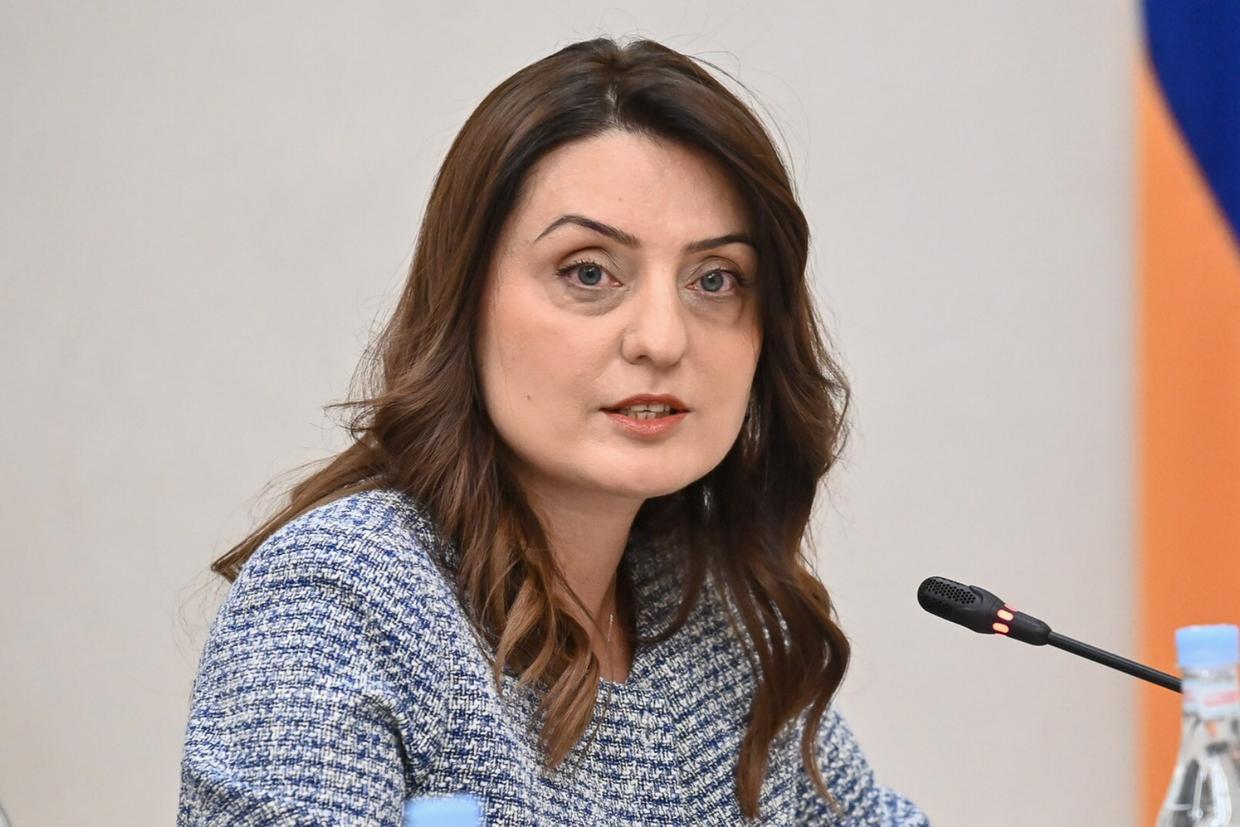
Speaking to OC Media before the government released the long-awaited draft anti-discrimination law, Batoyan said she believes that the ruling party is not afraid of being targeted or accused of promoting ‘LGBTQ+ propaganda’. For her, the issue is not a matter of political will alone, but rather that adopting such legislation requires a lengthy process.
‘Of course, I say this with regret, because it is being delayed, but this is how our system works. There needs to be broad consensus. First of all, the government has to agree with the initial package that is sent to parliament. MPs have to agree on this issue, NGOs have to agree, human rights defenders, experts, those who will implement it, most importantly, and so on. And I think this is the reason [for the delays]’, Batoyan says.
Will updated legislation be enough?
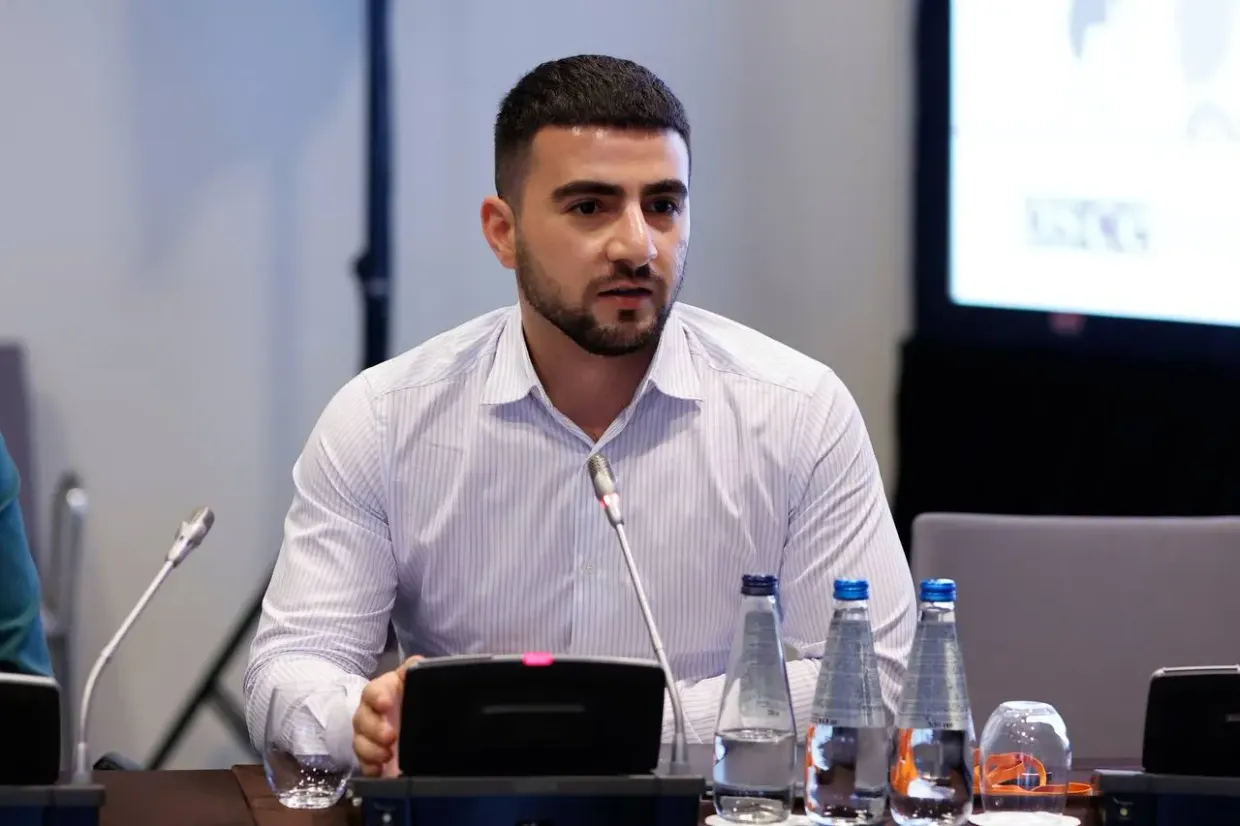
Even if the anti-discrimination law is finally passed, many activists are sceptical that this would be enough to change attitudes in Armenia.
‘Discrimination and attitudes towards specific groups require comprehensive solutions. Simply adopting a law, even if that law is implemented perfectly, will not solve the problem of discrimination in society’, Shirinyan told OC Media in 2025.
OC MediaNina Gogadze
According to him, changing public attitudes requires several institutional tools, one of which is the Human Rights Defender. At the same time, he argued that their public engagement with queer issues remains limited.
Another tool, he said, is the involvement of mainstream civil society organisations on this issue. Shirinyan noted that while many established human rights organisations work on broader rights issues, they rarely participate in public discussions or run campaigns specifically related to queer rights.
‘The fight against discrimination has to involve all layers of society. And perhaps the most important component is education, because many fears among people come from a lack of knowledge and lack of information’, Shirinyan said.
He believed that education should not only mean changes in school curricula, but also training for law enforcement officers, professionals providing psychological and social services, and other groups that interact with people who may face discrimination.
In addition, he believed the state should make combating discrimination and promoting inclusion part of its broader strategy, including through more sensitive language from officials and stronger responses to discriminatory incidents.
While queer Armenians await local change, some have sought a quicker source of justice via the European Court of Human Rights (ECHR).
One of the most prominent recent cases ruled on was Minasyan and Others v Armenia, in which the applicants claimed the Armenian courts ignored allegations of discrimination based on actual or perceived sexual orientation and gender identity. In January 2025, the ECHR ruled that Armenia had violated the applicants’ rights to privacy and their right to be free from discrimination. In the ruling, the ECHR emphasised that the constitutional prohibition of discrimination and the provisions of the Armenian Civil Code prohibiting insults were insufficient to protect individuals from homophobic hate speech.
According to Pink Armenia, two other cases are currently pending before the ECHR: the first concerns the attempted murder of a transgender woman, while the second concerns a government rejection of their own materials aimed at promoting equality and tolerance on the grounds the materials did not address an issue of public importance.
As activists continue to debate the government’s apparent reluctance to introduce comprehensive legal protections for queer Armenians, it remains uncertain whether the updated anti-discrimination bill will actually move forward through parliament and pass into law. It also remains uncertain whether civil society will be able to carry out the level of advocacy required for such a systemic change, or whether meaningful progress will, as often is the case, come only after tragedy strikes.