

Journalist – Aaron is an aviation and travel journalist with 14 years of experience in the travel and tourism industry. His background spans airport operations, aviation infrastructure, and travel consulting, having worked with global organizations across New Zealand, Europe, and North America.
Combining industry expertise with firsthand travel experience across more than 52 countries and five continents, Aaron covers airlines, airports, aviation policy, and the wider travel sector. He is based in Canterbury, New Zealand.
His work has been published in Simple Flying and featured by MSN, SAM CHUI Aviation & Travel, EIN News, Pakistan Defence, and Climate Depot.
Sign in to your Simple Flying account
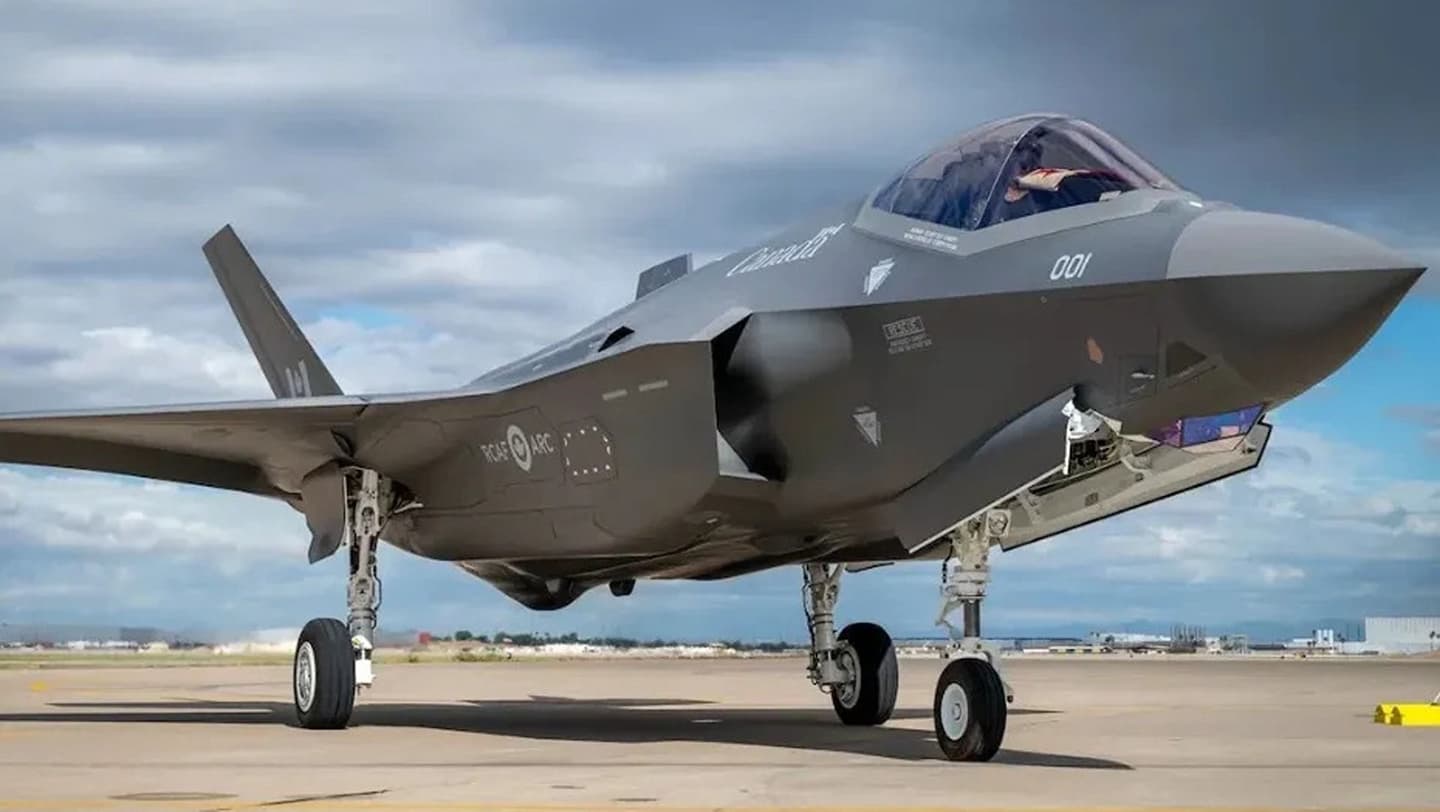
The Royal Canadian Air Force (RCAF) has received the first pair of F-35 jets from the United States. However, its full order of up to 88 of the fifth-generation stealth fighters remains under review by the Canadian government. The first two jets were received at Luke Air Force Base on Thursday, October 22.
Two Lockheed Martin F-35 jets will remain in Arizona while pilots undergo specialist training to operate them. The RCAF has not yet confirmed when it will start this training program. The jets are fifth-generation stealth multirole combat aircraft.
Why A Larger F-35 Order For Canada Remains Uncertain

Canadian Prime Minister Mark Carney earlier paused plans to proceed with the full order of up to 88 of the jets, and is reportedly considering the Gripen jets made by Swedish manufacturer Saab as an alternative. This came amid the ongoing trade spat between Canada and the United States. Carney's review was expected to conclude more than a year ago; however, the debate continues.
As reported by Simple Flying earlier this year, the country has already confirmed payment for an additional 14 of the F-35 jets, bringing its total commitment to 16 aircraft. The remaining 72 hang in the balance, amid the broader trade negotiations between the two North American countries. Carney confirmed that the ongoing payments for the initial 16 jets act as a bargaining chip within these negotiations.
However, alternative aircraft are being considered for the RCAF, including the Saab Gripen, as is the revival of a domestic aerospace and defense industry on Canadian soil
F-35 Budget of Up To $8 Billion
The total cost of the F-35 program for the RCAF has exceeded the initial $8 billion budget. Rising tensions between the two countries have led to consideration of Canada acquiring the Saab JAS 39 Gripen E as an alternative. This aircraft is praised for ease of maintenance and versatility in Arctic temperatures.
However, military leaders have suggested it lacks stealth and sensor fusion that would be required to compete against larger threats such as Russia or China. One factor that Canada has hesitated about proceeding with the full multi-billion-dollar deal is the escalation in initial cost estimates for the full fleet, which is now expected to surpass $27 billion.
Additionally, critics and government officials have raised alarms that reliance on the US defense sector could leave Canada vulnerable to restrictions on software access, maintenance and long-term fleet support. As such, Canada is exploring other options — despite being legally bound to take the first 16 F-35s, the Gripen acts as a suitable alternative.
Future F-35 Fleet Is At Risk

Widening geopolitical tensions between the historically close allies have prompted Canada to consider Saab's Gripen alongside the F-35. This comes even though the F-35 is a world-class stealth fighter and is a weapons technology powerhouse. Amid continued uncertainty under President Trump, the Canadian government has considered how it could reinvest in the domestic aerospace and defense industry and revive it.
This included the Avro Canada CF-105 Arrow, which was initially manufactured in Canada. Reconsidering the development of an aircraft in Canada could be seen through an integration of autonomy, due to the Canadian Production Center being part of a Saab agreement, which would mean that Canada could construct the planes in their own country.
Despite this ongoing tension, the RCAF and other internal briefings from the Canadian Defense Ministry still support the F-35, regardless of the ongoing political tensions. This is due to the program's close ties to the existing Canadian aerospace industry, as well as being the fifth-generation stealth fighter. More than 110 Canadian businesses contribute to the F-35 supply chain, and today around 30 continue to operate, resulting in up to 3,300 indirect domestic jobs.