
With days to go until John Healey delivers a Budget expected to target banks with a cash raid, Samuel Norman looks at the UK bank tax framework and other experiments across Europe.
For years City lobbyists managed to bat away demands for a bank tax hike. As Chancellor, despite delivering two tax-heavy Budgets, Rachel Reeves successfully saw off a clamour from her own backbenches to target the sector.
But under Andy Burnham’s government and John Healey’s Treasury, times have changed. Analysts now expect a raid on the banks to be the base case in Wednesday’s Budget – and the City is bracing for impact.
Thomas Pugh, chief economist at RSM, told City AM an increase to the bank levy was “probably the most likely option”. He added, depending on the remnants of Healey’s fiscal headroom and spending commitments, it may be the only major tax-raising measure introduced in the Budget.
The UK banking sector paid a record £47.8bn into Treasury coffers in the year to April 2026, according to a report from trade body UK Finance. The industry already faces a raft of different levies, from the typical employment tax to sector-specific charges.
These include the UK banking levy, an annual tax on balance sheet liabilities, and a three per cent surcharge on corporation tax.
The two taxes are expected to have generated around £2.6bn for the Treasury purse in the last year, according to PwC analysis. The total bank tax contribution is expected to be around 4.3 per cent of government tax receipts.
How far Healey seeks to push ahead with a tax increase will depend on his political appetite as much as the fiscal crunch he is faces.
Some campaigners have urged the Chancellor to maximise the opportunity and opt for a windfall tax on the booming profits of the largest institutions. But it is a tried and tested experiment across Europe – and in some cases, it may give rise to caution.
Trial and error
Italy attempted an aggressive 40 per cent levy on its banking sector back in 2023 following interest rate hikes from the European central bank.
A coalition government led by Prime Minister Giorgia Meloni said banks would be taxed on net interest income earned in 2022 or 2023 that exceeded the prior years’ baselines by five to 10 per cent. It was expected to raise up to €3bn (£2.5bn) but would go on to raise …almost nothing.
Markets were caught off guard by the initial announcement, sending bank stocks plummeting. Italy’s banking index dropped nearly eight per cent in a single day after news emerged, wiping out billions from valuations and panicking investors.
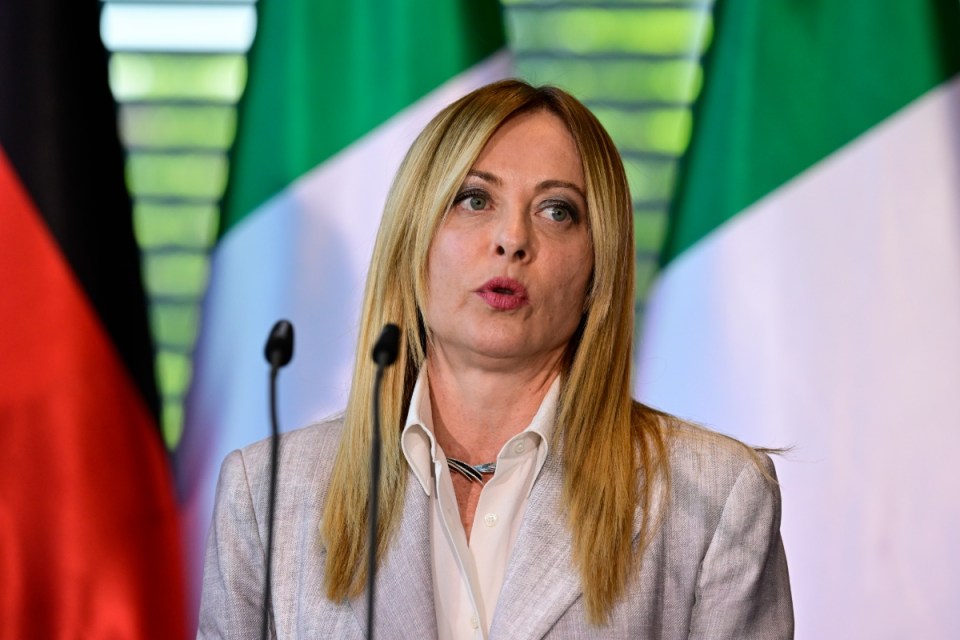
Facing fierce lobbying, the government added an opt-out clause where banks could avoid the tax entirely if they kept 2.5 times their tax bill locked on their balance sheets as capital reserves instead of paying it out to shareholders.
Nearly all major banks – including Unicredit and the country’s biggest by total assets, Intesa Sanpaolo – opted to build up their reserves. It gave the government some political points, allowing it to claim it took on big banks and forced them to strengthen the financial system, but the initial tax plan proved to be a colossal misfire.
In a more moderate instance, Spain introduced a 4.8 per cent levy on banks’ net interest income and fee revenues for 2023 and 2024. Pedro Sánchez’s government left no loopholes and succeeded in raising €1.3bn in 2023 and €1.7bn in 2024. The levy hit banks earning over €800m, which left a majority of smaller lenders and international banks outside the target range.
The levy was originally planned to be a two-year tax but the government would later extend it to 2027 and replaced the flat 4.8 per cent with a sliding scale between one to seven per cent tied to revenue earned.
While more successful than Italy’s bank tax bid, Spain faced harsh consequences. Top banks Santander and BBVA adamantly fought the tax. The initial announcement in mid-2022 wiped some €5bn off the value of Spanish banking stocks and triggered a wave of legal rows. It also tightened lending criteria for risky borrowers and restricted credit growth as lenders adapted to the increased cost.
Tax to spend
Both Italy and Spain framed their taxes under a patriotic mandate, to help cushion households against soaring inflation and rising living costs.
Lithuania introduced a bank tax in 2023 after it faced an eerily similar scenario to John Healey with a significant funding gap for defence. The government launched the ‘Temporary Solidary Contribution’ marking the introduction of one of the most uniquely focused windfall tax models across Europe.
It took the form of a 60 per cent rate applied to net interest income that exceeded a 40 per cent jump over the bank’s average net interest income from the previous four years. It followed rising interest rates, causing half-year profits across commercial banks to grow 150 per cent in the first half of 2023.
The government legally restricted the tax revenue to the state defence fund and military infrastructure. It brought in over €240m in its first full year and €220m the year following, a major sum relative to the size of its economy.
The highly concentrated nature of Lithuania’s banking sector – where three Scandinavian institutions control nearly 90 per cent of the market – made the tax simple to monitor and left incumbent lenders unable to simply pick up and leave without surrendering valuable market share.
Comparatively, in the UK the biggest five players control around 80 per cent of the deposits, but a thriving middle layer exists. Challenger institutions, building societies, and digital-first banks, such as Nationwide, Virgin Money, Monzo, and Starling, offer viable switching alternatives, ramping up competition.
Healey has kept tight-lipped on the scope of a bank tax, telling industry bosses only of the fiscal “challenges” the country faces. But if Europe’s misfires prove anything, it is that squeezing the banks is rarely straightforward. How much he leans on the industry will depend on how deep those fiscal holes run – and how much political heat he can take.