Egypt's pound has hit a record low of 56.2 to the dollar, down 15% in value against the dollar this year, but the fall is manageable, London-based consultancy Capital Economics said in a note on October 26.
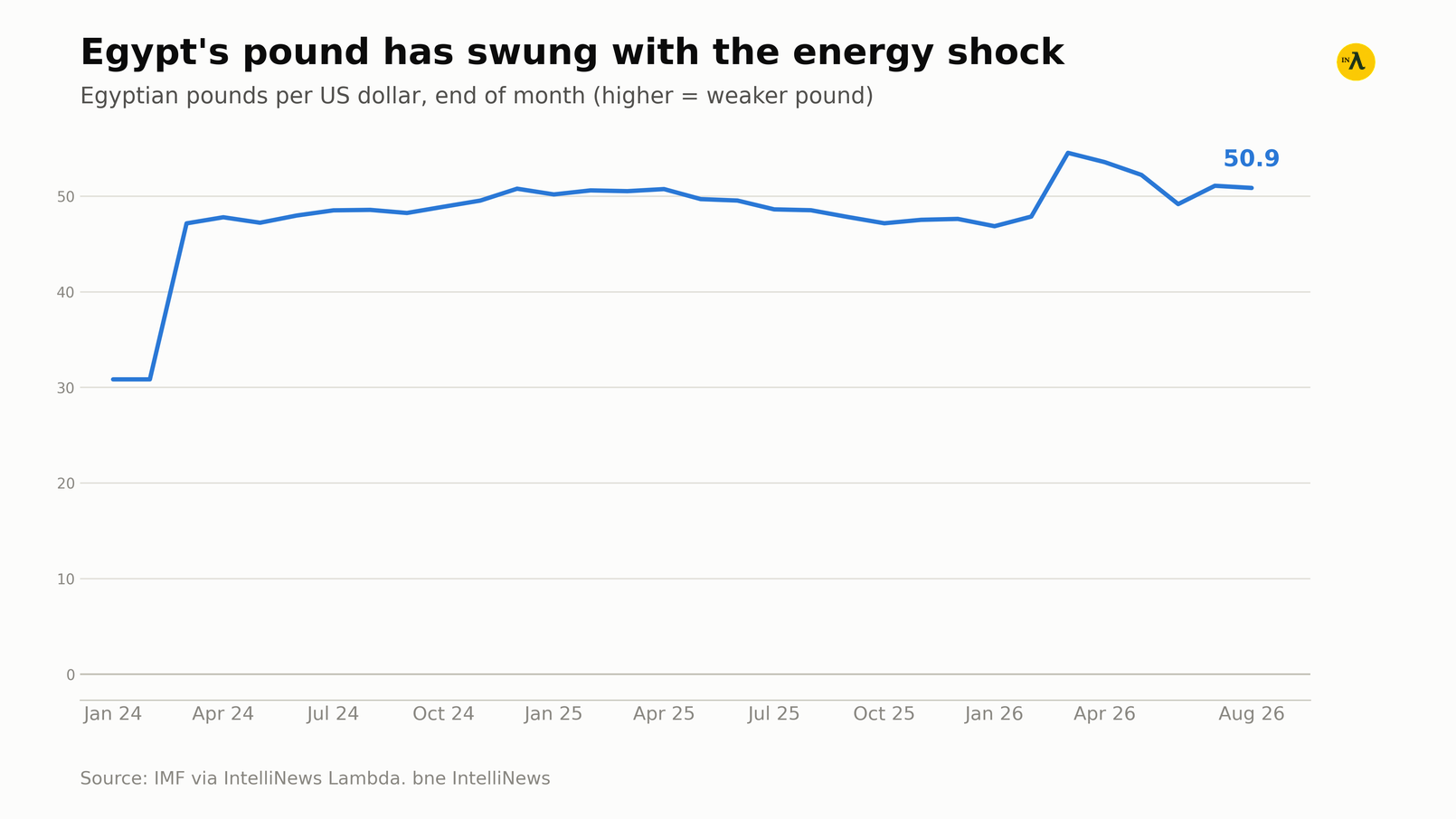
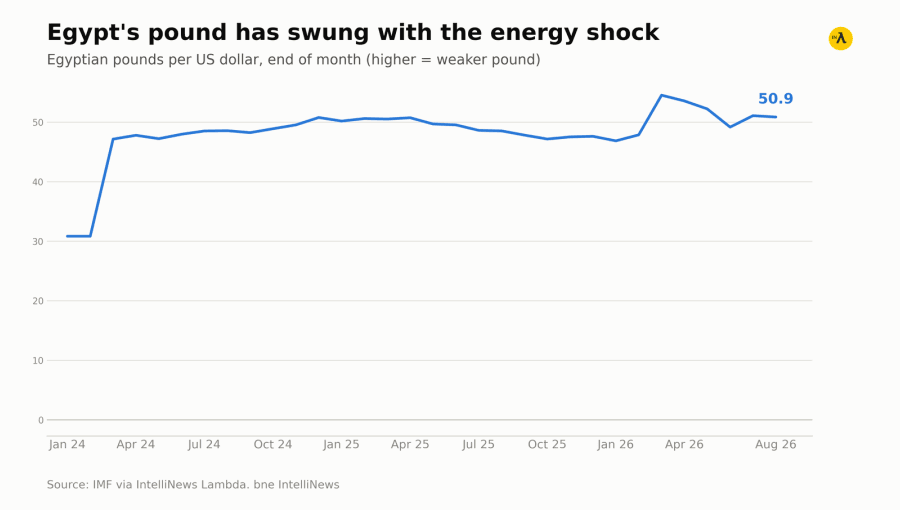
Egyptian pounds per US dollar, end of month, January 2024 to August 2026. The pound was at 56.2/$ on October 26, according to Capital Economics. Source: IMF via IntelliNews Lambda.
The pound is one of the worst-performing emerging market currencies this year and has already broken through the consultancy's year-end forecast of 55/$. As a large net energy importer, Egypt has been hit by the renewed rise in global energy prices: net energy imports are equal to about 4% of GDP, and the current account deficit widened to 5.1% of GDP on a four-quarter basis in 2Q26.
This is the second bout of pressure on the currency since the Iran war broke out. The pound weakened to 54.5/$ at the end of March, according to IMF data held in IntelliNews Lambda, then recovered to 49.2/$ by the end of June as hot money returned, before slipping past 50/$ again in July. It was at 47.6/$ at the end of 2025.
Investors may also be worried that Egypt's parliament's decision to authorise military support for Saudi Arabia against Houthi attacks could draw it into the conflict, wrote Jason Tuvey, Capital Economics' deputy chief emerging markets economist. That would threaten tourism: travel receipts are worth about 4% of GDP, and past security incidents have cut tourist arrivals by up to almost half.
A weaker pound brings two risks. It adds to upward pressure on inflation, which fell to 13.9% y/y in September from 14.5% in August, according to Central Bank of Egypt (CBE) data held in IntelliNews Lambda, but is still well above the CBE's 7% plus or minus two percentage points target range. It also raises the cost of servicing foreign currency debt: more than 40% of government debt, equal to 37% of GDP, is in foreign currency, and every 10% fall in the pound against the dollar adds 3.5-4.0 percentage points to the debt-to-GDP ratio, Tuvey estimated.
Tuvey argued that tight policy leaves room to absorb the shock. With the CBE's overnight deposit rate at 19%, real rates are high, and the consultancy expects the central bank to hold rather than hike when it meets on October 29. The government runs a primary budget surplus of about 5% of GDP, and the CBE has rebuilt its reserves, which rose to $57.35bn in September.
"Allowing the pound to fall is exactly what Egypt needs when faced with a terms of trade shock," Tuvey wrote, adding that a flexible exchange rate would bolster policymakers' credibility with investors. In the past, he said, officials held on to the pound for too long, which led to larger and more disorderly falls later. Capital Economics expects the pound to end 2027 at 60/$, a further 6% fall, if energy prices ease next year as it forecasts.