
A new website connecting bakeries, restaurants and grocers to non-profits is the latest way food insecurity is being addressed in the city

Rather than thousands of kilos of food getting dumped, two Calgarians are ensuring food is making it’s way to people who not only can use it, but need it.

Subscribe now to read the latest news in your city and across Canada.
- Unlimited online access to articles from across Canada with one account.
- Get exclusive access to the Calgary Herald ePaper, an electronic replica of the print edition that you can share, download and comment on.
- Enjoy insights and behind-the-scenes analysis from our award-winning journalists.
- Support local journalists and the next generation of journalists.
- Daily puzzles including the New York Times Crossword.
Create an account or sign in to continue with your reading experience.
- Access articles from across Canada with one account.
- Share your thoughts and join the conversation in the comments.
- Enjoy additional articles per month.
- Get email updates from your favourite authors.
Create an account or sign in to continue with your reading experience.
- Access articles from across Canada with one account
- Share your thoughts and join the conversation in the comments
- Enjoy additional articles per month
- Get email updates from your favourite authors
Sign In or Create an Account
Two local entrepreneurs have created programs aimed to support food security and reduce food waste in Calgary, and across Canada.
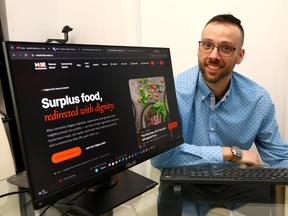
Local chef-turned-tech CEO Sean Burton recently launched Mise: Family Meals, a platform that connects Calgary bakeries, restaurants and grocers with neighbourhood non-profits.
Lourdes Juan founded a similar program called The Leftovers Foundation in 2012, and while no longer working with that organization, Juan continues her work to end food insecurity with Knead Technology.

Your weekday lunchtime roundup of curated links, news highlights, analysis and features.
By signing up you consent to receive the above newsletter from Postmedia Network Inc.
A welcome email is on its way. If you don't see it, please check your junk folder.
The next issue of Noon News Roundup will soon be in your inbox.
We encountered an issue signing you up. Please try again
Juan also founded Fresh Routes, a mobile grocery store offering fresh, healthy and affordable fruits and vegetables and other grocery items.
The issue of food waste is prevalent in both restaurants and at home, said Burton. To reduce food waste at home, some grocery stores and other food service businesses have partnered with apps like Too Good To Go, Flash Food and Food Hero to help grocery shoppers make more conscious decisions and utilize food on the verge of it’s best before date.
Burton and Juan’s efforts work to reduce food waste on a larger scale, while also supporting people experiencing food insecurity.
Mise works as a communication platform — when a kitchen has surplus it can’t use, it lists what’s available and how it’s been stored, and a nearby food bank, shelter or meal program claims what it can use. The two then coordinate the pickup directly with each other.
Additionally, organizations can post what they need so kitchens can see where their surplus will help most.
Burton took inspiration from what is colloquially known as family meals in many restaurants — staff take turns preparing meals for the entire crew before service using food not quality enough to make it to guests, but not quite bad yet, he said.
Burton hopes that in time kitchens will begin to add themselves to the list and get food to those who need it most.
While the platform plans to track the food saved, it is not to measure success. Burton said the real measure of success will just be that it is being used and facilitated.
“The more the better,” he said. “There’s no end to what it could turn into.”
Mise is a free service for both sides.
“This is something we wanted to do for the community,” said Burton.
The Leftovers Foundation started after Juan helped a cousin pick up bread from a local bakery and deliver it to a nonprofit. She said she expected to be delivering a couple bags of bread, but was surprised to see almost 200 pounds, and it put into perspective the scale of food that would have otherwise gone to waste if they hadn’t picked it up.
She saw a food waste problem, thought of all the locals that go hungry, and began researching. Food waste adds up to over $900 billion yearly, she said, and over 25 per cent of people in Canada are food insecure.
She discovered there was no organized food rescue at the time, and began organizing volunteers in Calgary, and soon that grew to include Edmonton and other satellite communities in Alberta. Leftovers is now the largest food rescue organization in western Canada, serving Alberta and Manitoba.
Leftovers, a registered charity, coordinates communication between those dropping off food and those picking up, as well as organizing the drop offs directly.
The nonprofit’s goal is allowing food to reach its full potential while serving communities most in need. Leftovers aims to provide people in need with accessible food, barrier-free and with dignity.
Through the website, donors and recipients can make themselves known and coordinate needs, offers and dropoffs. Volunteers support the redirected food deliveries.
The organization redirected over 1.1 million pounds of food in 2025.
Fresh Routes came after Leftovers for Juan, as a way to be innovative in addressing the root causes of hunger in Calgary. Juan spoke with social workers about how to support people living in affordable housing complexes who may not qualify for the food bank, have mobility issues and want healthier options.
Juan, with others, piloted a community mobile market that eventually became FreshRoutes. The program began with using food rescue that was being donated or sold to these communties at a “very marginal rate,” said Juan.
There were four communities that Fresh Routes first focused on: affordable housing complexes, Indigenous communities, other nonprofits and post-secondary institutions, “where food security is really invisible,” said Juan.
Once registered as a nonprofit, Fresh Routes began buying food from local farmers and getting that food into the community at about a 30 per cent discount, showing up right at the doorsteps of people who need it. The four pillars of Fresh Routes are: convenience, affordability, culturally appropriate and no proof of income.
“It makes it very equitable,” said Juan.
To visit a Fresh Routes market, check the schedule and locations online here.
Juan’s current role is within the tech company she started with a co-founder, Knead Technology. This started as a way to be more efficient in the food rescue space.
Knead is a food rescue platform that works with organizations across Canada and the U.S. that is “customized logistical software for their food recovery,” said Juan.
The software is modular, she said, describing it as a “choose their own food rescue adventure,” and make sure they have the logistic and software support to back it up.

These platforms are being used at a time of increased food insecurity in Calgary, and across Canada, as food banks are seeing record demand.
In the Hunger Count 2026 report, Food Banks Canada reported March 2026 had 2,355,075 visits — the highest number ever recorded. That is an increase of 8.7 per cent from the year prior, and 117 per cent higher than before the Covid-19 pandemic. The report says about 776,000 of those visits were children.
In Alberta, nearly 10 per cent more people accessed food banks in March 2026 than a year earlier. This is not just a food cost issue — it is an income issue, and an affordability issue.
Since 2021, food prices have increased by approximately 30 per cent, housing costs by 28 per cent and transportation costs by nearly 24 percent, according to the report. This increases financial strain on people, employed or not, with the report stating that by the end of 2025, households in the lowest income group were spending the equivalent of 112 per cent of their disposable income on food, housing and transportation. People are pulling from savings, borrowing money, delaying payments and carrying debt just to meet essential needs.
Food insecurity reaches beyond those “traditionally understood to be living in poverty,” says the report, with nearly 10 million people across Canada experiencing food insecurity, and about 18 per cent of food bank users reporting employment earnings as their primary source of income.
The increased demand is putting pressure on food banks as operating costs rise, making it more challenging to secure food for donation.
Organizations like Mise, Leftovers Foundation and Knead Technology are working to support food banks and other nonprofits through these challenges, and feed the food insecure in Calgary, and elsewhere.
“We’re just looking for people to not be hungry,” said Burton.
When describing how to solve the food security problem and solve some of these issues, Juan said “it’s not one magical solution.”
Food banks, food rescue organizations and others need to be working together, she said.
While Juan and Burton don’t work together directly, they share space in the food rescue area and are both supportive of each other’s endeavours. Juan noted Burton’s lived experience in the food industry: “There’s no one better to work in this space than someone who has seen it and wants to do something about it,” she said.
Another organization Juan supports is I Can For Kids — a nonprofit delivering grocery gift cards to Alberta families in need.
“It’s not an easy time out there for anybody right now,” said Burton, “whether you’re at home trying to stock the fridge, . . . if you’re on the street trying to feed yourself, or you’re a restaurant right now feeling the squeeze.”
Catch up with the day’s headlines, curated by our editors and delivered to your email inbox at lunchtime on every business day. Sign up now for the Calgary Herald Noon News Roundup.
Join the Conversation
This website uses cookies to personalize your content (including ads), and allows us to analyze our traffic. Read more about cookies here. By continuing to use our site, you agree to our Terms of Use and Privacy Policy.