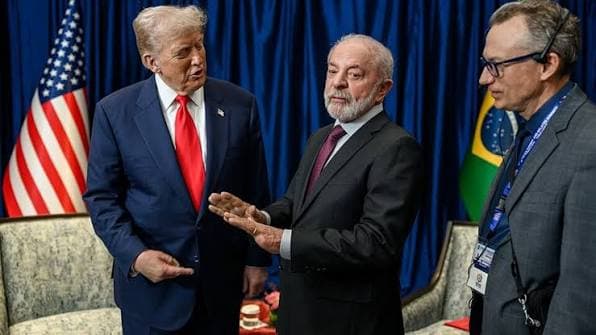
United States President Donald Trump publicly questioned the validity of Brazil’s presidential runoff election, claiming the process “looked like another rigged election.” Speaking to reporters on Monday, Trump offered comments supporting defeated right-wing candidate Flavio Bolsonaro, the son of former president Jair Bolsonaro. The US president criticized the two-hour voting extension authorized by Brazil’s Supreme Court, calling the tabulation process suspicious despite providing no evidence. However, Brazilian Vice President Geraldo Alckmin quickly rejected Trump’s allegations, calling his statements completely unfounded and defending the reliability of the national electoral system.
Read More: Trump backs Netanyahu, urges Israelis to re-elect him
Leftist incumbent Luiz Inacio Lula da Silva secured an unprecedented fourth non-consecutive presidential term after overcoming a first-round deficit. Official election records confirm that Lula defeated Flavio Bolsonaro by over four million votes, securing roughly fifty-one percent of total ballots cast. Furthermore, statistical analyses revealed that fewer than 35,000 extra votes were cast during the court-ordered voting extension. Despite the clear numerical margin, Flavio Bolsonaro refused to formally concede defeat and pledged to seek an official annulment of the results. Consequently, political analysts anticipate persistent legal challenges from right-wing coalitions attempting to contest the outcome.
Lula’s victory triggered immediate economic volatility across domestic financial markets as investors reacted to the unexpected election outcome. Brazil’s national currency, the real, dropped over eight percent against the US dollar, marking its sharpest single-day decline in decades. Similarly, the main Brazilian stock exchange experienced significant selling pressure following confirmation of the election results. Financial economists noted that markets reacted sharply because many trading desks had positioned portfolios anticipating a conservative electoral victory. Therefore, financial institutions expect market volatility to persist until the incoming administration clarifies its long-term fiscal policies.
Despite domestic political pushback, democratic leaders across the globe quickly congratulated President Lula on his historic reelection victory. International observers praised the high voter turnout and commended election authorities for maintaining transparent voting procedures nationwide. However, political analysts note that Lula faces a challenging governance environment due to a heavily conservative Congress. Conservative parties made substantial gains during earlier legislative elections, giving opposition coalitions significant influence over future policy approvals. Consequently, the incoming presidential administration must negotiate extensively with opposing legislative factions to pass key economic reforms.
Read More: Trump votes early in Florida ahead of US midterm elections
The political standoff highlights ongoing global polarization surrounding democratic electoral processes and public trust in institutions. Legal experts note that Flavio Bolsonaro faces federal police orders requiring the surrender of his travel documents. Meanwhile, grassroots organizations supporting President Lula continue celebrating across major urban centers, emphasizing community resilience and social progress. Furthermore, international diplomatic missions affirmed their readiness to work collaboratively with Brazil’s newly elected leadership. Election outcome marks a pivotal moment for Latin America’s largest democracy as it navigates complex economic and political challenges.