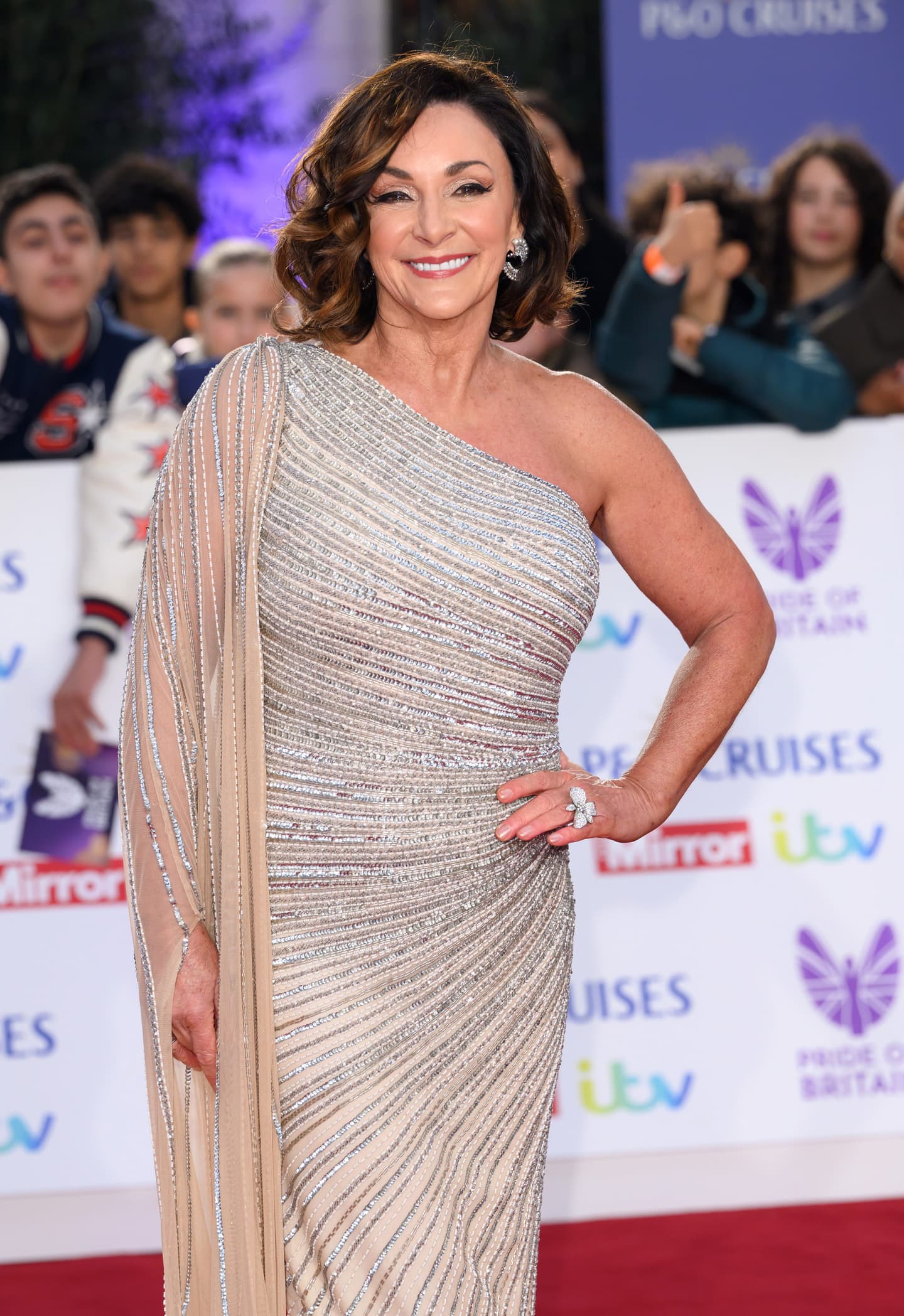
As Shirley Ballas famously said: ‘If you use your time well and you have your health, you are already a millionaire and everything else is secondary.’ The question, though, is this: what does using your time well actually look like? Well, for the Strictly judge, it means an early rise and a tough but seemingly transformational exercise routine.
The leg exercise she relies on
‘I get my 10,000 steps in before seven o’clock in the morning every day,’ she said last year. Gulp. Is that really… necessary? Well, first – the good news.
You don’t need to hit 10,000 steps in order to reap the rewards of walking. In fact, the target wasn’t even set by medical experts, but by a Japanese pedometer company in the run-up to the 1964 Olympics, to encourage people to get fitter.
Recent science suggests less daunting figures.
A Harvard study of more than 13,000 women aged over 62 found that reaching 4,000 steps on just one or two days a week was linked with a 26% lower risk of death and a 27% lower risk of dying from a heart attack or stroke compared with those who never reached that level. Hitting 4,000 steps on three or more days cuts the risk of early death by 40%.
The University of Alabama reported similar findings in older adults with an average age of 78. Heart benefits began at just 3,000 steps, and each additional 500 steps lowered cardiovascular risk by 14%. Walking 4,500 steps reduced the risk of heart attack or stroke by 77% compared with 2,000 steps.
So while you don’t have to match Shirley step for step, making walking a daily practice IS a good idea. And not only for your heart – your legs will thank you, too. With every step you take, you’re exercising your:
- Quadriceps (that’s the front of your thighs)
- Hamstrings (the back of your thighs)
- Glutes (your buttocks)
- Calves (lower legs)
How to supercharge your walk
Shirley gets her steps in first thing, not only because her diary is busier than a shopping mall on the first day of the January sales, but also because, in her words, walking early in the morning gives you ‘a natural stimulation’. She’s right. As Russell Foster, specialist in circadian neuroscience and sleep, and author of Life Time: The New Science Of The Body Clock, And How It Can Revolutionise Your Sleep And Health, explained to Good Housekeeping: ‘Morning light advances your internal clock and helps wake you up.’
How and where you walk matters, too. A faster pace builds more muscle and improves cardiovascular fitness, while a route that takes in hills will boost your leg strength, too. Climbing uphill works the muscles in your hips and buttocks harder, while coming down the other side makes your quadriceps put extra effort in.
Shirley’s other non-negotiables
How would you use your time wisely on your birthday? A long lunch or a lounge in a spa? Not for Shirley. ‘What a way to start my birthday. I’ve done my hour and a half exercises and weights,’ she said in an Instagram post marking her most recent big day.
Next, she’s ‘in the sauna, fantastic 20 minutes,’ she continued. ‘Now I’m going in the ice bath, and that just rejuvenates my muscles at this busiest time of the year.’
Weighted workouts
Weight training helps build and maintain strength and muscle, supporting everyday function as well as fitness. GH’s fitness expert Kim Hawley says: ‘You can train daily by splitting sessions across muscle groups – for example, chest, triceps and shoulders one day; legs the next; then back and biceps – before repeating the cycle and taking an all-important rest day.’
UK adult guidelines recommend working all major muscle groups at least twice a week, with progressive training (gradually increasing the challenge, in other words).
Saunas
Heat raises your heart rate and increases blood flow, explains Kim, which is why regular sauna sessions have been linked with lower rates of heart disease and high blood pressure (although, she points out, these findings don’t prove that sauna use is the cause).
Ice baths
‘Deliberate cold exposure is very popular at the moment, and if you enjoy it, that may be reason enough,’ says Kim. ‘The evidence for wider health benefits, though, is limited.’
For athletes, she explains, ice baths may reduce the feeling of soreness after strenuous exercise and proponents do report feeling more alert and invigorated.
‘Ultimately, weight training should absolutely be a part of your routine and with some cardiovascular sessions thrown in, you will have all the bases covered.’ Sauna and ice baths are wonderful add-ons, Kim says, but walking really is a non-negotiable wonder.