From stone breakers and water vendors to farmhands and domestic workers, thousands of people in Ntungamo depend on poorly paid, uncertain jobs, raising questions about whether hard work alone can secure a decent living.
Before sunrise in Ntungamo, some residents are already at work. In the surrounding hills, men prepare to break rocks. In villages, women leave home to work in other people’s gardens. Water vendors load jerrycans onto bicycles, while restaurant attendants and domestic workers begin cooking and cleaning.
For these workers, the day begins with a search for someone willing to pay for their labour.
They work through the heat, endure aching bodies and sometimes return home after sunset with only a few thousand shillings. The following morning, they must start again.
For many, this is more than a means of earning a living. It is a lifelong routine marked by uncertain employment, limited savings and few opportunities to escape poverty.
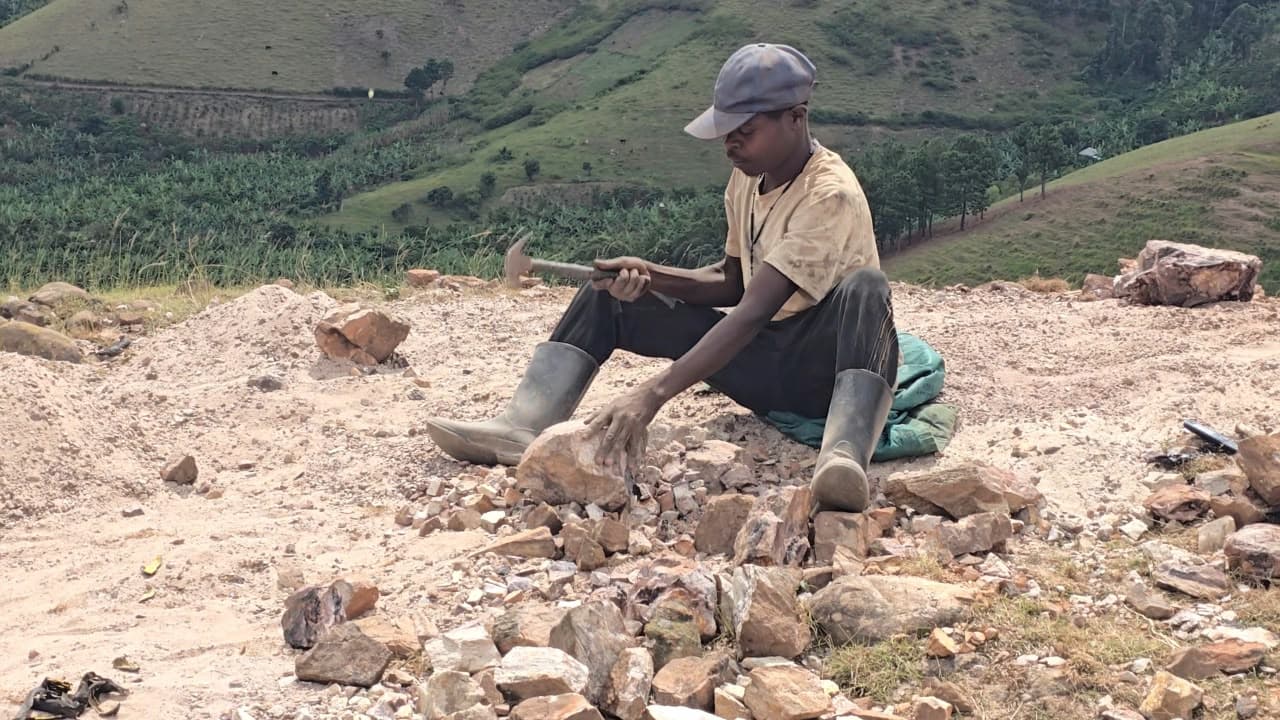
In the hills of Kyebisinde, Nyakyera, Ruhaama East, John Muhirwe spends his days breaking rocks and extracting hardcore stones used in construction. His earnings depend on the quantity and type of stones he produces and whether he finds a buyer.
“This is what we do. We also dig out hard-core stones and sell them. A big truckload goes for Shs90,000, Shs80,000 or Shs70,000, depending on the type of stones,” he says.
The price of a truckload, however, is not the amount an individual worker takes home. The work requires considerable time and physical effort, while workers also face safety risks.
Muhirwe says they lack adequate equipment and are exposed to accidents, highlighting the dangers of an occupation that requires protective gear and safer working conditions.
His colleague, Apollo Turyahebwa, says producing one elefu of stones can take two days. He sells it for Shs80,000 but must also pay a fee to the manager for every truck. The amount he retains after these deductions and any other expenses is therefore a more meaningful measure of his earnings than the sale price alone.
Their work supplies materials for construction, yet those extracting the stones remain exposed to physical danger and unpredictable returns.
A few kilometres away, water vendors navigate Ntungamo’s roads in search of customers. Amson Amutuhaire pushes a bicycle loaded with jerrycans, travelling nearly five miles to make deliveries.
“I sell water to many people in Ntungamo town, selling about several jerrycans in the dry season, each at Shs500,” he says.
John Ruteraho says the business helps him educate his children.
“This business of selling water helps me pay school fees for my children,” he says.
He charges from Shs500 per jerrycan, with the price negotiable depending on the quantity a customer needs.
Every trip offers an opportunity to earn money, but the work demands physical strength, time and access to customers. When demand falls, income can become less predictable.

In rural communities, women face similar uncertainty. Some leave home early to weed, dig and prepare gardens for landowners, earning between Shs3,000 and Shs7,000 for a day’s work. Payment is not always guaranteed.
After spending hours working under the sun, they return home to prepare meals, care for children and perform other unpaid household duties.
Others work as housemaids, cleaners, cooks, salon attendants and restaurant assistants, earning as little as Shs3,000 a day. Although their labour keeps households and small businesses running, such earnings can leave little room for savings or emergencies.
For older workers, the struggle becomes even more difficult. After decades of working, some must continue seeking casual jobs simply to afford food. Without reliable savings, pensions or other support, old age may bring neither rest nor security, but continued competition for poorly paid work as physical strength declines.
The problem is not that these people are unwilling to work. It is that hard work alone does not guarantee economic security.
Uganda Bureau of Statistics’ 2025 Labour Market Survey reports that 89.2 per cent of employment in Uganda is informal. Informal work covers diverse activities, including self-employment and casual labour, and does not automatically mean every worker lacks protection.
However, many people in such jobs face uncertain earnings and limited access to employment benefits.
Agriculture adds another layer of uncertainty. In Ntungamo, some farmers say crop theft further undermines household incomes, leaving families struggling to benefit from the little they produce.
Scholar Kyomuhangi, from the Eastern Division of Ntungamo Municipality, says theft has affected even small gardens and coffee harvests.
“When you get a small banana in our small gardens, thieves steal it. In the harvesting season for coffee, we harvest nothing because thieves steal raw berries,” she says.

Whether economic hardship is contributing to the theft of crops requires further investigation. What is clear from the farmers’ accounts is that theft can compound the difficulties faced by households already struggling to make ends meet.
The experiences of stone breakers, water vendors, farmhands and domestic workers raise a broader question about the value society attaches to essential but often overlooked labour.
For these workers, employment is not necessarily a route out of poverty. It can be a daily struggle to survive, with tomorrow bringing the same search for work and the same uncertainty over whether their efforts will be enough.