
South Korea is moving to sell a sprawling state-owned farm in Argentina, after almost five decades of failed development efforts, according to parliamentary documents released Monday.
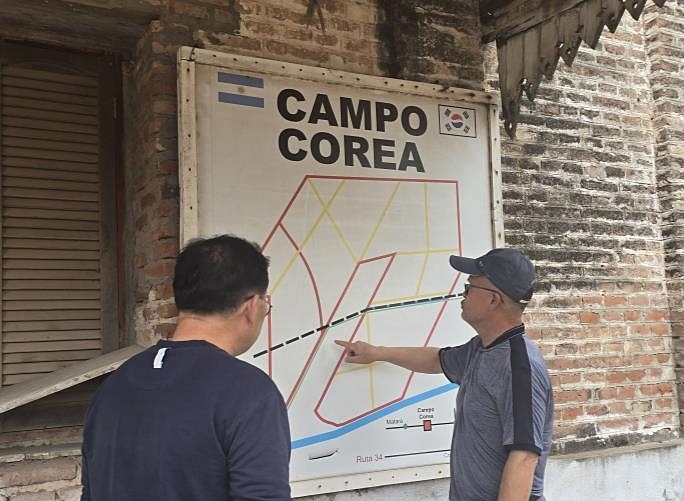
The Llajta Mauca Farm, purchased in 1978 under the Park Chung-hee administration to support Korean agricultural emigrants, covers 20,882 hectares, over one-thrid of the area of Seoul. But it has remained largely unused for nearly half a century despite costing taxpayers approximately 4.95 billion won ($3.74 million) in taxes and management expenses since 2001 alone.
According to documents submitted to Rep. Han Jeoung-ae of the ruling Democratic Party, the state-run Korea International Cooperation Agency has begun taking steps to sell the Argentina property and restructure leasing arrangements for another government-owned farm in Chile.
The Foreign Ministry, which oversees KOICA, has approved the plans, with the agency seeking to recover public funds and generate revenue from overseas properties acquired decades ago.
Located 1,050 kilometers northwest of Buenos Aires, the Llajta Mauca Farm was purchased in August 1978 for about $2.12 million by the Korea Overseas Development Corporation. The corporation was dissolved in 1991, when KOICA was established and inherited its assets and liabilities.
But four government inspections conducted after its purchase concluded that the land was unsuitable for development.
The financial burden continued to mount. Between 2001 and 2026, the agency spent approximately 1.07 billion won on land taxes and 3.88 billion won on local management and operating expenses, according to its available financial records.
Development prospects deteriorated further in 2015, when provincial authorities designated substantial portions of the property as a forest conservation area under tightened environmental regulations.
A development proposal submitted by KOICA in 2024 was subsequently rejected, effectively closing off the agency's existing development plans.
An alternative project combining sustainable forestry and cattle ranching was also deemed economically unattractive, requiring at least $2.94 million in additional infrastructure investment with an estimated payback period exceeding 18 years.
Faced with continuing expenses and regulatory uncertainties, KOICA ultimately decided that selling the property would be more financially advantageous than retaining it.
The agency, however, is seeking to avoid a fire sale by securing development rights before putting the property on the market.
It plans to submit a forestry and livestock development proposal to provincial authorities to obtain formal development approval for approximately 73 percent of the land.
Such approval could substantially increase the property's market value. Local real estate assessments indicate that undeveloped land is worth approximately $300 to $400 per hectare, compared with $500 to $600 or more for land with development rights.
KOICA currently estimates the property's value at approximately $10.44 million,and is preparing to commission a formal appraisal.
After taxes and transaction costs, the agency expects to receive approximately $7.89 million in net proceeds, potentially rising to $9.07 million, or 12.1 billion won, if the buyer assumes responsibility for capital gains taxes.
KOICA aims to launch a public bidding process in the second half of this year, finalize the sale in the first half of 2027 and transfer the proceeds to South Korea by the end of next year.
Meanwhile, KOICA plans to repurpose its Teno Farm in Chile as a solar power site to boost returns from the underperforming property. Purchased in 1980 for about $530,000, the 185-hectare farm, located 173 kilometers south of Santiago, has generated below-market rental income under temporary short-term leases since 2017.
A recent appraisal identified approximately 145 hectares of the site as suitable for solar development, citing its proximity to power infrastructure and major roads. KOICA estimates that leasing the land for solar power generation over 25 to 35 years could increase its assessed asset value by as much as 1,480 times compared with conventional agricultural use. The agency plans to select a private operator through competitive bidding.
Several legal and administrative hurdles remain before the plans can be completed.
In Argentina, KOICA must change the legal status of its local branch from a nonprofit entity to a for-profit corporation to facilitate the transfer of sale proceeds to South Korea, while navigating potential foreign exchange restrictions.
In Chile, the agency must resolve registration issues involving nine water-use rights, complete land surveys and update local tax registration documents by April 2027. It is also seeking the removal of a decades-old mortgage registered against the property before its acquisition.
Han criticized the longstanding management failures and urged KOICA to ensure the remaining procedures proceed without delays.
"Overseas farmland purchased in the past to support emigration has been left neglected or undervalued through temporary short-term leases," Han said.
She called for the successful repatriation of proceeds from the Argentina sale and the resolution of water rights issues in Chile, stressing that the government must prevent further setbacks in managing the overseas assets.
mkjung@heraldcorp.com