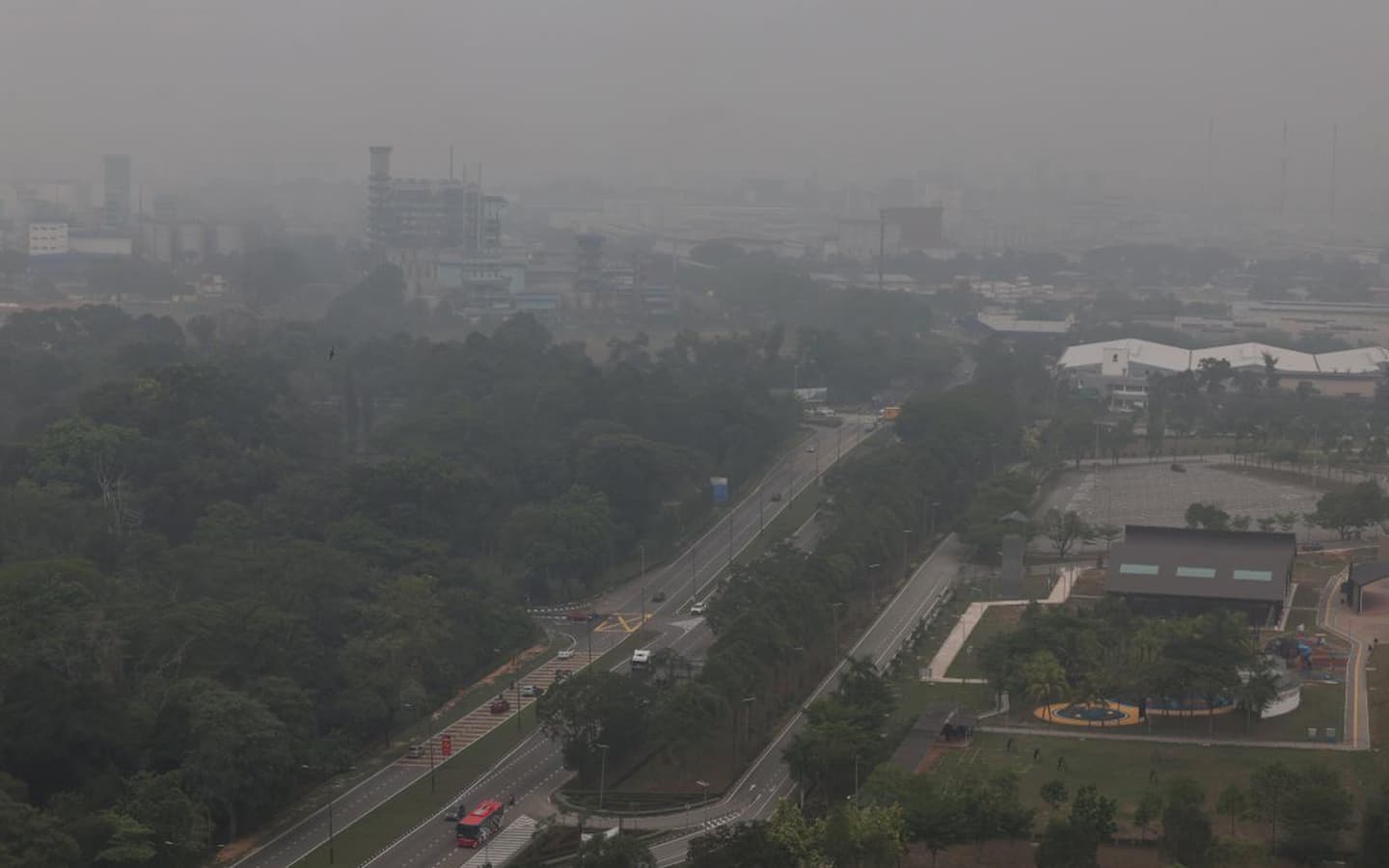
PETALING JAYA: An Indonesian environmental NGO plans to take legal action against Malaysian and Singaporean plantation companies allegedly involved in the recent transboundary haze.
The Indonesian Forum for the Environment (Walhi) today outlined its plans to sue Singaporean companies in a Jakarta district court, saying it is also considering filing lawsuits directly in Singapore, targeting holding companies rather than just their Indonesian subsidiaries.
"We are still discussing this with consultants, and we will hire an international lawyer to help build our case against holding companies in Singapore," Walhi campaign coordinator Uli Arta Siagian said at a roundtable hosted by Malaysian advocacy group Monitoring Sustainability of Globalisation (MSN).
Uli said the NGO was still developing its legal arguments and gathering data on the extent of Malaysian companies’ alleged involvement in the forest fires that have contributed to the haze.
She said one obstacle to holding companies accountable was the lack of a strong Asean legal framework to address transboundary haze pollution.
A 2022 Walhi report found that the 2002 Asean Agreement on Transboundary Haze Pollution lacked an enforcement mechanism, relying instead on member states to consult and negotiate when haze affects other countries.
MSN director Charles Santiago said Singapore faced similar challenges in 2015 when it sought information from Indonesian local authorities about forest fires under its Transboundary Haze Pollution Act.
"Given that there was no response, there was no basis to file a charge even against companies from their own country, so it just collapsed," he said.
When asked about media reports that Malaysian companies were not included on a list of firms identified by the Indonesian government as responsible for the haze, Walhi urged Putrajaya to conduct a proper investigation rather than assume that no Malaysian companies were involved.
Fires in Indonesia have blanketed parts of Southeast Asia in toxic smoke, forcing school closures, driving up respiratory illnesses and curtailing outdoor activities in Indonesia, Malaysia, Singapore, Brunei and Timor-Leste.
Earlier this month, government spokesman Fahmi Fadzil said most of the fires observed in Indonesia occurred outside oil palm concessions owned by Malaysian companies, according to checks with the firms.