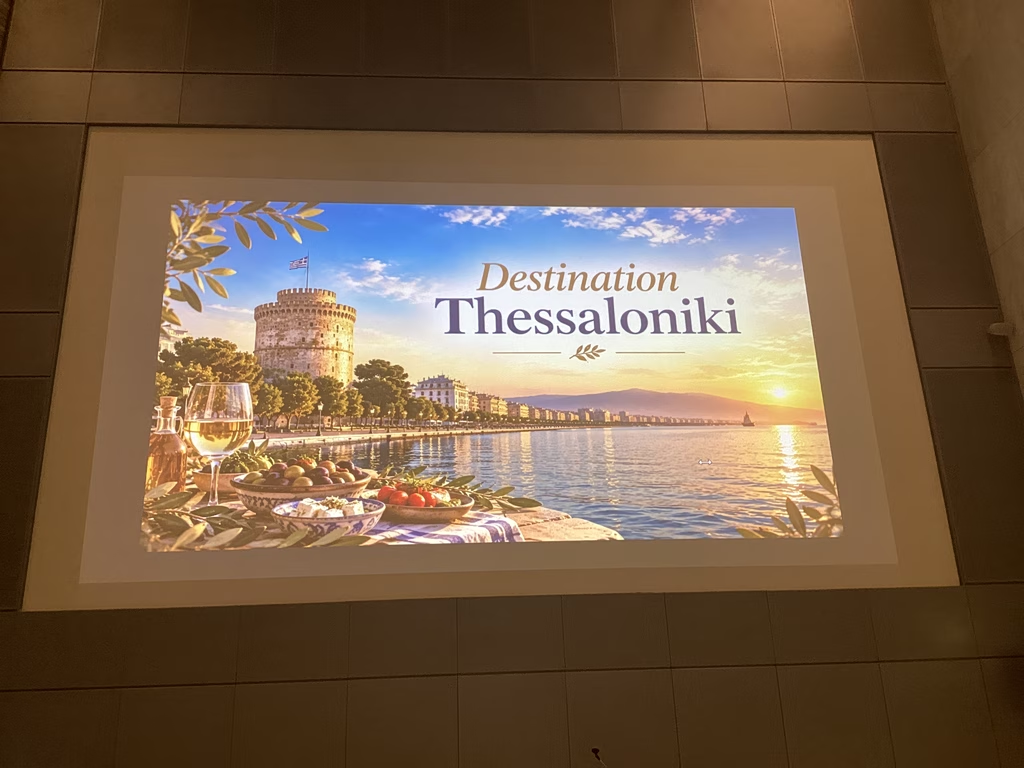

How can the “Bride of the Thermaic Gulf” appeal to the German soul? How can the city celebrated in Greek folk songs as the “great poor mother” introduce itself to a new audience?
Thessaloniki is seeking to strengthen its position on Europe’s tourism map by highlighting its centuries-old history and multicultural identity. Mayor Stelios Angeloudis and his team have launched an international promotional campaign under the slogan “Destination Thessaloniki,” aiming to show why Greece’s second-largest city deserves to be a destination in its own right.
The campaign began with visits to Istanbul, Izmir and Balkan capitals before turning to Germany, with Berlin as its first stop.
“The German market is a key stop in this effort,” Angeloudis told To BHMA and Greek correspondents in the German capital shortly before presenting the city’s tourism offering to a German audience at the Greek Embassy.
NEWSLETTER TABLE TALK
Never miss a story.
Subscribe now.
The most important news & topics every week in your inbox.
Figures from 2025 illustrate the challenge. Although approximately 1.7 million German arrivals were recorded at Thessaloniki’s Macedonia Airport, only around 130,000 to 140,000 German visitors stayed overnight in the city, according to the mayor.
Many instead continue to Halkidiki, Kavala, Thassos or other destinations, returning to Thessaloniki only to catch their departure flights.
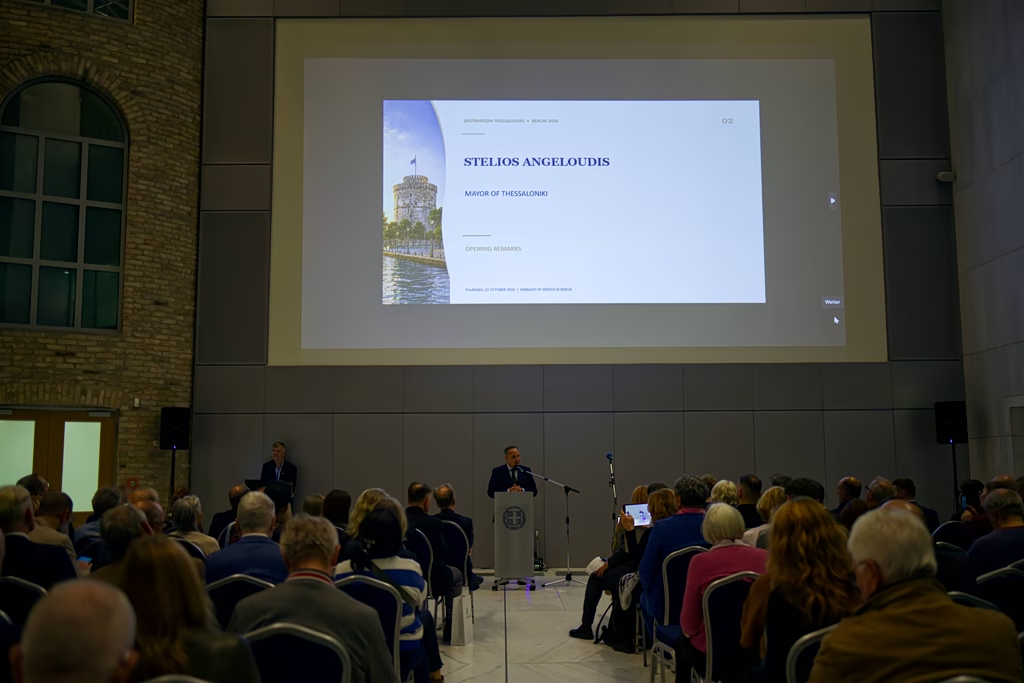
Thessaloniki Mayor Stelios Angeloudis
Building stronger ties with key markets
During the presentation in Berlin, Angeloudis outlined Thessaloniki’s historical wealth, reflected in its museums and monuments. The city has 13 early Christian and Byzantine monuments included on UNESCO’s World Heritage List, as well as modern landmarks such as George Zongolopoulos’ Umbrellas sculpture and the redeveloped New Waterfront, which has received international awards.
Together with its 15 major museums, these attractions give Thessaloniki a compelling story to tell international visitors, the mayor said.
He argued that the city was doing itself a disservice by failing to establish stronger connections with markets that already send it large numbers of tourists. The German campaign began in Berlin and Leipzig, with presentations planned for Munich and Stuttgart on a future visit.
Leipzig, which is twinned with Thessaloniki, has already offered a high-profile tribute to the Greek city. This year’s opera ball, attended by more than 2,000 guests, was titled “Kalispera Thessaloniki,” (“Good evening, Thessaloniki”).
“This year’s Greek-inspired ball symbolizes once again a living European unity and, as every year, will create encounters that can develop into genuine friendships,” said Vivian Hönnert-Bondin, managing director of Opernball Leipzig Production GmbH.
A city where the world never sleeps
Vicky Hatzivasiliou, deputy regional governor for tourism in Central Macedonia, presented Thessaloniki as a gateway to some of the region’s most important historical and natural attractions.
Within approximately an hour of the city, visitors can reach Aigai (Vergina), the ancient Macedonian royal site where Alexander the Great was proclaimed king before embarking on the campaigns that changed the course of history. Other nearby destinations include Lake Kerkini and Lake Doirani.
“It is a lively city,” Hatzivasiliou told To BHMA. “A welcoming and safe city where the world never sleeps, with an extensive waterfront, a wonderful shopping district and, above all, warm and welcoming people. All these elements together create a unique experience.”
Gastronomy is another central part of Thessaloniki’s appeal. Angeloudis noted that it is the only Greek city included in UNESCO’s Creative Cities Network for gastronomy. Thessaloniki has also recently been included in the Michelin Guide, alongside Athens and Santorini.
The mayor plans to establish a model gastronomy museum in the renovated Modiano Market to showcase the city’s distinctive culinary culture.
Thessaloniki, he argued, can offer German visitors a three-day experience combining food and a journey through different historical periods — something he believes is difficult to find in any other European city. Its culinary offering is complemented by a year-round calendar of festivals and cultural events.
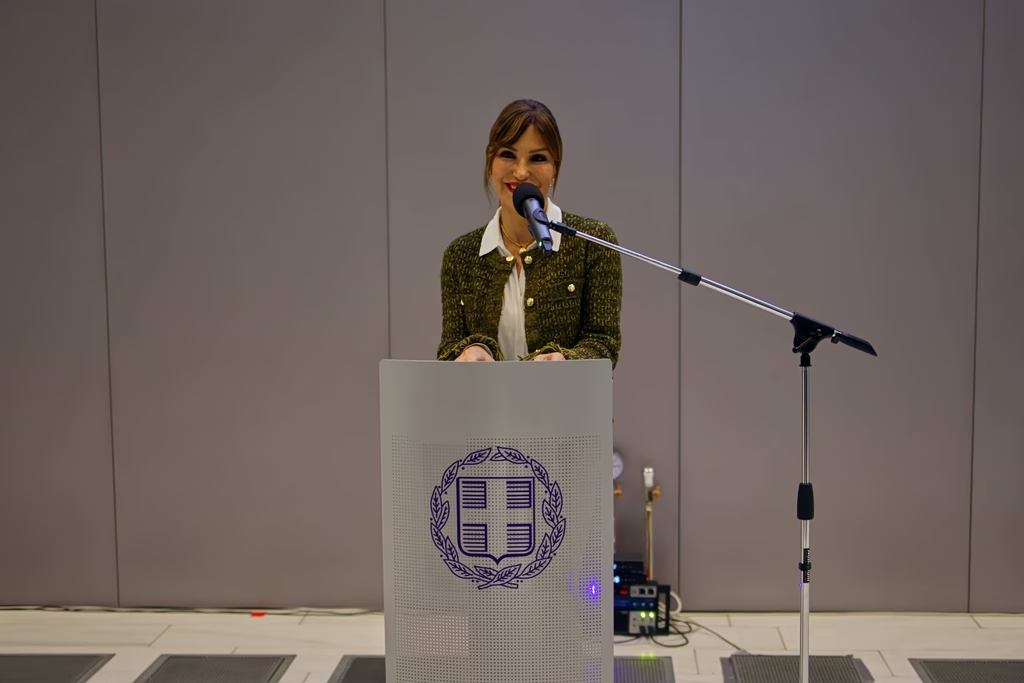
Vicky Hatzivasiliou, Deputy Regional Governor for Tourism of Central Macedonia
‘Ryanair was wrong to leave’
Christian Goiny, president of the Association of German-Greek Societies and a passionate supporter of Thessaloniki and Greece, also sees potential for the city as an urban tourism destination.
“I think so,” he said when asked whether Thessaloniki could establish itself more firmly in this market. City breaks are particularly popular in Germany, he noted, with many travelers choosing Rome, Naples, Barcelona and Lisbon.
Thessaloniki, he added, is a city many Germans have yet to discover — and one well worth discovering.
Goiny also criticized Ryanair’s decision to leave its bases in Thessaloniki and Berlin, describing it as a mistake. He believes the airline itself will ultimately bear the consequences, as other carriers step in to fill the gap.
“The gap it leaves behind will be covered by other airlines,” he said, pointing to the strong demand evident in the Berlin market.
Giving Thessaloniki another introduction
Goiny already has his next plane ticket booked for the 67th Thessaloniki International Film Festival, which begins in early November.
He is preparing a project with conductor Symeon Ioannidis, the Thessaloniki Youth Orchestra and Max van Dusen, a Berlin-based film music composer. The program will explore film music through an international workshop, events, short-film screenings accompanied by live music, panel discussions and a film-themed party in Thessaloniki.
The initiative reflects the broader ambition behind the city’s tourism campaign: to showcase a place that has continually produced culture, welcomed artists and creators, and brought people and civilizations together over centuries.
Thessaloniki is seeking to introduce itself to German travelers once again — not as a transit point or an intermediate stop, but as a destination in its own right and a deliberate choice for their next trip.