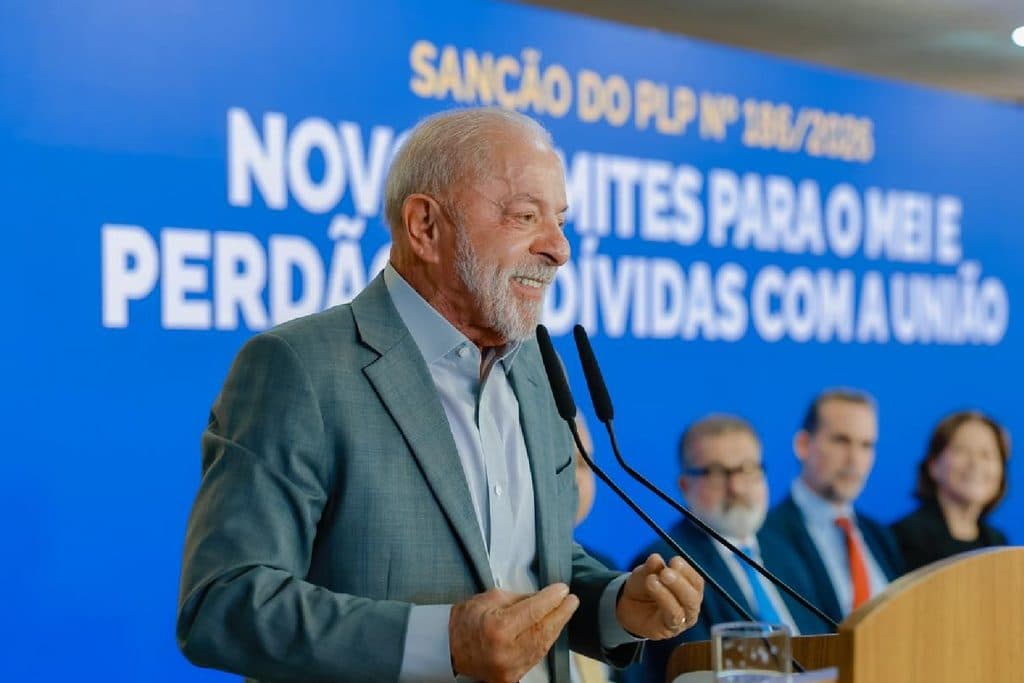
Brazilian President Luiz Inacio Lula da Silva, 80, leader of the left-wing Workers’ Party, defeated Flavio Bolsonaro, 45, a member of the opposition Liberal Party who had won the first round of the presidential election 21 days ago, this Sunday, October 25. Lula da Silva managed to secure his fourth term and halted the string of defeats that left-wing presidents in the region had been experiencing.
Tension and anticipation over the election results in Brazil continued to grow. The country’s Superior Electoral Court decided at the last minute to extend voting by two more hours. This happened because the opposing candidates expressed concern that disruptions to public transportation and bad weather could affect voter turnout.
Related: Brazil: Trump’s First Defeat in Latin America.
A Very Close Start to the Vote Count
This was an indication of how close both contenders believed their race would be. And, indeed, when the count had barely begun, with only 2% of the votes counted, Lula da Silva had 51.72% of the votes, while Bolsonaro had 48.28%, a difference of 3.44 percentage points.
However, once more than 15% of the votes had been counted, a change was taking shape: Bolsonaro had taken a narrow lead over Lula da Silva. The opposition candidate had received 9,097,000 votes (50.04%), compared with 9,373,489 votes (49.92%) for the incumbent president and candidate.
With 50% of the votes counted, Bolsonaro remained ahead with 30,638,077 votes (50.15%), while Lula da Silva was close behind with 30,207,680 votes (48.84%), narrowing the difference and seemingly signaling that the incumbent president and candidate would once again take the lead.
Indeed, at that point, Lula da Silva moved back ahead of Bolsonaro, and from then on he did not fall behind Bolsonaro again, according to the real-time data provided by the Superior Electoral Court.
Lula da Silva Secures His Victory
The final result gave Lula da Silva 64,076,924 votes (51.76%) and Bolsonaro 59,727,246 votes (48.24%), although it confirms a trend that has been characterizing election results in Latin America: victories are secured by very narrow margins, which further intensifies political competition and gives right-wing sectors reasons to believe they can defeat the left.
Lula da Silva’s margin over Bolsonaro was approximately three million votes. The president’s victory halts the region’s shift to the right, as seen in countries such as Colombia, Ecuador, Chile and Argentina, among others, where voters rejected the possibility of left-wing leaders continuing to govern their nations.
Across the continent, Brazil and Mexico are the only democratic left-wing governments that remain, alongside the left-wing dictatorships that continue to subjugate Venezuela, Cuba and Nicaragua.
Lula da Silva, a metalworker and labor union leader, has previously served as president of Brazil from January 1, 2003, to December 31, 2006; from January 1, 2007, to December 31, 2010; and from January 1, 2023, to the present.