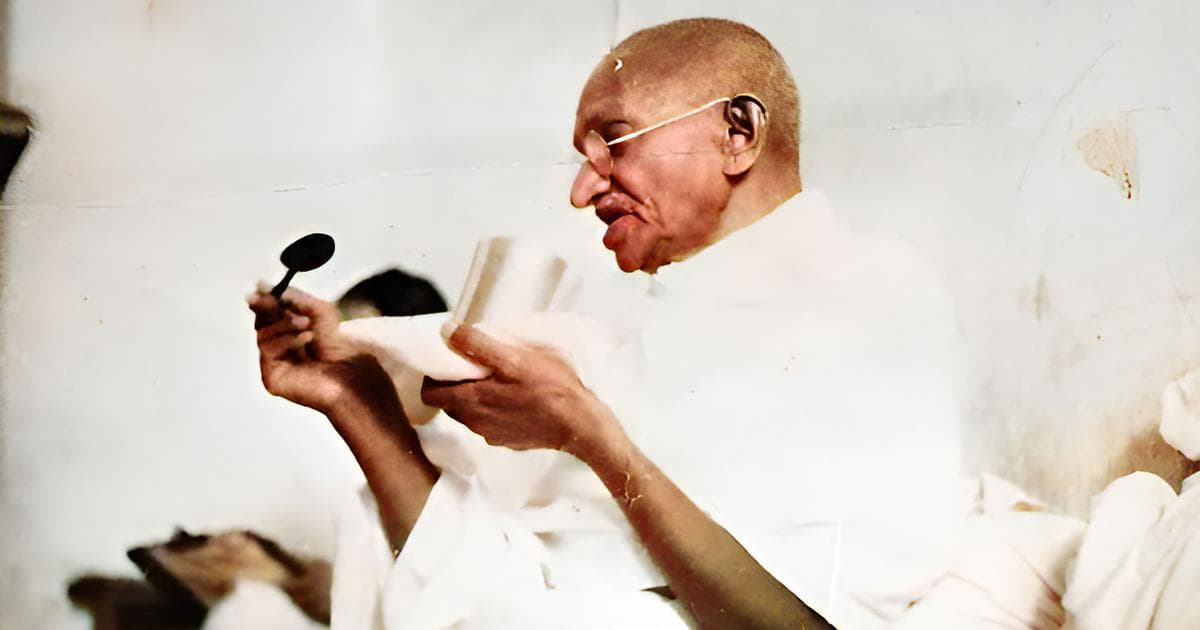
“My religion teaches me that whenever there is distress which one cannot remove, one must fast and pray.”
India has had a tradition of fasting as a means of self-denial, self-purification, and self-mortification. This is an integral part of India’s religious and cultural history. Fasting on certain given days of the month and week, and on certain days connected with epic lore, such as on Mahashivaratri, makes fasts more than integral to Hinduism; it makes them vital and essential to it. In the Jaina tradition, fasting is even higher in the order of observances, as in Gandhi’s description of his Jain-influenced mother fasting unfailingly and cheerfully, having been seen earlier in this narrative. And Indian Muslims, of course, observe the annual fasts in the month of Ramzan punctiliously, Gandhi noting the practice with admiration in his illustrious colleague, Khan Abdul Ghaffar Khan.