
WHEN gunshots rang out next to a hotel in central Marbella on September 8, police initially suspected a settling of scores between local drug gangs.
The truth, according to Dutch newspaper Het Parool, is that the shooting was the latest chapter in a feud that began in the Netherlands.
It is a sign of how the Dutch underworld’s violent cocaine wars are increasingly being fought on Spanish soil.
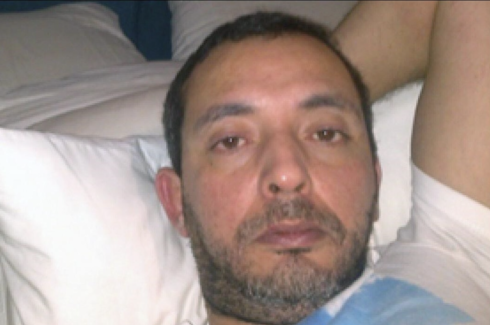
The target was Nourdin B.Z., a known figure in Amsterdam’s criminal underworld.
In March, Dutch police foiled a plot to kill him in an Amsterdam aparthotel, arresting two young Scandinavians with weapons. He then moved to southern Spain, but his enemies tracked him down.
In September, two young men opened fire on him in Marbella, leaving him with a leg wound.
Three men, two of them Danish and one Dutch, have been arrested. According to Het Parool, investigators believe the orders may have come from a long-standing rival, a Dutchman of Moroccan descent from the Brabant region who now lives in northern Morocco.
After the shooting, a video appeared online showing hooded men with rifles accusing Nourdin B.Z. of stealing 500kg of cocaine. Investigators suspect it was staged to throw them off the trail.
The case bears all the hallmarks of the so-called ‘Mocro Mafia’. The term describes a loose network of mainly Dutch-Moroccan criminal groups heavily involved in cocaine trafficking.
Its central figure, Ridouan Taghi, was arrested in Dubai in 2019 and tried in the Marengo case, the longest criminal trial in Dutch history.
The violence has had a profound impact on Dutch society, so much so that in 2018 the Dutch police union warned parliament the country showed many of the traits of a narco-state.
Increasingly, that violence is spilling into Spain.
According to Spain’s State Attorney General, the Mocro Mafia has extended its turf wars into southern Spain and tightened its grip on Marbella.
It is blamed for the 2023 murder in Chiclana, Cadiz, of a Dutch-Moroccan protected witness who had testified against one of its bosses in the Netherlands.
One of the network’s most feared figures, the fugitive Jos Leijdekkers, known as ‘Bolle Jos’, used Marbella as one of his key bases, with luxury apartments, expensive cars and secret meetings with international gangs.

The coast’s appeal is partly logistical. Rather than serving as a command centre, the Costa del Sol is increasingly used as a logistics platform for receiving, storing and redistributing large quantities of cocaine entering Europe.
In March, police seized 1.5 tonnes of cocaine hidden in around 1,000 cement sacks at a Marbella warehouse. The drugs had arrived from Brazil via the port of Algeciras, and the gang was allegedly led by a man linked to the Mocro Mafia who operates between the Netherlands and Dubai.
In July, a separate Dutch network operating along the coast was dismantled after police intercepted a record one-tonne haul of MDMA bound for Ghana, where it was to be swapped for South American cocaine. Fifteen people were arrested between Fuengirola and Estepona.
Feuds like Nourdin B.Z.’s show how disputes born in Amsterdam or Brabant can now be settled in Marbella, with orders given from Morocco or Dubai and gunmen recruited from elsewhere in Europe.
In another recent case, a Dutch man is accused of ordering a killing on the Costa del Sol from abroad, with three Dutch women accused of carrying the weapon across borders.
Spanish and Dutch police are working ever more closely together. In the MDMA case, Policia Nacional set up a joint investigation team with Dutch police after several of the gang’s leaders moved back to the Netherlands, and the two forces moved together to seize the shipment before it left port.
But with the Costa del Sol still home to some of the Dutch underworld’s key players, and their rivals willing to pursue them across borders, few expect the gunfire to stop soon.
Click here to read more Crime & Law News from The Olive Press.