
My daily driver is an iPhone Air, which can easily ask for a charge after a long day of general use, like browsing the internet, WhatsApp, editing documents, taking photos and videos, using maps for navigation, and whatnot. Of course, I can use a power bank, but it’s one more device to carry and recharge. So, I decided to rely on a car charger for such situations. I have been using the Portronics Car Power 80 with two charging ports and an advertised 80W output. With it, I can easily top up my phone while commuting, and this way my phone always has enough juice in the tank. And if you are also confused about whether you should buy a car charger, let me share my experience using the Portronics Car Power 80, which may help you decide.
 Survey
✅ Thank you for completing the survey!
Simple design: Just plug it in
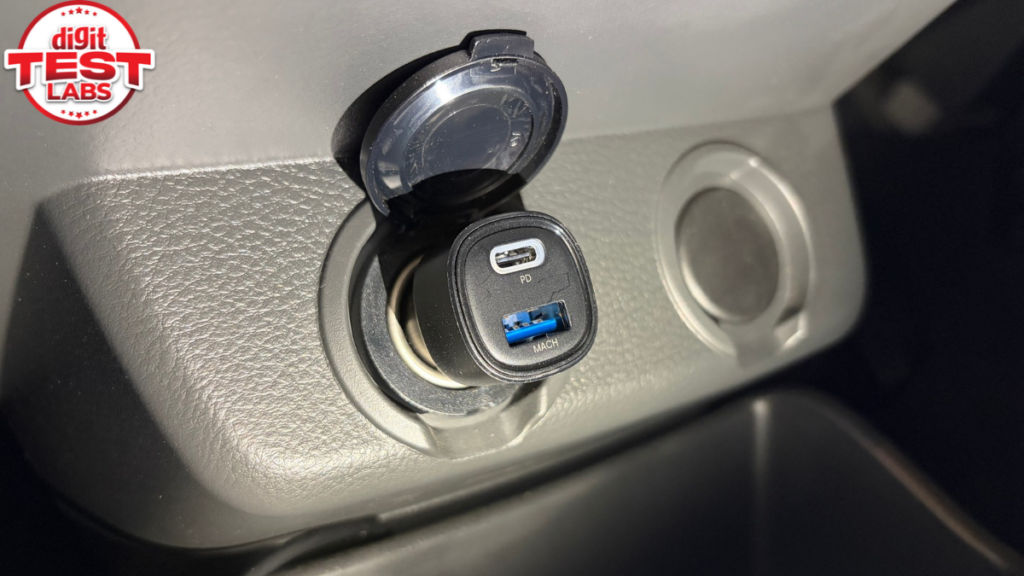
I installed the Car Power 80 into my car’s 12V power socket. You just have to push it in, and provided the car is powered on, the charger instantly works. When it is on, there is a blue-green LED indicator around the USB-C port. It helps you locate the charger in a dimly lit cabin.
Speaking of ports, there are two: a USB-C port on top and a USB-A port on the bottom. And since the charger is quite portable, it is very easy to carry around.
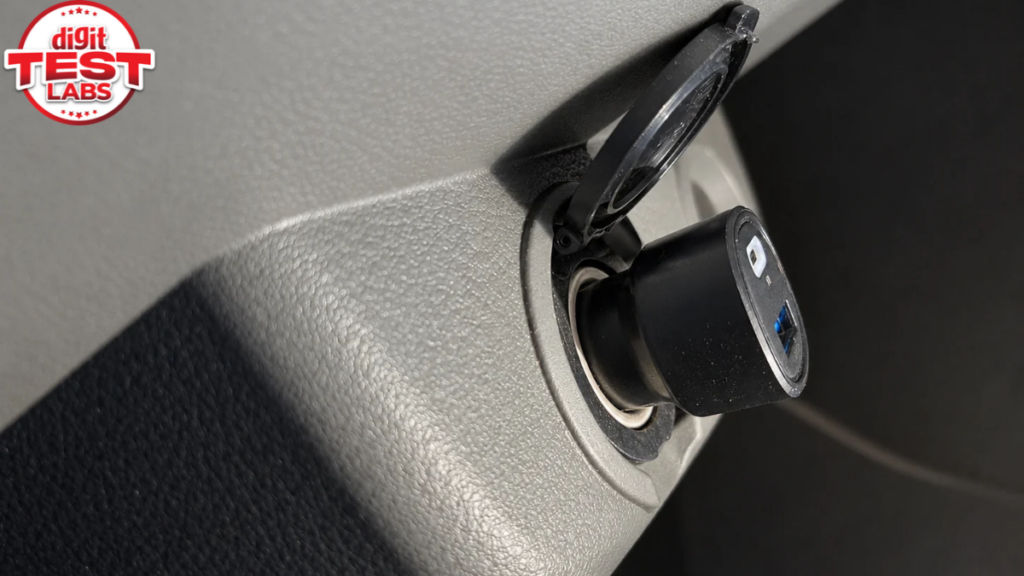
In terms of the build quality, Portronics appears to have used good-quality plastic for the outer shell, and overall, it seems durable.
One thing I would have liked to see is a USB cable in the box. Unfortunately, you don’t get one bundled. You will need a suitable USB-C cable for the main port and a compatible USB-A cable for the second port. You should note that a poor-quality cable can limit charging speeds, even when the adapter itself supports faster charging.
Charging support: 80W needs context
The Portronics Car Power 80 can connect to a standard 12V power socket as well as a 24W heavy-duty socket. It has a USB-C port with up to 45W through USB Power Delivery (PD) and a USB-A port with up to 35W. So, it has a total combined maximum output of 80W, but the individual ports don’t deliver 80W on their own. That is worth keeping in mind.
Also, the 45W USB-C port does not mean every phone will charge at 45 watts. The actual speed depends on what the phone supports, the charging protocol shared by the phone and adapter, and the cable used. Since it supports the PD (Power Delivery) standard, the charger and connected device can agree on a supported power level. In other words, a phone designed for lower charging speeds will continue to use its own supported limits.
The Portronics car charger doesn’t support the PPS standard, by the way. So, while 45W sounds promising, you should not assume the Car Power 80 will deliver your phone’s maximum supported charging speed. I suggest you research and always buy a compatible charger.
The good thing is the company assures safety with features like over-voltage protection, short-circuit protection, and over-current protection.
Portronics Car Power 80 is useful, but know the limits
As mentioned already, the first situation where I can see the charger coming in handy is a drive after a busy day. The Portronics Car Power 80 makes the most sense when your phone is also your navigation device. Thanks to two ports, I can charge both my phone and my MacBook Air if needed. The second port can be used by your fellow passenger. I can see it being useful while on a long trip with someone.
Also, if you are a cab driver, then your passenger can also charge their phone or laptop with low power requirements. The second port thus lets you avoid the familiar inconvenience of two people sharing one charger. You also do not need to carry a second car adapter.
There are some things you should know before buying it, though. The 45W USB-C rating means it won’t be suited for higher-wattage laptop chargers. Nor should you expect both connected devices to charge at their maximum charging speeds simultaneously. Ensure your adapter and the Car Power 80 support the required standards and protocols.
At its current asking price of Rs 549, I find the Portronics Car Power 80 a practical accessory, or should I say, a fix for low battery anxiety while on the road. It offers USB-C PD, a second port, and enough flexibility for everyday phone charging without adding much bulk to the car. However, check whether its charging standards match your devices’ requirements, especially if you rely on a specific fast-charging protocol. If they do, your drive can double as charging time for your devices.
Also Read: JBL at 80: Inside its audio legacy and vision for the future of listening
G.S. Vasan is the chief copy editor at Digit, where he leads coverage of TVs and audio. His work spans reviews, news, features, and maintaining key content pages. Before joining Digit, he worked with publications like Smartprix and 91mobiles, bringing over six years of experience in tech journalism. His articles reflect both his expertise and passion for technology. View Full Profile