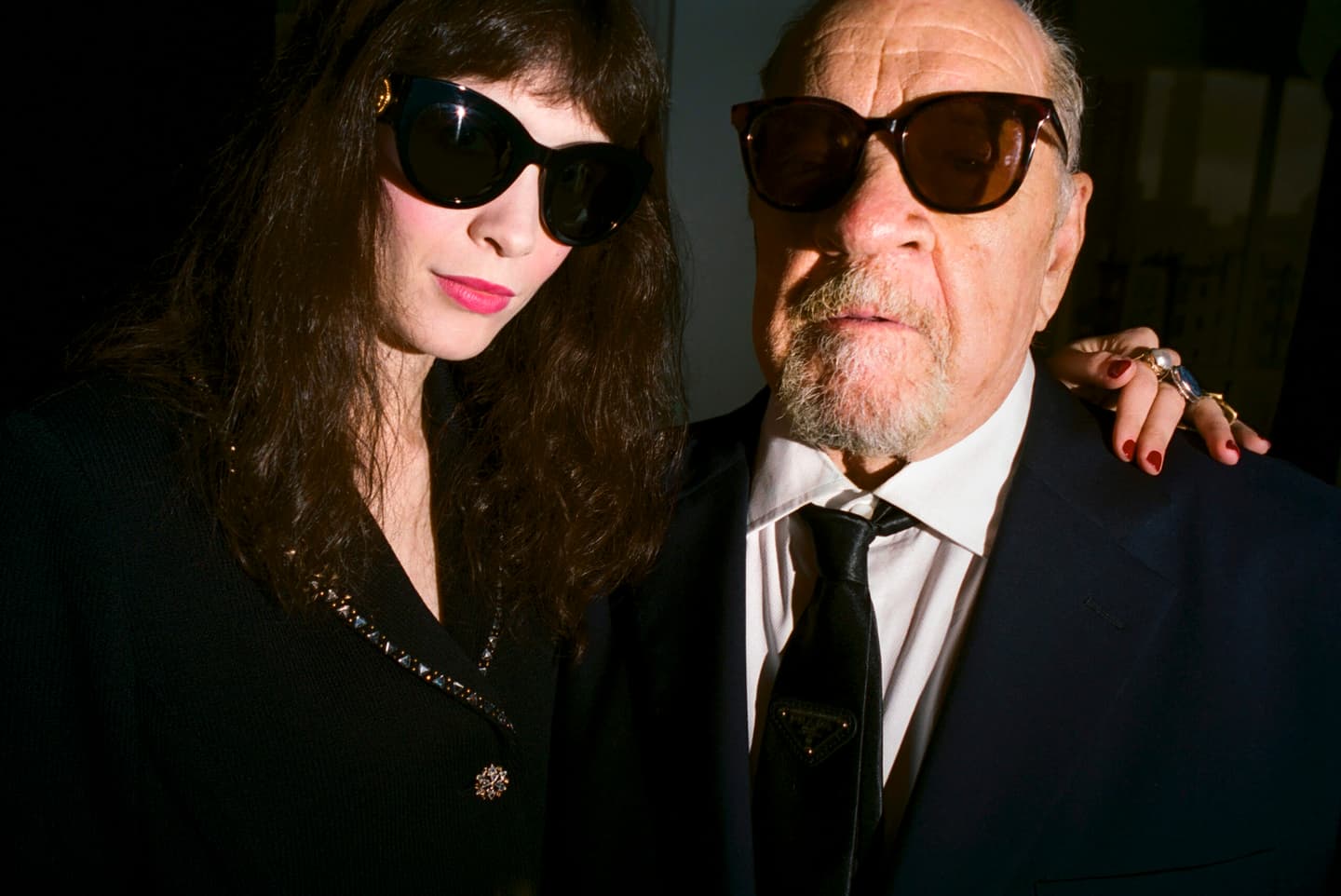
Paul Schrader is an unabashed workaholic. But the New York-based filmmaker’s career got off to a rocky start in the ’70s when, following a failed marriage and the demise of a dead-end job, he found himself in the emergency room with a bleeding ulcer. It was in that hospital that inspiration for Taxi Driver first struck, which was also Schrader’s attempt to exorcise his own psychological demons. Ever since then, his films have revolved around themes of morality, but specifically the question of whether or not anyone can truly change. A question that he revisits in his latest film, The Basics of Philosophy, which tackles the subject of pedophilia and recently had its US premiere at The Downtown Festival. After its opening weekend, Schrader sat down with filmmaker and founder of the festival, Rebekah Sherman-Myntti, at the Waverly Diner to discuss his thoughts on death, his early career, and his first Ingmar Bergman film.
———
REBEKAH SHERMAN-MYNTTI: I’m gonna hit record.
PAUL SCHRADER: Look at this. This was taken for Interview Magazine. Taken by Robert Mapplethorpe.
SHERMAN-MYNTTI: It’s amazing. Explain what I’m looking at.
SCHRADER: It’s a photo of my daughter Molly and my wife Mary Beth when they did a thing in Interview about new mothers with Susan Sarandon and Patti Hansen.
SHERMAN-MYNTTI: What a special photo. So, you turned 80 this year. You’ve continued making films long after many of your contemporaries have slowed down—
SCHRADER: Well, many of my contemporaries slowed down due to the fact that they died.
SHERMAN-MYNTTI: The ultimate reason.
SCHRADER: [Laughs]
SHERMAN-MYNTTI: What do you think is still driving you? Is it ambition, obsession, an inability to imagine doing anything else? What is it that keeps you going?
SCHRADER: It gets harder to do the task as you get older, and fewer and fewer people want to invest in you. One of the reasons I’m still working is I can make a film very cheaply. A normal budget for me these last 20 years has been around five or six [million], and so I get actors, known actors, to work for me at scale, and that encourages investors because they can see a clear road to getting their money back. One thing I have to be able to say to investors is, “I can offer you three things. I can give you a movie that you’re proud to mention at a dinner party, and people will be impressed. I can put you on a red carpet in Venice, Berlin, or Cannes.”
SHERMAN-MYNTTI: Or The Downtown Festival!
SCHRADER: [Laughs] And thirdly, “I think there’s a very good chance I can make you whole. I’m not going to make you rich, but I think there’s a very good chance I can make you whole”. In their business careers, they’ve made a lot of money selling toasters, and tampons, and whatnot. Wouldn’t they rather do this for a change? Wouldn’t that be interesting? Often they say, “yes.”
SHERMAN-MYNTTI: I love the hustle. When you think about being in your 80s and making work, are there certain subject matters that you’re interested in exploring? You and I have talked about grappling with mortality.
SCHRADER: That’s a very tricky question because, ideally, I would like to be doing Umberto D, you know, a great classic about aging, but the market is not there. So, you have to find a way to find a subject matter or something that appeals to the cluster of people who actually pay to go to movies. You have to try to find a way to think about or explore mortality in a younger metaphor.
SHERMAN-MYNTTI: I’ve always been very aware of my own mortality. I think about death a lot. What’s your relationship to it like?
SCHRADER: I’m not afraid of death. Well, what I am afraid of is protracted pain, agony. I’m not afraid of the big sleep. I’ve always sort of felt 82 would be it.
SHERMAN-MYNTTI: I don’t think so, Paul. You’ll be making movies till you’re 100. What has aging been like?
SCHRADER: It sneaks up on you. I feel like I’m 40, except, you know, when I have to walk up a flight of stairs. Mentally, I think I’m as sharp as I ever was. I come up with new ideas, and I see a lot of films, and have as informed opinions as I did when I was younger.

SHERMAN-MYNTTI: I think that what’s so interesting about your body of work is that you haven’t been afraid to dive into complicated ideas and subject matter, deeply layered characters, and I think the most recent film, The Basics of Philosophy,is certainly in line with all that. Do you think it’s harder to make genuinely provocative work today, or have the consequences of being provocative simply changed?
SCHRADER: I think people are more easily offended today than they used to be. People get offended at things that they would have shrugged off in the past.
SHERMAN-MYNTTI: Yeah, and film festivals have historically been spaces for experimentation and discovery, but I think that, right now, many are tied to these commercial machines. The Basics of Philosophy had its world premiere at Venice, and then its US premiere at The Downtown Festival to a sold-out and super engaged crowd. How was that for you?
SCHRADER: I was surprised when the film was not accepted into Telluride, Toronto, and New York—three festivals that I have had work in. I was told in the case of both Telluride and Toronto that it was about subject matter.
SHERMAN-MYNTTI: Right, we discover the professor is a pedophile. But since when is depicting a character engaging in a certain act a cosign or a promotion of that act? There’s so much more nuance to it than that. Work that’s challenging, and deals with uncomfortable subjects, and raises difficult questions—that’s what I’m interested in. And that’s why I wanted to show the film at The Downtown Festival. We trust our audience to engage with complex ideas rather than telling them what to think.
SCHRADER: Yes, and why The Downtown Festival? Because you were at the correct time. Your festival overlaps with New York. What I like about The Downtown Festival, and hope to experience more of, is that it’s looking for new wrinkles, new ways of doing things.
SHERMAN-MYNTTI: That makes me happy to hear. You and I have both been told that we’re workaholics. What do you think of that word and of being told that?
SCHRADER: Well, I get very antsy if I’m not working. In fact, I’m never not working. If I’m sitting, if I don’t have anything to do, I’ll come up with something.
SHERMAN-MYNTTI: I’m the same. What’s the difference between workaholism versus passion anyways? But, going back in time a little bit, I want to hear about how you first got the idea to become a filmmaker.
SCHRADER: Well, it came out of my interest in films, which came out of my church’s prohibition of films. So obviously, the forbidden fruit tastes best and, in my church, movies were the forbidden fruit. Also, Ingmar Bergman was coming along at that time, and not only was the food forbidden, it was also as nutritional as anything we were studying in divinity class.
SHERMAN-MYNTTI: What was the first Bergman film you saw?
SCHRADER: The Seventh Seal. And so then, I got interested in movies and I had to go where I could see movies. I was in Grand Rapids[, Michigan], and I had one serious movie theater that showed, at most, one quality film a week.
SHERMAN-MYNTTI: And is that the movie theater that played Bergman?
SCHRADER: Yeah, that’s where it would play. Also, when I was in college, something humorous happened. There was a softcore porn theater near the college, and it wasn’t doing much business so the owner had this brainstorm to have a month of Ingmar Bergman films.
SHERMAN-MYNTTI: Incredible. As you know, I just did the artist residency at Bergman’s Estate in Fårö, and part of it is that you have to give something back to his estate. So when I make the film I finished writing while I was staying at his house, I have to return to the island and show the film and do a talk or whatever. So, you’re gonna have to go back with me! I want to bring all my people when that happens.
SCHRADER: In two years?
SHERMAN-MYNTTI: [Laughs] Yes, let’s say two years. But okay, wait. This porn theater is playing a month of Bergman. Keep telling me.
SCHRADER: Yeah, so, I get interested in and am reading everything I can find about the history of films, and I know I have to go someplace and see all these films that I’ve been reading about. And that place, of course, was New York. So I took a couple classes at Columbia, mainly just to see films, and through one of those fortuitous strokes that define one’s life, I happened to meet Pauline Kael, and she became my mentor.
SHERMAN-MYNTTI: How did you meet her?
SCHRADER: I was at a bar, a Columbia bar, reading I Lost It at the Movies. I was making notes, and the guy next to me said, “You like that book?” I said, “Yes.” He said, “Would you like to meet her?” I said, “Of course.” He got up, he made a phone call, he came back and said, “We’re going to have dinner with her tomorrow night.”
SHERMAN-MYNTTI: Wow.
SCHRADER: I hadn’t seen that many movies, but I had a lot of opinions, and she and I argued rather fiercely, and drunkenly, and late into the night. When it finally came time to go home, she said, “You’re too drunk to get a cab. Just sleep on the sofa.” So I did. In the morning, she made me breakfast, and she said to me, “We’re going to stay in touch. You’re going to write me every two weeks. You’re going to send me every review you write.” And we did.
SHERMAN-MYNTTI: So, Pauline really took you under her wing and I think there’s that [same] spirit of generosity I’ve observed you have with people from a younger generation. Like, giving someone who usually works in a certain role on set a higher position, as an opportunity where they can step into that role. It changes their lives and it changes their trajectories. I’d love to know why you do that and what your thinking is behind it.
SCHRADER: It’s selfish. [Laughs] They work for nothing, and they work harder than the dickens to prove that they can stay at this level of work, and you’re often getting their best work because they haven’t done it before. Just like a musician, if a musician has not done a score before, he’s got to figure out how to do a score, and more likely than not, it’s going to be original. If someone has done 30 scores, they know exactly how to do a score, and you know exactly what you’re going to get. So you’re always looking for people who are on the cusp, are ready to break out, and are willing to work hard to get a chance to break out.
SHERMAN-MYNTTI: At your 80th birthday party, so many people shared how you taking a risk on them literally launched their careers. It sounds like generosity to me. But wait, I’m curious, go back to you getting into filmmaking.
SCHRADER: It was ’69, ’70, I was living with a woman who I broke up with my wife for, and then she threw me out, so I didn’t have a job, didn’t have any income. I’d been working for Chicken Delight. I lost that job because I was eating too much of the chicken. If you’re delivering Chicken Delight, you’re not supposed to eat it all.
SHERMAN-MYNTTI: Were you just in your car eating the chicken?
SCHRADER: Yes, and I was sort of drifting around in this car, drinking, and I had a gun.
SHERMAN-MYNTTI: Why’d you have a gun?
SCHRADER: I’m not sure.
SHERMAN-MYNTTI: How’d you get a gun?
SCHRADER: That was L.A. I just went into a gun shop.
SHERMAN-MYNTTI: What made you get a gun?
SCHRADER: I wanted to have one. I don’t know. I knew. I knew why. It was suicidal ideation.
SHERMAN-MYNTTI: Was that the first time in your life that you had those ideations?
SCHRADER: No. But I was drifting around, I could sleep in my car. The big, old porn palaces on Santa Monica Boulevard were open all night long, and people slept in the balconies. Then I started getting real strong pain in my stomach, and I went to the hospital and had a bleeding ulcer at 26. When I was in the emergency room, I realized I hadn’t spoken to anyone for maybe three or more weeks, just in my car. And in the hospital, this metaphor, this image came to me of this big, yellow taxi, this big, yellow coffin, you know, floating through the sewer of the cities with this boy trapped inside who seems to be surrounded by people yet is desperately alone. I said, “That’s me. And I better write about this guy before I become him, because I am becoming him.” All the violent fantasies and all that, violence not only to myself, to others, and so I wrote about it. Two drafts in two weeks.

SHERMAN-MYNTTI: Fever dream style.
SCHRADER: I wrote it purely as therapy. I didn’t write it to give it to anyone. A few other things happened, but after some time, I was no longer an unemployed film critic. I was a hot screenwriter, and I knew that that moment wouldn’t last long. That there would be another hot screenwriter the next year, so I had to exploit this moment and write as much as I possibly could, and hustle as much as I possibly could to get in the game.
SHERMAN-MYNTTI: What do you think it means to be a hustler? What does that mean to you?
SCHRADER: Well, I mean, you’re always networking. Hustling is not promoting oneself. Hustling, when it is done right, is getting someone else to see that you are in their best interest.
SHERMAN-MYNTTI: Yeah, and it’s almost as if it’s on behalf of the work, to ensure that the work is done properly or so that the work is properly taken care of. In terms of these characters you create, whether it’s in Taxi Driver or The Basics of Philosophy—
SCHRADER: I’ve written about him a number of times. I come back to him, and it’s always a guy, and he lives alone, and he is reflective, self-reflective. He keeps a journal, and he wears a mask, and the mask is his profession. So he could be a taxi driver, or a drug dealer, a card player, a gardener—whatever—and then something comes along to disrupt that.
SHERMAN-MYNTTI: The facade.
SCHRADER: Well, that cloistered space he has created for himself.
SHERMAN-MYNTTI: Why do you think you’re drawn to that? If you had to psychoanalyze yourself.
SCHRADER: I originally was drawn to it because that’s how I saw myself. You know, I wrote Taxi Driver so I wouldn’t become him. But when you look at the larger picture, what I was really doing—the existential hero, the hero who does not say, “How should I live,” but “Should I live?” He had permeated American literature, but he had not permeated American film yet. He was in European film, but not American film. And I knew that Travis was an existential hero. And I reread two books just before I started writing the script. One was Nausea by Sartre, and the other was The Stranger by Camus. They’re both first-person, existential heroes, very much like the taxi driver. And so, I knew I was bringing that character into American film, and one of the reasons the film succeeded was American film wanted that character.
SHERMAN-MYNTTI: Those books did a number on me when I first read them. Tell me, what does success look like to you now?
SCHRADER: Success is the ability to keep working, which is no easier today than it ever was. You know, it’s a scavenger’s game. You’re going around picking up bits and pieces of finance. That’s success, and then being recognized. About once a day, someone will say, “Oh, are you Paul Schrader?” Or “I love your work,” and that always catches me by surprise because, you know, I’m not an actor.
SHERMAN-MYNTTI: I’d love for you to have a whole acting arc.
SCHRADER: [Laughs] I think the reason I have this impact on young filmmakers is because I began on spec, and I’m still on spec, and it proves to them that you do not need permission to write a script. You can write it on spec and then try to find someone to buy it. You can’t be foolish about it. You have to write a script out of spec that is sellable, but you don’t have to get somebody’s permission before you do it. I couldn’t have got somebody to pay me to write First Reformed.
SHERMAN-MYNTTI: I think it’s that impetus to not wait around and be given permission, like you’re giving yourself the green light essentially. We all will only benefit from that impulse. And, sadly, not everyone operates that way. A lot of people are comfortable waiting around.
SCHRADER: You have to have enough calculation and enough savvy to not be wasting your time.
SHERMAN-MYNTTI: Exactly. What are you excited about these days?
SCHRADER: Well, a nice drink after sundown, and the buzz you get when you know a movie’s going to be good. Or even better, when you know a series is going to be good. Because then you watch the first episode and there’s seven episodes. You get this warm feeling that there’s six more to come. I like to travel, although it’s not as easy. When I was young, the phone would ring then I’d be off to the airport. You know, like being in Barcelona at midnight. Everything’s open. Everything’s fun. I would love to get a new idea right now, except that I’ve got three scripts to shoot already.
SHERMAN-MYNTTI: I feel like there’s a lot to be excited about. Thanks, Paul. I always learn so much from you.

The post Paul Schrader Is Not Afraid of the Big Sleep appeared first on Interview Magazine.