
It’s hard to believe it’s been eight years already since Lee Chang-dong’s last movie, mesmerising 2018 noodle-twister Burning, and 16 now since the South Korean auteur’s charming 2010 character study Poetry before it. Well, good things come to those who wait, and Director Lee’s latest, Possible Love — a beautifully novelistic exploration of class, connection, the ethics of documentary filmmaking and Korea’s labour-market crisis — is exceptionally good.
This is by no means the first film to reflect upon the socioeconomic pressures weighing down South Korea’s populace: Director Lee’s fellow countrymen Bong Joon Ho and Park Chan-wook have staged their own reckonings with the ongoing crisis in Parasite and No Other Choice, respectively. But while Lee’s peers filtered their responses through distinctive genre lenses, his own movie feels, by its very nature, far more emotionally febrile and overtly personal. It was initially rooted in a reaction to escalating police brutality against striking workers (including, one suspects, the SsangYong Motors Strike of 2009) before eventually, years later, evolving to encompass the filmmaker’s own complicated feelings about his ability and right to dramatise such a raw, open national wound.
Lee takes a simple premise and makes of it something far more thematically rich and dramatically complex.
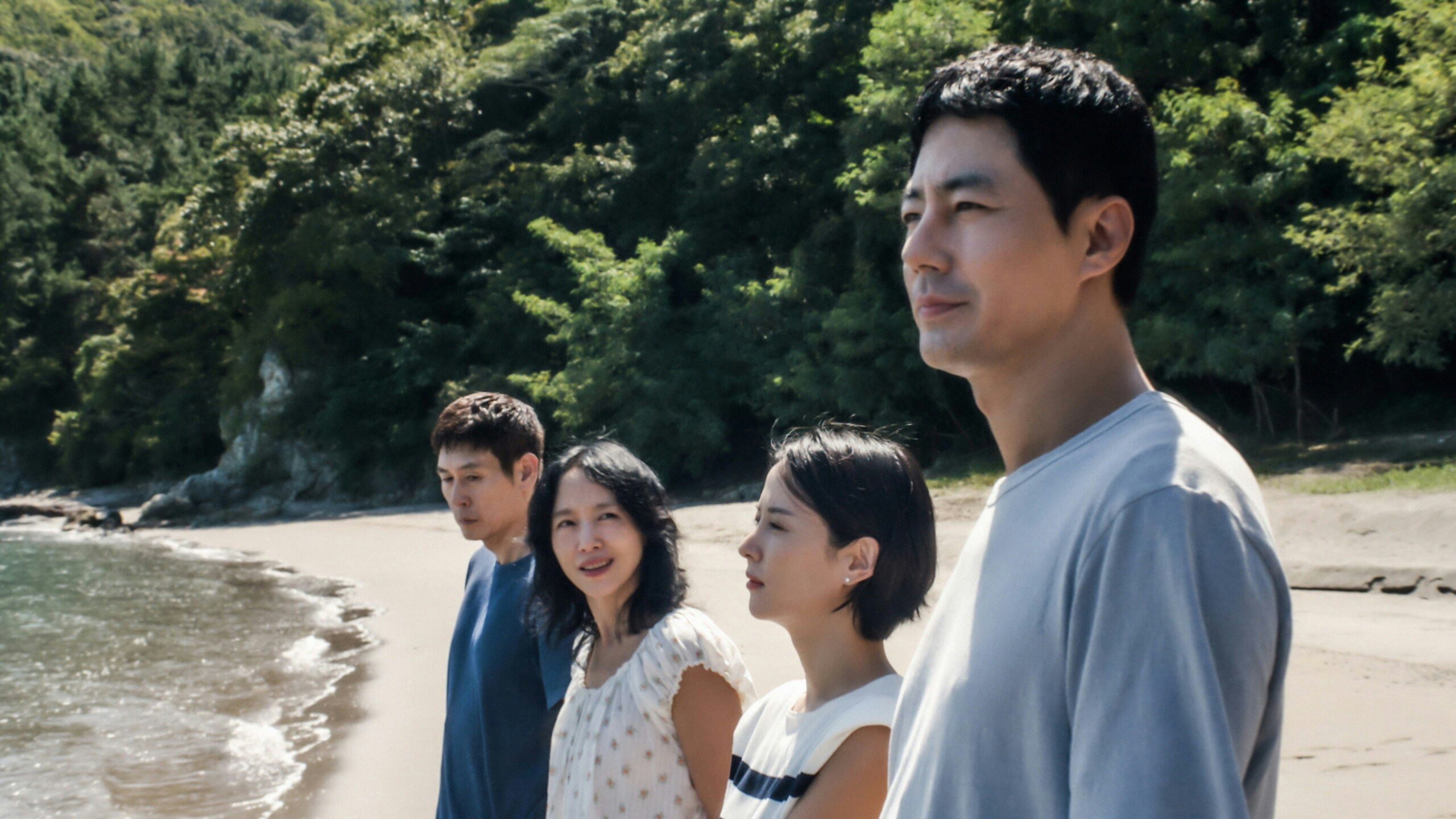
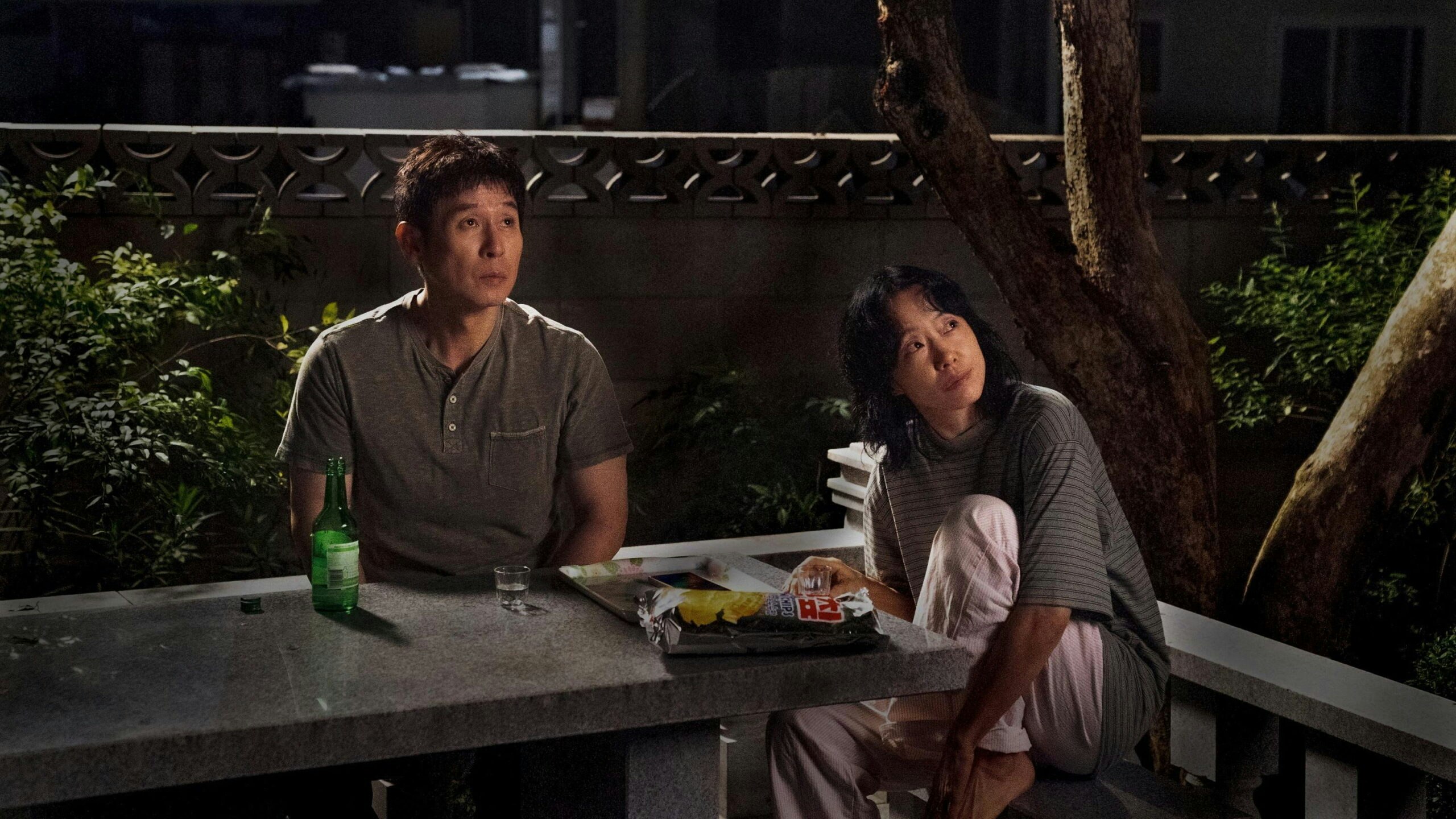
The set-up is, all things considered, pretty simple: this is a tale of two couples, from opposite sides of the tracks, and their meeting. First, we meet working-class couple Mi-ok (Jeon Do-yeon) and Ho-seok (a tightly coiled, eventually devastating Sul Kyung-gu). Mi-ok is a mask factory worker whose bright disposition belies dark pools of sadness in her eyes. Her husband, Ho-seok, is struggling with an inarticulable anger and profound survivor’s guilt after having not only been laid off by his auto firm employers, but barely making it out alive from a horrific police raid on his protesting colleagues, which left many of his friends dead. When their paths serendipitously cross with documentarian Ye-ji (Parasite’s Cho Yeo-jeong, again acing it as an unwittingly class-blind rich lady), looking to make a film chronicling working-class struggles, it isn’t long before they’re drawn into the filmmaker’s project, and into her and generationally wealthy husband Sang-woo’s (Zo In-sung) world.
Cleverly constructed through a delicately layered story-within-a-story of cameras and frames that constantly encourages us to consider who’s telling whose story here, Lee takes the simple premise and makes of it something far more thematically rich and dramatically complex, evoking similar meta masterworks such as William Greaves’ Symbiopsychotaxiplasm, Abbas Kiarostami’s Close-Up and Spike Jonze’s Adaptation. Yes, this is yet another film about society’s haves and have-nots, class inequality, and the systemic crushing of the working-class under the boot of late-stage capitalism — and a righteously angry one at that. But it’s also a film about the ebb and flow of a marriage, about the dreams both realised and relinquished in the name of love, about appearance and reality and the all-consuming nature of covetousness — be that of another’s house, spouse, or fundamental freedom to get stark-bollock-naked and swim in the sea.
Look closer yet, and there’s even more thematic fat to chew on as Director Lee fuses the personal and the political to jaw-slackening effect. One of the key threads Possible Love unpicks over its duration is a fundamental unease with — and attempt to reconcile — a documentarian filmmaker’s emotional and social proximity to their subject in the creation and pursuit of their art. Can you make an honest and meaningful film if you don’t connect on an intimate, personal level with your subject? Can you make one that’s truthful, without exploitation or compromise, if you do? Director Lee uses this film to ask the question as much of himself as his characters. His panoramic pursuit of an answer — most potently seen in the tension between Ye-ji’s earnest desire to know and love Mi-ok and her husband (or her “Method acting”, as Sang-woo more cynically sees it) and her seeming inability to do so without first hitting ‘record’ — leaves plenty to process as the credits roll.
While Possible Love’s deliberate pacing, its density of symbolism and imagery, may scare off second-screeners upon its Netflix release, the way Director Lee — along with former mentee and now co-writer Jungmi Oh — so elegantly allows story and revelation to grow naturally out of character deserves to be celebrated. This isn’t a film that’s interested in creating sensation or scandal or twists for twists’ sake, but rather in so deeply investing itself in these four characters’ lives — given such rich interiority by Jeon, Sul, Cho and Zo’s understated, delicately modulated performances and ineffable on-screen chemistry — that everything they do, and every decision they make, feels fundamentally true to who they are. As such, when connections spark, fray, or threaten to sever entirely between any of these same-but-differently yearning and restless souls, it doesn’t feel like the result of an author’s guiding hand or a documentarian’s coaxing lens, but the natural product of lives as they’re being lived. Or, in other words, a Lee Chang-dong movie. Here’s hoping we won’t have to wait another eight years for the next one.