
Canada has moved to give Canadian banks a prominent role in its latest draft stablecoin regulations, backing the banks’ push for bans on stablecoin yields, while mandating non-bank issuers to park their reserves inside those same banks.
The document published in the Canada Gazette landed barely three days after the Office of the Comptroller of the Currency (OCC), the top bank regulator in the United States, drew objections from the banking industry after allowing crypto platforms to continue to pay rewards on stablecoins.
The 60-day consultation has now opened on the Friday, October 24, 2026 draft.
Canada and the US go different routes with stablecoin yields
According to the regulations published in the Canada Gazette, the bar on stablecoin issuers in the country offering token holders interests applies across a wide spectrum of “direct and indirect” yield routes. For example, the platform-activity rewards carve-out that Coinbase is allowed to offer in the US counts as yields in Canada.
The Canadian Bankers Association raised the familiar argument about yields pulling deposits out of banks and squeezing lending, according to The Logic, confirming its firm support of the ban.
The ban “is intended to ensure payment stablecoins do not function like bank deposits or investment products,” said Finance Canada spokesperson Marie-France Faucher.
Stablecorp CEO Kesem Frank has argued Canada should copy the US and allow some rewards, warning that without yield there is little reason to hold a Canadian-dollar coin over a US-dollar one.
How Canada’s stablecoin regulation regime looks
The latest stablecoin regulations draft contained other proposals that prohibit stablecoin issuers from presenting their fiat-pegged tokens as legal tender, bank deposits, or publicly insured products.
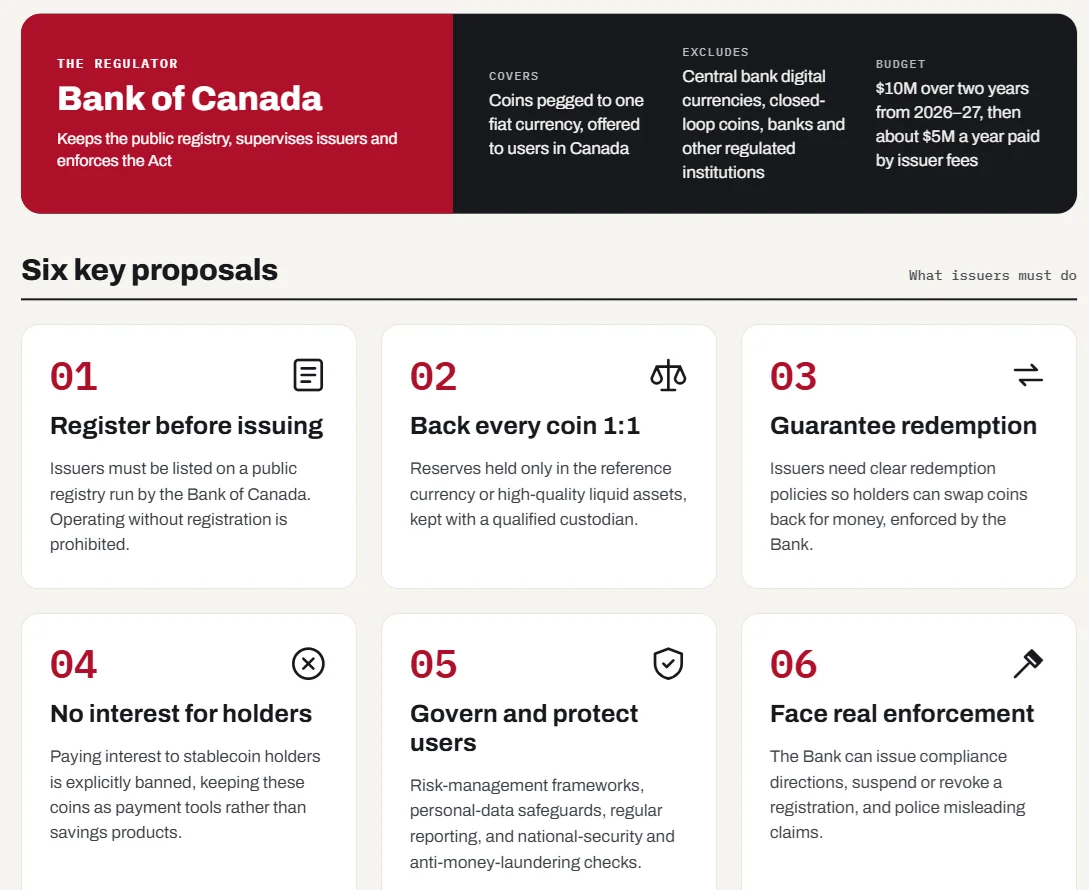
Per the stipulations in the draft, stablecoin issuers are required:
- to register with the Bank of Canada
- back every coin at least one-to-one with high-quality liquid assets in the reference currency
- redeem at par
- keep policies covering governance, risk, data security, and recovery
- keep reserve assets in banks
The Minister of Finance and the Bank of Canada also get roles screening applicants for national security risk and enforcing penalties on defaulters, respectively.
Canadian banks have a built-in advantage
The SCA only regulates non-financial issuers. Banks, trust, loan and insurance companies, credit unions, and foreign financial institutions are excluded because they are already prudentially regulated, the Gazette states.
So, while banks are not stablecoin issuers, the firms issuing these tokens still have to rely on them for reserve custody. For example, VersaBank is the custodian of Stablecorp’s QCAD, Canada’s first regulatory-compliant Canadian-dollar stablecoin. The bank earns a custody fee plus a spread on the deposits. Tetra’s CADD, launched with National Bank, Shopify, and Wealthsimple behind it, keeps all reserves at Canadian institutions, including tier-one banks.
Another advantage codified in the regulation proposal allows banks to pay interest and even carry deposit insurance on tokenized deposits. Stablecoin issuers, on the other hand. cannot access the same levers despite both running on the same ledger technology.
The 60-day consultation runs before the rules are finalized. Finance Canada expects the framework in force in 2027, though senior deputy governor Carolyn Rogers told the Senate in May 2026 that regulations could realistically land in mid- or late 2027.
Don’t just read crypto news. Understand it. Subscribe to our newsletter. It's free.