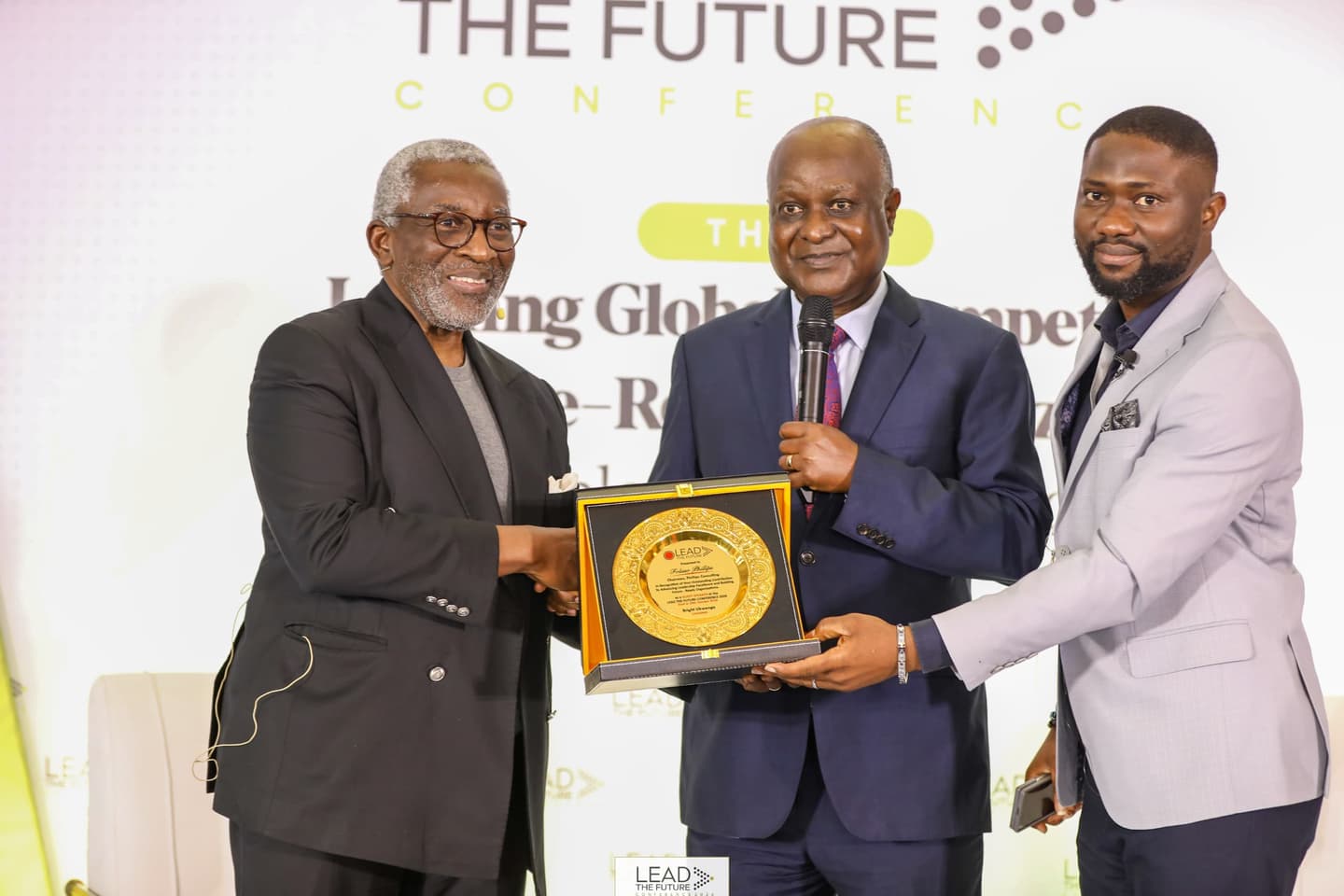
Business leaders and technology experts have called on African organisations to accelerate the adoption of artificial intelligence (AI), invest in workforce development and strengthen leadership capabilities to remain competitive in the rapidly evolving global economy.
They warned that technology investments alone would not guarantee business growth without skilled workers, effective leadership, sound governance and the capacity to translate innovation into measurable results.
The experts made the call at the Lead the Future Conference 2026, held in Lagos with the theme, “Leading Globally Competitive and Future-Ready Organisations: People, AI, Innovation.”
The conference, chaired by the Group Chairman of Nigerian Exchange Group (NGX), Dr Umaru Kwairanga, brought together business executives, technology leaders and governance experts to examine how African organisations could adapt to emerging technologies, workplace changes and global competition.
Speaking at the event, Kwairanga urged African businesses to look beyond their immediate markets and leverage technology to expand their operations and compete with global players.
“Modern technology democratizes opportunities, and African enterprises must take advantage of that to scale their businesses,” he said.
He stressed that Africa’s vast human and natural resources could only translate into sustainable economic growth through effective leadership, sound corporate governance and strong institutions.
In a keynote address titled “Redefining Leadership for the Future,” the convener of the conference and Principal Consultant at SixthSense Leadership, Bright ‘UK’ Ukwenga, challenged business leaders to embrace continuous personal development and build organisations that empower people to achieve their full potential.
According to him, leadership is increasingly defined by the ability to inspire others, create opportunities for growth and adapt to changing expectations.
“The social contract between the leader and the led has changed fundamentally. Leadership is becoming a better version of yourself so that you can inspire and influence others. Your growth must inspire others,” Ukwenga said.
He maintained that effective leadership should create an environment in which employees could thrive and contribute meaningfully to organisational success, rather than depend solely on those in positions of authority.
The need to align technology with people and business strategy also featured prominently during discussions on organisational transformation.
Chairman of Family Homes Funds Ltd and former Managing Director of Wema Bank, Ademola Adebise, said organisations seeking to transform their operations must recognise that people, rather than technology alone, determine the success of such initiatives.
Drawing from Wema Bank’s experience in launching ALAT, Africa’s first fully digital bank, Adebise explained that successful transformation required a clear vision, effective communication, adequate resources and disciplined execution.
“Transformation is really people doing things, not just the technology,” he said.
He emphasised that organisations must establish clear performance measures to determine whether technology investments were delivering the desired outcomes.
Senior Faculty at Lagos Business School, Dr Yetunde Anibaba, also examined strategic foresight, highlighting the need for organisations to anticipate emerging trends and prepare for changes that could affect their long-term relevance.
The second day of the conference focused on corporate governance, public-sector accountability, institutional sustainability and the future of work.
Among the speakers were the Founder of FifthGear Plus, Niyi Adesanya; Akinrinade Morakinyo Oluwola, representing the Chief of Staff to the Lagos State Governor; Chairman of Phillips Consulting, Foluso Phillips; and former Deputy Governor of the Central Bank of Nigeria, Dr Tunde Lemo.
Discussions on workforce development and changing career expectations highlighted the growing importance of continuous learning as businesses respond to technological disruption.
Chief People Experience Officer at Leadway Group, Kunbi Adeoti, said the traditional model of a linear career was giving way to a workplace where employees must continually acquire new skills and adapt to changing opportunities.
“It’s not a linear career anymore. That’s why we have the concept of pivoting. How do you learn, relearn and learn again?” she said.
Adeoti called attention to the need for employers to create workplace cultures that support learning, career adaptability and the development of new capabilities.
Similarly, Group Head of Sterling Academy, Kola Oluyemi, warned that academic qualifications and professional certificates would have limited value without the practical knowledge required to solve workplace problems.
“A certificate is good, but if you have a certificate and there’s no application or knowledge, it’s useless to the organisation,” he said.
Other contributors to discussions on talent development and ecosystem leadership included Ireayomide Oladunjoye of Endeavor Nigeria and Bola Lawal of Premia Business Network.
The conference underscored the need for organisations to integrate artificial intelligence and other emerging technologies into broader business strategies, while ensuring that employees possess the skills required to deploy them effectively.
Participants also stressed that businesses must move beyond reacting to disruption and instead develop the capacity to anticipate change, innovate continuously and strengthen their institutions.
They called for greater collaboration across the public and private sectors, noting that future-ready organisations would require a combination of strategic foresight, capable leadership, a skilled workforce and effective execution to deliver sustainable value.
The conference concluded with a renewed call for African businesses to invest in people, embrace innovation and build resilient organisations capable of competing on the global stage.
The post African businesses must embrace AI, upskill workers to compete globally – Experts appeared first on The Sun Nigeria.