Mongabay · জলবায়ু
Taiwan’s tea growers let nature take back control as climate pressures mount
২৬/১০/২০২৬
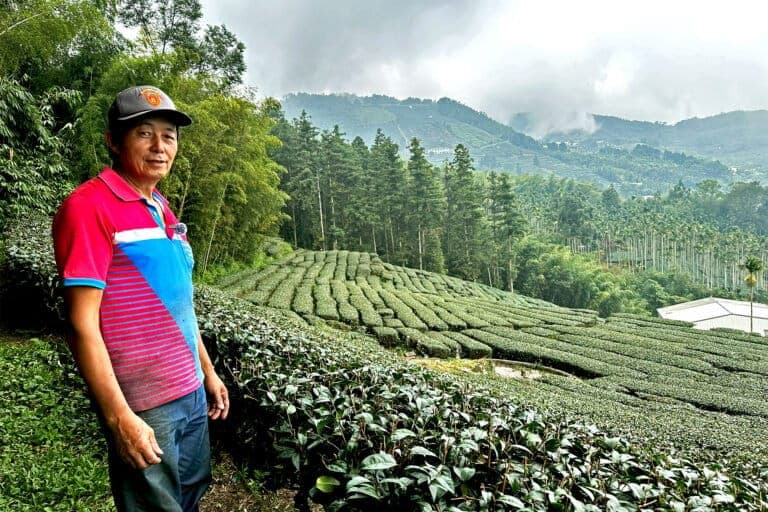
MEISHAN TOWNSHIP, Taiwan — Lin Kuang-li’s tea plants blend in among the dozens of others that blanket this tea-producing village in Alishan, a mountain range in Taiwan. Yet the leaves he produces are slightly different from those of his neighbors. The 60-year-old is the sixth generation of his family to grow tea, primarily high-mountain Ch’ing-hsin (Qing Xin) oolong, in Longyanlin village, in Meishan township, Chiayi county. In 1976, his late father, Lin Yun-fa, started the business to boost the village’s struggling economy. Today, it has been half a century since the hills of Longyanlin began to be intensively cultivated. The plantations are aging, and the soil is becoming depleted. It seems fortunate that 30 years ago, Lin Kuang-li decided to switch to natural farming and stopped using pesticides. It was a risky bet, but he is proud of the results. The farmer takes a handful of soil and squeezes it in his hands. “My soil is now in excellent health,” he tells Mongabay. Alishan, in the central part of the island, is famous for producing Taiwan’s highly prized high-mountain tea, known as kao-shan cha in Mandarin. These oolong tea varieties, grown at elevations higher than 1,000 meters (3,300 feet) in Alishan and other misty alpine regions, are famous for their fragrant aroma, smooth texture and low bitterness. Lin Kuang-li stands among his Ch’ing-hsin oolong tea plants in Longyanlin village, Meishan township, Chiayi county, in Taiwan’s Alishan tea-growing region, on Sept. 24, 2026. Image by Aylin Ho for Mongabay. However, tea…This article was originally published on Mongabay
মূল প্রতিবেদনে যান ↗