
Uzbekistan is a pinnacle of the Silk Road but remains fairly undiscovered. Hannah Copeland went in search of childhood fantasies and got lost in vibrant bazaars
My fascination with Central Asia began as a teenager when I read a historical romance novel about an Uzbek Princess and her travels along the Silk Road. The epic landscapes and sense of adventure made it a bucket list destination for me. Two decades later, I was finally making it a reality.
Just getting to Uzbekistan is an experience, starting with the cultural jolt that is Uzbekistan Airways, which left me wondering if I’d boarded a plane to a parallel universe. Most of my fellow passengers appeared to be Uzbeks returning home with designer hauls from Istanbul airport, many of the women flashing their distinctive capped gold teeth (historically a symbol of status and beauty), and the men wearing traditional square ‘doppa’ hats. Others were decked out in Kazakh and Mongolian embroidered robes, leaving me well and truly the sore thumb as I headed to Tashkent, the capital of Uzbekistan.
Like many sprawling Central Asian cities, Tashkent still has remnants of Eastern bloc influence, with concrete, brutalist architecture that couldn’t be described as beautiful, exactly, but is impressive nonetheless. A shallow earthquake right under the city in 1966 destroyed much of the historic centre, with Soviet planners rebuilding it to showcase state power.
The Silk Road in style
It’s a fascinating mix of old and new: imposing statues of bygone conquerors stand alongside mosques with intricate mosaic domes, wide boulevards and leafy parks, bustling bazaars, modern restaurants, and contemporary skyscrapers. Ancient Islamic history and grand artistic design clashes with a youthful vibe from the influx of students and young professionals.
I was on a seven-day tour operated by Cox & Kings. Established in 1758, it is the world’s oldest travel company, and its tours include access to incredible on-the-ground experts and experiences. Mine included hotels, as well as local food and drink.
Tashkent’s Old City is a dense maze of traditional clay houses and narrow lanes. I took the metro from the hotel, not because cars weren’t available, but because in Tashkent, public transport is high culture. Uzbek architects and Soviet authorities designed stations as ‘palaces of the people’, the system doubling as an underground art gallery, with marble-clad walls, murals of cosmonauts, and glass chandeliers hanging from the rafters.
With blue mosaic domes, intricately carved Indian sandalwood doors and gold interiors, the Tillya Sheikh mosque is the city’s most commanding attraction. It’s also home to one of the world’s oldest Qur’ans, written in the 7th century. During my visit there was only a smattering of tourists, and some groups of local children flying colourful kites as part of the Eid celebrations.
Everyday Uzbek life
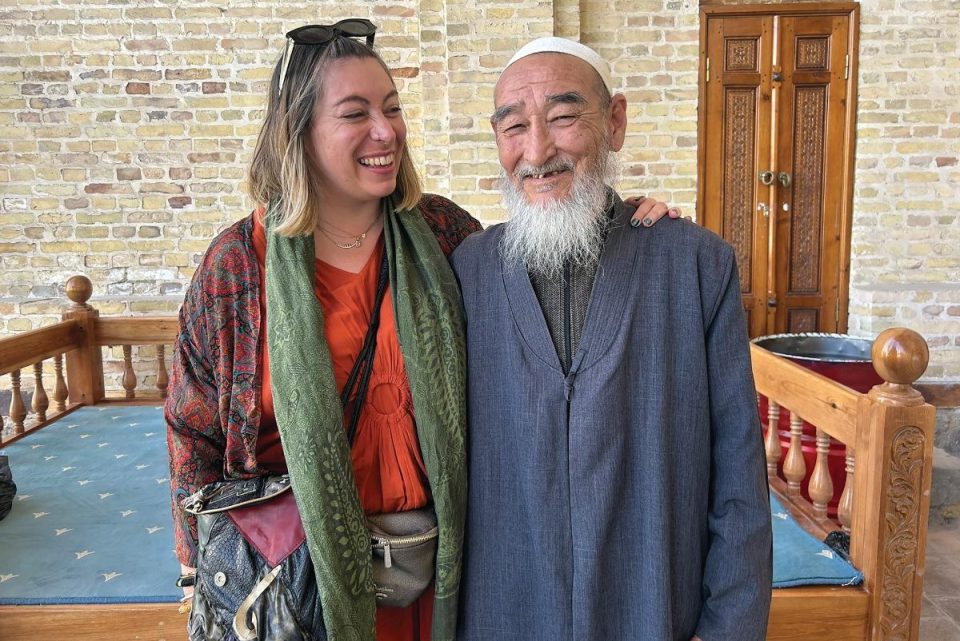
In the weeks before I arrived, 20,000 people gathered each morning to pray in the square. Most locals are curious, open, and fiercely proud of their heritage. In the nearby Abu Bakr Kaffal Shashi Mausoleum, a praying family told me the story of the Imam buried there, who was their great-great (many times over) grandfather.
In contrast to the serenity of the square, Chorsu Bazaar introduced me to everyday Uzbek life. It is a vibrant spectacle that wallops the senses. One of the most iconic markets in Central Asia, traders have for centuries sold everything from silk Ikat kimonos to hearty local delicacies like plov (a fragrant and oily medley of rice, veg, meat and spices).
I have to admit some of the bubbling pots and food displays were more alien than haute cuisine, but the smorgasbord of dishes I tried – including dill salad, quails eggs, pickles, mutton pie and lemon tea – was thankfully devoid of some of the slimier offerings I spotted (most notably Hisab, a huge sausage with intestinal casing resembling some sort of monster eel.) Pomegranate juice made fresh with a curious contraption, like an oversized lemon-squeezer, was both bitter and delicious.
Madrasahs, mosques and minarets
The ancient city of Bukhara, an hour-and-a-half’s internal flight away, took me deeper into this landlocked country. On the edge of the vast Kyzylkum Desert, it is one of the most complete examples of a medieval Islamic city. Like Tashkent, it has an urbanised part and a contrasting Old Town, where intriguing architectural attractions include madrasahs, mosques and minarets.
These are relics of a time when the city was one of the main destinations on the Silk Road, when merchants travelled across the globe connecting East and West, exchanging goods, culture and ideas between Asia, the Middle East, and Europe.
What struck me most was how I saw traces of Western European, Turkish, Persian, Central Asian, Russian and Chinese influence woven in the food, clothing and language.
As a hoarder of cultural treasures, I was in heaven browsing stalls touting handmade carpets, silk embroidery (suzani), miniature paintings and ceramics. Every beautiful thing I bought came from small family businesses, and was a way to engage with local artists and learn about traditions passed through generations.
Cox & Kings take guests off the traditional tourist routes, and one curiosity in Bukhara was an opulent, bizarre tearoom called the Retro Saloon Timur. The venue is hidden down a winding back street so tucked away it would evade even the most inquisitive tourist. It serves teas and homemade jams, but what stays with you are the surroundings: every centimetre of wall space is covered by a mix of paintings, from desert scenes to tasteful nudes and grand military portraiture.
High speed Afrosiyob train
Gaudy golden ornaments adorn every other orifice: mannequins in elaborate historical costumes grace corners and a mix of Russian and Central Asian music provides a backdrop to AI-generated princes and princesses on TV screens. I’m not quite sure whether owner Irina Sharipova’s intention was ironic tackiness or serious cultural commentary, but either way, it was huge fun: charming and memorable.
A particularly special evening was spent on the rooftop of Minorai Kalon Boutique Hotel, where I dined al fresco on lamb stew and rosemary potatoes, a mixture of local salads, dill sour cream and pickles, homemade bread and soups. The restaurant overlooks a skyline dominated by a moonlit Po-i-Kalyan mosque and minaret as the call to prayer rings out across the city.
The next day, I took the high-speed Afrosiyob train to Samarkand, the ultimate destination on any Uzbek itinerary and a city that has held profound wonder for me since those geeky childhood bookworm days, owing to its mystique and Silk Road history.
The train service was clean, efficient, and modern. You even get a snack of ice cream with raspberries included with the ticket. Over the two-hour journey, I listened to a playlist of Central Asian music while watching the Uzbek countryside zoom past, imagining how caravans of traders once made this expedition on foot or camel.
Pre-cursor to the Taj Mahal
One of the oldest cities in the world, celebrated for its unparalleled beauty and historical significance, Samarkand has been a cultural crossroads for thousands of years. This is largely due to geography: its fertile, water-rich location was the junction where Central Asia’s impassable mountains and harsh deserts forced trade routes from China, India, and Persia to converge.
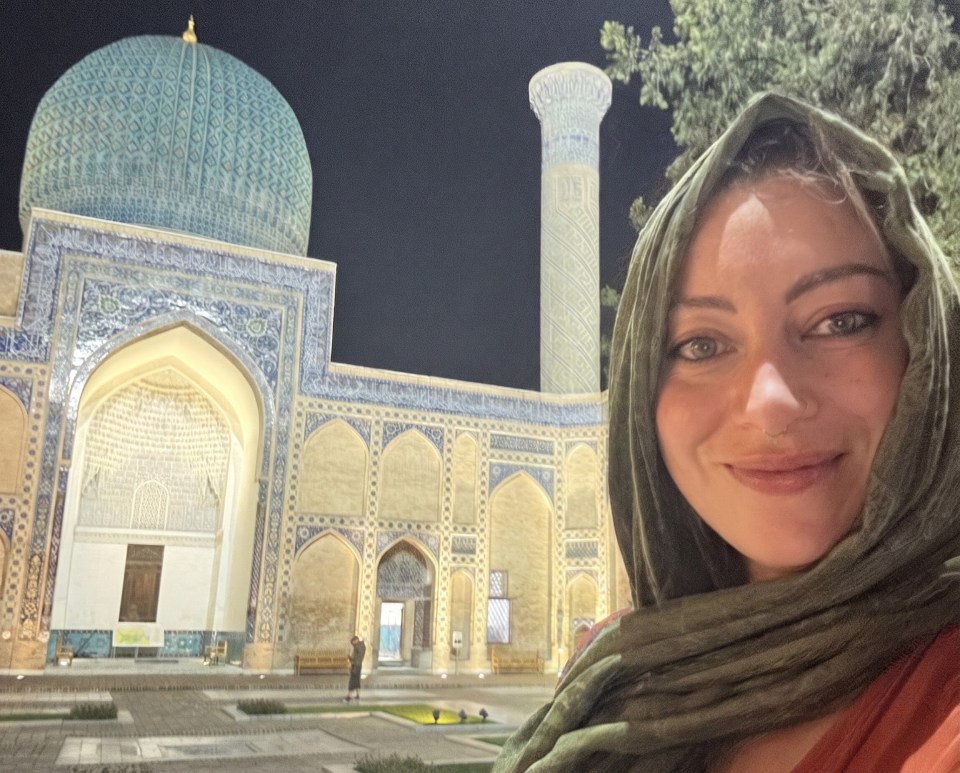
The central Registan Square holds a trio of madrasahs, or historic Islamic places of study, with the Ulugh Beg, Sher-Dor, and Tilya-Kori each boasting wonderful decorative mosaic frontages. Just a short walk from the Registan is the Bibi-Khanym Mosque, considered by many to be a precursor to the Taj Mahal, which was built some 200 years later (Turco-Mongol conqueror Timur commissioned the building for his wife in the 15th century).
Before I left, I asked our guide Bobur if he could take me to morning prayer at a small mosque near our hotel. It was worth the early rise to see the city at dawn, hear the Imam chant and witness men, young and old, at their daily ritual of worship in the shadow of the minaret. When they noticed me watching they gestured to the women’s section of the temple, a simple but beautiful room with a rug to pray on, where chinks of morning light seep through a carved wooden door and make an intricate pattern beside the Qur’an. I found it profoundly moving and felt a strong connection to the quiet and welcoming spirit of the place.
There are few places on earth that feed my childlike imagination and conjure such excitement as Central Asia. I have never been anywhere with such a fusion of ancient cultures and landscapes. The trip whetted my appetite not only to explore the region more fully, but to delve deeper into the country, a destination many avoid in favour of tickbox express tours that can’t possibly do the ‘Stans’ justice. Uzbekistan is both enduring and alive – I’m so grateful to have explored before mass tourism arrives.
How to travel the Silk Road
Cox & Kings (coxandkingstravel.com) offers a 12 day small group tour, Uzbekistan: Heart of Central Asia, from £3,895pp, based on two sharing. Price includes international and internal flights, high-speed rail and all transfers, accommodation, guided sightseeing, entrance fees and select meals.