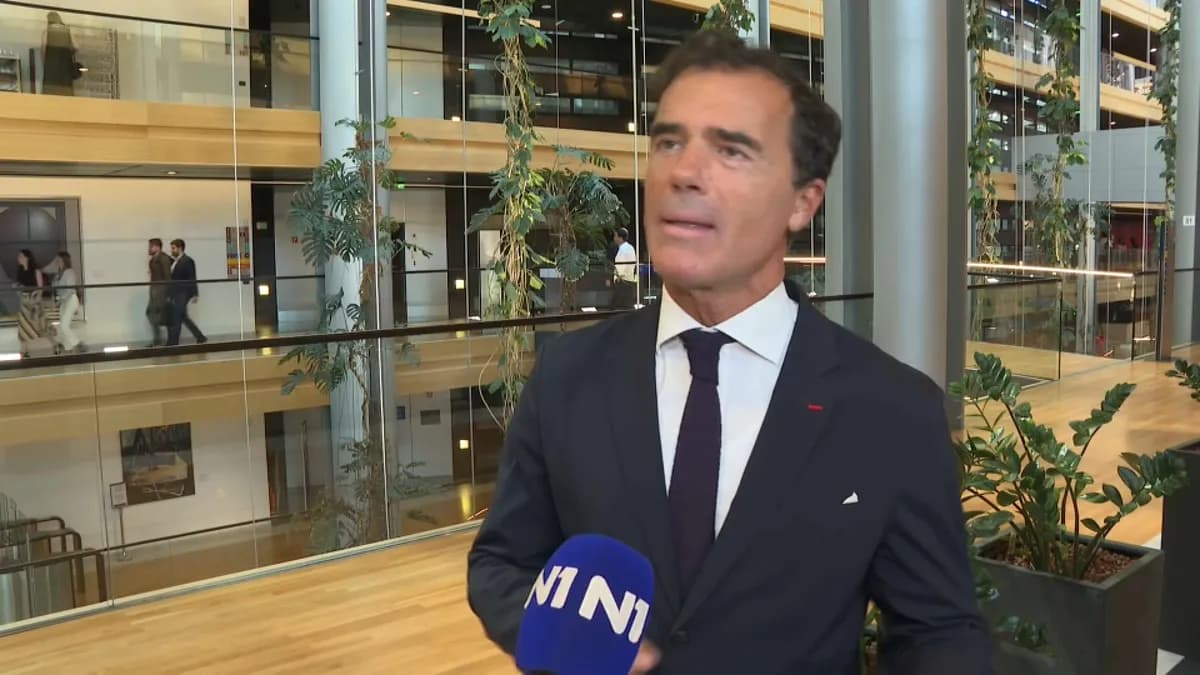

European Parliament Member Sandro Gozi hailed the results of the Serbian parliamentary elections as a magnificent victory for the Serbian people and a decisive step toward a more democratic and European future, noting that the most important thing is that former Serbian President Aleksandar Vucic conceded defeat.
Oglas
Speaking to N1, the European Democratic Party MEP said that the outcome serves as a powerful triumph for the student and democratic movements he has long supported. Gozi emphasized that the newly formed parliamentary majority and the European Union (EU) must immediately begin collaborating to chart a new path forward.
Gozi noted that the Student List’s criticisms of the EU stem from the bloc’s own mistakes, explaining that public skepticism is a direct consequence of past miscalculations by European leadership. He pointed out that the European People’s Party (EPP) and various foreign embassies had long shielded Vucic, mistakenly treating him as a guarantor of regional stability and economic relations. Gozi argued that this flawed assessment alienated parts of the Serbian public, leading to mixed signals about the EU’s true stance.
Gozi also stressed that European institutions, including European Commission President Ursula von der Leyen, should have taken a far clearer and firmer stance against Vucic, especially given that the Serbian Progressive Party (SNS) is an associate member of the EPP. He praised European Commissioner for Enlargement Marta Kos for consistently standing on the right side of the issue and driving a positive shift in relations between the European Commission and Serbia.
According to the MEP, the Student List’s victory effectively dismantles the narrative pushed by major European capitals, which had previously urged politicians not to challenge Vucic or align with the student movement under the assumption that the former president was a pragmatic leader committed to EU integration. Gozi said that European leaders must now revise their doctrines to acknowledge that democracy has spoken, adding that the country is entering a highly sensitive, complex, and unprecedented new political phase.
When asked about the poor performance of the “European Serbia” list and what it signals about public sentiment toward the EU, Gozi observed that the election became a stark, binary choice that left no room for a third option. Voters viewed the ballot as a direct struggle between continuing an autocratic slide under Vucic or backing the students to launch a democratic renewal, choosing not to split their votes on smaller alternatives. He expressed strong optimism that the incoming Serbian majority possesses the political will to pursue European integration.
Looking ahead, Gozi recommended that the new government dedicate its first 18 to 24 months to rebuilding the country’s democratic foundations, specifically targeting systemic flaws in media freedom, corruption, and the political control over the judiciary. He concluded that addressing these core issues - which fueled the Student List's victory in the first place - is directly aligned with removing the primary obstacles to EU accession, noting that as Serbia strengthens its democracy, its path to the European Union will naturally accelerate.
Teme