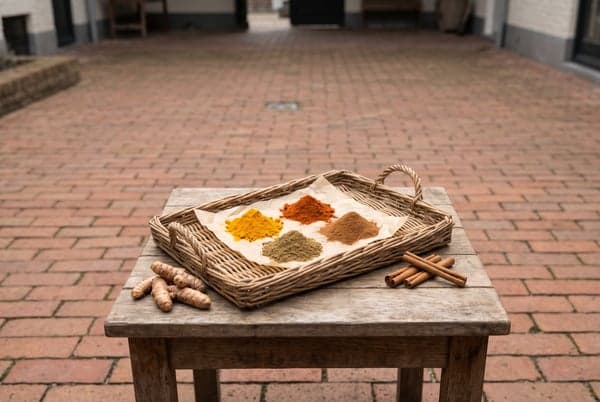
Spices contaminated with lead, including turmeric and cinnamon, have prompted recalls, warnings and enforcement — here are five to know and how the metal gets in
Updated October 27, 2026

Illustration: Quartz
Lead reaches spices by three main routes. Plants can take it up from contaminated soil. Grinding, drying and processing equipment can shed it into the finished powder. In some supply chains, sellers have mixed lead-based industrial pigments into spices to make their color look brighter. The result can sit in an ordinary jar on a kitchen shelf with no sign that anything is wrong.
Color adulteration is difficult for a shopper to detect by sight. A pigment added for color works because it resembles the spice's natural shade. A richer yellow or a deeper red can make a powder look like a better product. That color may still come from a compound never meant to be eaten.
The health stakes explain the attention from public health agencies. The U.S. Centers for Disease Control and Prevention states that no safe blood lead level in children has been identified. Lead is particularly harmful to children's developing brains. Exposure can come through everyday foods, from a spoonful of ground cinnamon to a fruit pouch made with it.
In the U.S., the Food and Drug Administration has issued warnings and overseen recalls involving lead in spices and in foods made with them. Consumer Reports published its own analysis of ground cinnamon products in 2024. The issue extends well beyond one country. Spices move through long supply chains that can include farms, traders, processors and packers in several countries. Each handoff is another point where heavy metals in spices can enter. Each is also another link investigators must trace when contamination surfaces.
This guide covers five cases of spices contaminated with lead or flagged for the risk: turmeric, cinnamon, paprika and chili powder, plus the seed spices cumin and coriander. It is a selection, not a ranking. Other spices and spice blends have faced similar questions. None of the five is presented here as the worst offender.
Each slide follows a different route into the jar. Turmeric shows lead chromate used as a color adulterant. Cinnamon traces lead-tainted applesauce pouches to a supplier in Ecuador. Paprika covers red lead, a pigment historically used to deepen color. Chili powder shows how blends drawn from several sources complicate tracing. Cumin and coriander show how seed crops can pick up lead from soil and from the surfaces where they are dried and ground.
Turmeric adulterated with lead chromate

Valentin Balan / Unsplash
Turmeric is the clearest documented case of a spice deliberately colored with lead. Some suppliers have coated turmeric with lead chromate, a bright yellow industrial pigment, to make the spice look more vivid and more valuable.
Turmeric comes from the underground stem, or rhizome, of Curcuma longa, a plant in the ginger family. Its natural yellow-orange color comes from compounds called curcuminoids. Color is one of the main ways buyers judge turmeric in a market. That gives sellers a reason to make a pale batch look richer than it is.
The spice is sold both as whole dried rhizomes and as ground powder. The pigment has been applied at both stages. It has been used to coat the outside of the roots and mixed into the powder.
Lead chromate is the pigment known as chrome yellow. It has long been used in industrial paints and coatings. It is not a food ingredient. The compound contains lead. Its chromate component is a form of hexavalent chromium, a separate toxic substance. Its color sits close to the shade buyers associate with good turmeric.
The practice is documented in research published in 2019 by Stanford researchers Jenny Forsyth and colleagues. Their work in Bangladesh linked lead chromate adulteration of turmeric to elevated blood lead levels in the country.
Bangladesh then took enforcement action against the practice.
The added lead does not cook off. Heat does not break down a metal. A curry, soup or tea made with adulterated turmeric carries the lead into the finished dish. Pigment blended into ground turmeric is also hard to tell apart from the spice's natural color by eye. A brighter color alone does not prove contamination, though. Turmeric varies naturally in shade by variety and growing conditions.
Lead in turmeric is not only a South Asian concern. The spice is traded globally and used in home cooking, packaged foods and dietary supplements. Adulterated roots or powder can end up in products sold far from where the plants were grown.
Ground cinnamon and the Ecuador applesauce pouch case

Illustration: Quartz
Ground cinnamon has drawn repeated lead warnings and recalls from the U.S. Food and Drug Administration (FDA). One widely reported case involved applesauce pouches that the agency traced to cinnamon from a supplier in Ecuador.
The pouches were sold under three brand names: WanaBana, Weis and Schnucks. The products were cinnamon-flavored applesauce in squeeze pouches, a snack format widely sold for children.
The FDA's investigation followed the contamination back through the supply chain. The source was not the apples or the packaging. It was the ground cinnamon added for flavor, which the agency traced to the Ecuador supplier.
The FDA identified lead chromate as the likely source of the lead. Lead chromate is a bright yellow industrial pigment, historically used in paints. It is not a natural component of cinnamon bark. Its presence points to contamination introduced somewhere between harvest and packaging.
The case shows how one tainted ingredient can spread across several labels. All three brands carried cinnamon from the same Ecuador source. A shopper choosing between them on a store shelf could not tell from the packaging that the spice inside shared an origin.
Cinnamon is made from the dried inner bark of Cinnamomum trees. Once that bark is ground into powder, an added pigment is difficult to spot by eye. Laboratory testing, not appearance, is how lead in cinnamon is detected.
Concern is not limited to pouches. Consumer Reports also analyzed ground cinnamon products and found that some contained elevated lead. The products tested were cinnamon sold as a spice on its own, the kind used in baking, oatmeal and hot drinks.
The FDA posts recall notices and safety alerts for contaminated foods on its website. Those notices name the affected brands and products. Checking a cinnamon container against the agency's alerts is one direct way to see whether a specific product has been flagged.
Paprika and red lead as a color adulterant

Zoshua Colah / Unsplash
Paprika has been flagged for lead contamination, and part of the reason is color. Red lead, a lead oxide pigment, has historically been added to paprika to deepen its red shade.
Paprika is ground from dried red peppers of the species Capsicum annuum. Hungary and Spain are its best-known producers, and Spanish pimentón includes smoked varieties. Cooks reach for it as much for color as for flavor, in dishes from goulash to chorizo.
That role makes color one of the main traits buyers use to judge quality. The spice trade grades it with a standard measure known as the ASTA color value. A batch with a higher reading is treated as the better product.
Red lead is an orange-red compound of lead and oxygen, also known as minium. Its chemical formula is Pb3O4. It has long been used as a pigment in paints and in rust-resistant primers for iron and steel.
Red lead pairs with paprika the way lead chromate pairs with turmeric. Each is close in color to the spice it is mixed into. Red lead suits a red powder, and lead chromate suits a yellow one.
The grading system shows the incentive. When deeper color earns a higher grade, a pigment that deepens color lets a duller batch pass as a richer one. The lead adds nothing to flavor or aroma. It changes only how the powder looks.
That makes red lead in paprika a form of food fraud rather than accidental contamination. Someone has to choose to add it.
Color fraud is not the only path. Peppers can take up lead from contaminated soil as they grow. Pods can pick up more during drying. Grinding equipment can add lead as the dried pods are milled into powder. Those routes involve no intent. Paprika can carry lead even when no one has tampered with it.
Chili powder and how lead enters dried peppers

Illustration: Quartz
Lead can get into chili powder at three stages: in the soil where the peppers grow, in the equipment that grinds them and through deliberate adulteration. Many chili powders are blends. A single jar can therefore carry lead from more than one of those stages.
In the U.S., "chili powder" usually means a seasoning mix rather than one ground pepper. A typical version combines ground dried chilies with other spices such as cumin, garlic powder and oregano. The chili portion may itself combine several peppers, such as ancho, the dried form of the poblano, and cayenne. Each of those ingredients can come from a different farm, region or supplier before it reaches the packer.
The term carries a different meaning in many other markets. In India and the U.K., "chilli powder" usually refers to ground dried chilies with nothing else added.
The first route is the field. Pepper plants grow in soil, and lead in that soil can end up in the harvested crop. Where the soil holds more lead, the peppers face a higher baseline risk before any processing begins.
The second route is the mill. Dried pods have to be ground into powder, and that step puts the spice in direct contact with machinery. Lead can enter at this stage from the grinding equipment itself, regardless of how clean the peppers were when they arrived.
The third route is intentional adulteration. Some sellers add substances to a spice to change how it looks. With chili powder, the aim is a stronger color.
The blend format makes the source of any contamination harder to pin down. If a finished chili powder tests high for lead, the cause could be the chilies, another ingredient in the mix or the mill that processed it. Investigators have to trace each component back through its own supply chain to find where the metal came from.
Cumin and coriander seeds and lead from soil and drying surfaces

Illustration: Quartz
Cumin and coriander seeds can carry lead picked up from contaminated soil and from the surfaces where they are dried, threshed and ground. Unlike turmeric and cinnamon, these seed spices have few well-documented contamination incidents that can be named with certainty.
Both plants belong to the Apiaceae family, which also includes carrots, parsley and fennel. Cumin comes from Cuminum cyminum. Coriander seed comes from Coriandrum sativum, the same plant whose leaves are sold as cilantro in the U.S. Growers harvest both crops for their dried fruits, which cooks call seeds.
Lead reaches farmland from several sources. They include the past use of leaded gasoline and lead-based paint, as well as mining, smelting and industrial emissions. Lead is an element, so it does not break down in soil over time. It tends to bind tightly to soil particles and organic matter.
Plants that do take up lead hold most of it in their roots. Only a small share moves up into the seeds. That pattern shifts attention to what happens after harvest.
Seed spices are commonly dried in the open. Soil dust can cling to the seeds while they dry. In traditional processing, the dried plants are often beaten or trampled on a threshing floor to free the seeds. That step brings them into further contact with dirt. Any lead in that dust travels with the crop unless the seeds are cleaned.
Grinding adds another possible route. Mills with worn or lead-containing metal parts can shed particles into the powder. Before grinding, whole seeds can be sieved and winnowed to remove dust and stones. Once they are ground, surface dust and any metal debris become part of the finished product and can no longer be sorted out.
India is the world's largest producer of cumin, with most of the crop grown in the western states of Gujarat and Rajasthan. Cleaning, drying, grinding and repacking can each happen at a different site before the spice is sold. Handling standards can vary from one site to the next.