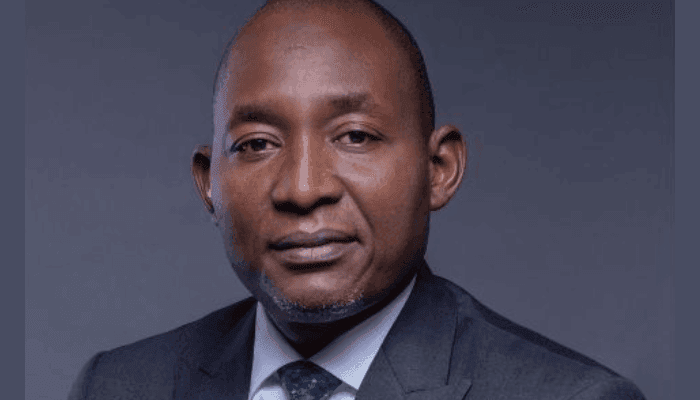
The federal government, through the Nigerian Midstream and Downstream Petroleum Regulatory Authority (NMDPRA) has launched a revised rulebook for moving gas through the country’s pipelines, a bid to give investors a more predictable way into a market it says needs as much as $50 billion of new money by 2030.
The NMDPRA unveiled the second revision of the Nigerian Gas Transportation Network Code at an energy conference in Lagos. Rabiu Umar, the chief executive officer of the downstream regulator, said it would give shippers, transporters and buyers “clearer rules.”
The code covers third-party access, capacity booking, nominations, balancing and metering. It sets out how producers put gas into a shared pipeline, how it is measured and how it is scheduled. Umar said the first version, introduced in 2020, was revised in 2024 and has now been updated again.
“There’s one pipeline that different producers put their gas into, and for that equity, there needs to be a code,” Umar said. “Rules of engagement on how you put your gas inside, how the gas is measured, and how you nominate gas into the network.”
The regulator said imbalances on the Western Network fell about 30 percent in the first half of 2026 after the first revision, as more shippers joined. Umar invited “every shipper, transporter and investor to make full use of” the new version.
The revision also adds initial rules for a trans-African pipeline network that is under discussion. Nigeria already exports gas through the West African Gas Pipeline, and projects to Morocco and Algeria are being considered.
“There is no way you will have gas crossing borders from one country to another if the rules of engagement are different,” Umar said. He called for a standard network code, so there is “no break in communication or in custody transfer.”
The rules arrive as new pipelines near completion. Umar said the OB3 pipeline and the Escravos-Lagos pipeline compressor are close to finished, and that the Ajaokuta-Kaduna-Kano line is more than 80 percent built. Once they come on stream, the regulator expects gas transport capacity to rise from 2.2 billion cubic feet a day to about 4.2 billion, linking southern supply to northern demand.
Nigeria holds about 215 trillion cubic feet of proven gas reserves, which Umar described as Africa’s largest, and he said unproven resources could be roughly three times that. He said the constraint is getting the gas out and used.
“The resource is not a constraint. Investment and infrastructure are,” he said.
According to the regulator’s slides, about 52 percent of the country’s 16.2 billion cubic feet a day of installed gas processing capacity is used.
In September, the domestic market took 2.07 billion cubic feet a day. Nigeria LNG took 2.76 billion, and gas to West African neighbours through the regional pipeline was 0.13 billion.
The authority put fresh oil and gas investment needs at $30 billion to $50 billion through 2030. That includes processing, fertiliser, liquefied petroleum gas and flare-gas capture.
Projects it cited include a seventh train at Nigeria LNG, which would lift capacity from 22 million metric tons a year to 30 million. It also pointed to a fourth fertiliser train at Indorama, taking capacity from 4.38 million tons to 5.84 million.
Cooking-gas demand is outrunning supply, the regulator said. Consumption is running at 5.2 thousand tons a day against supply of 4.7 thousand. It wants the LPG market to grow from 1.8 million tons a year to 4 million by 2030, and household use of LPG to rise from 20% to 60 percent in that period.
“That gas is an investment opportunity,” Umar said.
Umar paired the gas announcement with a pledge to make the regulator easier to deal with.
He said the authority is reviewing every licence it issues and, where possible, will move from annual renewals to five-year terms and cut approval steps. The aim, he said, is for applicants to obtain licences from anywhere in the world without visiting its offices.
“We are enablers of business. We are not gatekeepers,” he said.
He said the agency won’t “wake up and issue regulations,” and will consult those affected before drafting rules. A draft anti-competition regulation was put to consultation on Sept. 22, and the regulator has signed a memorandum with the Federal Competition and Consumer Protection Commission.
Investors have long complained about slow permits and unclear rules in Nigeria’s energy sector. Umar acknowledged the criticism, saying “some licences or permits taking forever to get” discourage investment.
In remarks beyond gas, Umar said local refineries now supply 74 percent of Nigeria’s petrol, up from about 44 percent a year earlier. Petrol imports fell 54 percent over the same period, to 10.2 million liters a day from 22.1 million. He said a war in the Gulf over the past eight months pushed crude to around $100 a barrel, while Nigeria avoided a nationwide supply disruption.
Related News

Dipo Oladehinde is a skilled energy analyst with experience across Nigeria's energy sector alongside relevant know-how about Nigeria’s macro economy. He provides a blend of market intelligence, financial analysis, industry insight, micro and macro-level analysis of a wide range of local and international issues as well as informed technical rudiments for policy-making and private directions.

