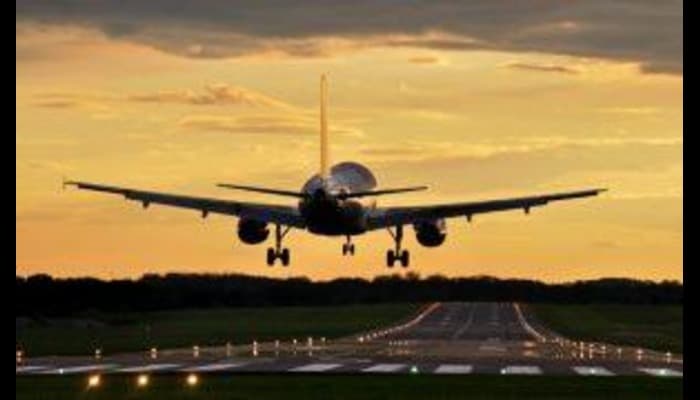
For years, the narrative plaguing Nigeria’s aviation sector was simple: local carriers lacked the wings to keep up with demand.
Armed with this logic, domestic airlines have increasingly poured capital into fleet modernisations and fresh aircraft acquisitions, promising a new era of punctual travel.
Yet, as airport terminals overflow and passengers continue to endure hours of agonising wait times, a stark reality has emerged. Buying more planes is proving to be an expensive mismatch for a system choked by structural bottlenecks.
From congested tarmac space and limited lighting for sunset-restricted airports to antiquated air traffic management, expanded fleets are failing to ground Nigeria’s flight delays – proving that new wings cannot easily outfly deeply rooted systemic failures.
Passengers across the country continue to grapple with schedule disruptions and operational unreliability, proving that expanding fleet sizes alone cannot fix the underlying crisis crippling domestic air travel.
The failure of new aircraft acquisitions to reduce delays stems from a complex mix of structural, infrastructural, and operational challenges.
Key factors include aggressive flight scheduling without adequate operational buffers, inadequate airport infrastructure such as apron congestion and dusk-to-dawn airport limitations, unexpected fleet depletions due to bird strikes and mandatory maintenance C-checks, network route expansions that stretch existing capacity, and environmental disruptions like severe weather conditions.
Data released by the Nigeria Civil Aviation Authority (NCAA) show that out of 7,961 scheduled flights operated by 15 domestic carriers during the month, 4,765 suffered delays, representing a 59.9 percent delay rate nationwide, while total flight cancellations stood at 36 (0.45 percent).
United Nigeria Airlines recorded the highest delay rate among major carriers at 76.6 percent (943 delayed flights out of 1,231 operations), followed by Air Peace at 71.4 percent (1,330 delays out of 1,864 operations), Enugu Air at 66.3 percent (582 delays out of 878 flights), and ValueJet at 56.7 percent (435 delays from 767 flights).
Other carriers, including Arik Air (62.5 percent) and Max Air (60.7 percent), also posted high disruption figures, whereas Umza Air recorded the lowest delay rate at 12.9 percent (52 delays out of 403 flights). Cancellations were led by United Nigeria with eight, Air Peace with seven, Enugu Air with four, and three each for Max Air, Green Africa, Ibom Air, Rano Air, and ValueJet.
These mounting operational disruptions occur alongside significant capital deployment by domestic operators into modern fleet equipment. Air Peace recently took delivery of a factory-new Embraer E175, following a Boeing 737-800 Next Generation acquired in May and expanded its Embraer fleet to 18 aircraft, including the advanced E2 series where it serves as the African launch customer.
State-owned Ibom Air welcomed its third Airbus A220-300 at Victor Attah International Airport in Uyo under a 10-jet order with Airbus. Simultaneously, United Nigeria Airlines added two Boeing 737-800NG aircraft at Murtala Muhammed Airport in Lagos to service primary domestic routes, while ValueJet received its first Boeing 737NG aircraft to advance its regional West African network.
Evaluating the disconnect between fleet expansion and operational reliability, Samuel Caulcrick, former Rector of the Nigerian College of Aviation Technology (NCAT), explained that flight disruptions are fundamentally a structural scheduling failure rather than a raw numbers game of aircraft ownership.
“Flight delays are ultimately a structural scheduling problem, not just a raw-numbers game about how many aircraft an airline owns,” Caulcrick stated.
“If an airline drops a flight from a plane’s daily schedule, it adjusts the utilisation rate and immediately lowers the probability of a knock-on or reactionary delay. If Flight 1 is delayed by 45 minutes due to morning fog, that delay won’t automatically ruin Flight 6 at 10:00 PM.”
Caulcrick noted that while airlines resist lowering daily aircraft utilisation because planes only make money when airborne, adopting operational tactics like schedule padding and maintaining standby capacity can prevent systemic schedule failure.
“Airlines use a tactic called schedule padding or block time padding. If a flight between Lagos and Abuja physically takes 50 minutes, the airline might schedule it as a 1-hour-and-15-minute flight. This extra 25 minutes acts as a built-in buffer. If the plane gets stuck on the tarmac for 20 minutes before takeoff, it can still land on time according to the schedule.
“Airlines can also keep operational spares, spare aircraft and crew on standby at major hubs to swap out a delayed plane and reset the schedule. Ultimately, scheduling is a financial tradeoff: an aggressive schedule makes more money on paper, but a realistic schedule with built-in buffers prevents the chaotic domino effect of delays.”
Seyi Adewale, Chief Executive Officer of Mainstream Cargo Limited, highlighted that passenger relief remains elusive because fresh aircraft arrivals are regularly offset by unscheduled fleet damages, mandatory maintenance programs, and expanding route networks.
Adewale recalled recent bird strikes that hit United Nigeria aircraft, resulting in total engine losses that exposed the proactive limitations of the Federal Airports Authority of Nigeria (FAAN) in controlling airport bird hazards.
He also cited whole aircraft losses and groundings, including past incidents involving Enugu Air, Allied Air, and ValueJet, alongside routine fleet depletion during C-checks and heavy maintenance.
Furthermore, Adewale observed that domestic carriers are increasingly stretching their fleet capacity to cover new regional destinations, such as Air Peace’s services to South America and London Gatwick or Heathrow, and servicing emerging state-owned airports.
He added that the prevalence of daytime-only airport infrastructure severely restricts how airlines can rework schedules when early disruptions occur.
To address these vulnerabilities, Adewale urged airlines to form inter-carrier codeshare partnerships during maintenance groundings, partner with FAAN on bird-scaring devices such as pyrotechnics and automated Zon guns, and recommended that the NCAA raise fleet capacity requirements for new air transport license holders to prevent fragile, single-promoter carrier setups.
Highlighting internal and external operational realities, Adedayo Olawuyi, Chief Commercial Officer of United Nigeria Airlines, stressed that many factors causing delays stem from severe airport infrastructure bottlenecks and conditions outside an airline’s control.
“There are many reasons that lead to cancellations and delays of flights in Nigeria’s aviation sector,” Olawuyi stated.
“I don’t know how many of you have ever lived in a five-bedroom apartment where there is only one car park? Before you go out in the morning, they need to call you to come and move your car. Sometimes that’s what we face because of congestion at the airport.
“So, if you get to the ramp early in the morning, there are times when the aircraft is blocked from moving simply because there are many operators operating today. A flight that pushes back at 6:59 a.m. eventually takes off at 7:38 a.m. The flight was supposed to arrive in Abuja by 8:00 a.m., but there’s already a 40-minute delay that the airline knows nothing about.”
Olawuyi emphasised that technical malfunctions and weather constraints mandate strict adherence to safety protocols over schedule adherence.
“We operate machines. Have you ever woken up, and your car did not start? When technical challenges occur, we must maintain safety and ensure everything is properly fixed before releasing the aircraft into service. Furthermore, the bulk of the airports we operate in are dusk-to-dawn operations, meaning they do not have airfield lighting and cannot operate at night. When delays extend into the evening, we are ultimately forced to cancel flights.”
Critiquing the published NCAA disruption metrics, Olawuyi argued that raw delay statistics fail to differentiate between controllable airline delays and uncontrollable external factors.
“When you remove the controllable delays, and you have a high number of 60 percent, then you can say the problem is the airlines. The question about the reason for the delays should not be directed to the airlines alone, but to all stakeholders across the aviation ecosystem.”
Addressing solutions to ramp gridlocks, Remi Jibodu, Chief Operating Officer of Murtala Muhammed Airport 2 (MMA2), pointed out that simultaneous morning flight scheduling creates severe operational bottlenecks.
Jibodu advocated for a coordinated airport slot management system in collaboration with domestic airlines to stagger departure times, ease tarmac congestion, and minimise early morning cascade delays across Nigerian airports.
Under NCAA consumer protection regulations, passengers experiencing two-hour delays are entitled to refreshments, four-hour delays mandate full meals, and extended six-hour disruptions require financial compensation or rebooking accommodation.
Related News

Ifeoma Okeke-Korieocha is the Aviation Correspondent at BusinessDay Media Limited, publishers of BusinessDay Newspapers. She is also the Deputy Editor, BusinessDay Weekender Magazine, the Saturday Weekend edition of BusinessDay. She holds a BSC in Mass Communication from the prestigious University of Nigeria, Nsukka and a Masters degree in Marketing at the University of Lagos. As the lead writer on the aviation desk, Ifeoma is responsible and in charge of the three weekly aviation and travel pages in BusinessDay and BDSunday. She also overseas and edits all pages of BusinessDay Saturday Weekender. She has written various investigative, features and news stories in aviation and business related issues and has been severally nominated for award in the category of Aviation Writer of the Year by the Nigeria Media Nite-Out awards; one of the Nigeria’s most prestigious media awards ceremonies. Ifeoma is a one-time winner of the prestigious Nigeria Media Merit Award under the 'Aviation Writer of the Year' Category. She is the 2025 Eloy Award winner under the Print Media Journalist category. She has undergone several journalism trainings by various prestigious organisations. Ifeoma is also a fellow of the Female Reporters Leadership Fellowship of the Wole Soyinka Centre for Investigative Journalism.

