
Luke Diaz is a freelance military writer with experience with active duty experience in the US Navy as well as defense and industrial engineering. He is a former Naval Flight Officer who performed tactical air control on the carrier-based E-2 Hawkeye.
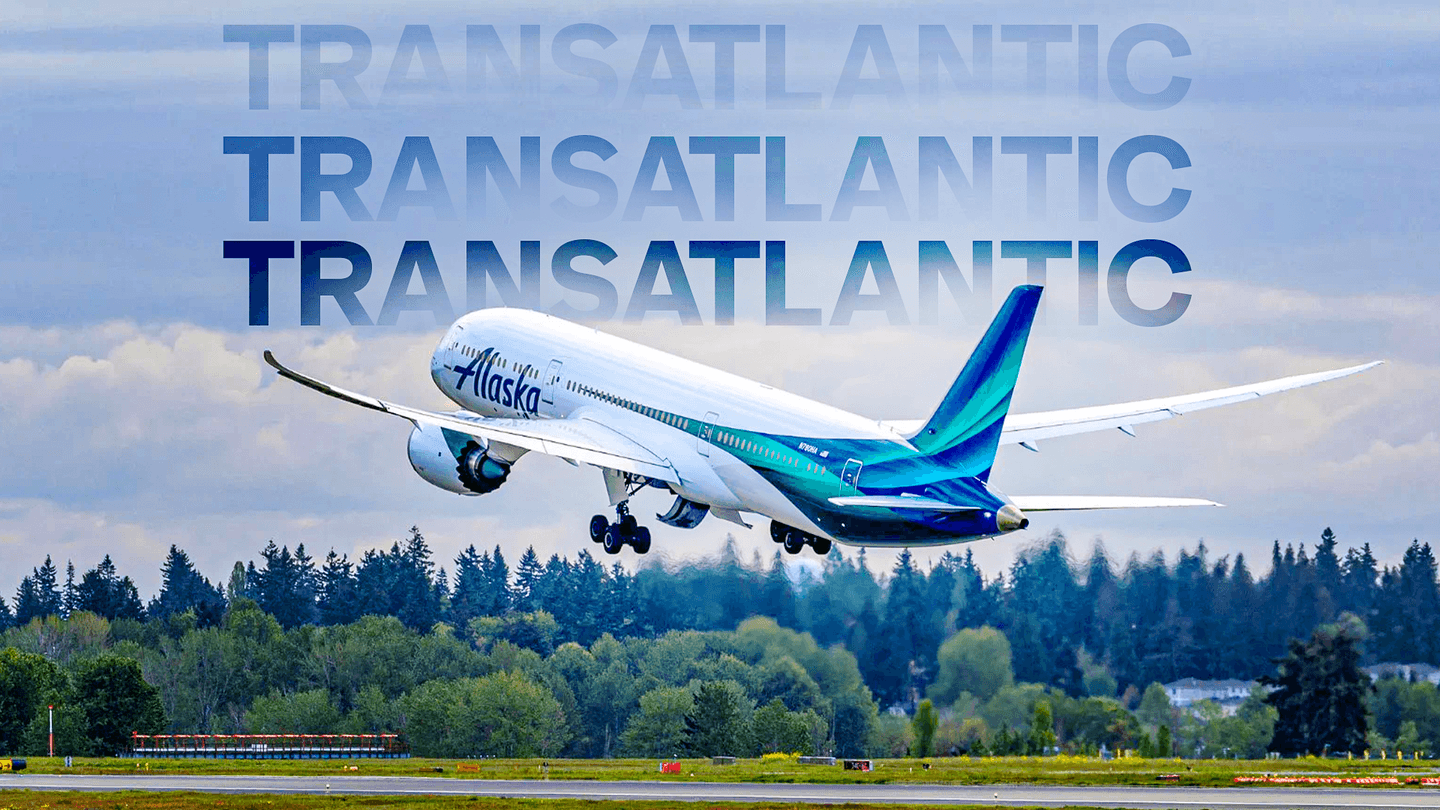
 Alaska Airlines pushed ahead with its plans to become an international carrier following its merger with Hawaiian Airlines that wrapped up in 2024. The introduction of its first Boeing 787 Dreamliners has greatly expanded its long haul reach beyond what started with the handful of Airbus A330 widebodies from Honolulu. The five examples of 787s on the flight line now cover Rome, London, Seoul, and Tokyo in addition to Hawaii service.
This twin-aisle cadre has started an exciting period of growth and change for the Alaska Air Group. However, its small numbers have already shown how vulnerable the new international network is. On July 19, one of them turned around over England and never completed its crossing. The airline had no aircraft waiting to take its place.
When Alaska launched Rome in the spring, executives already said the carrier needed all five Dreamliners plus a spare it did not own to fly its full summer schedule, according to Business Traveller. The absence of a spare is exactly what made the midsummer breakdown a minor crisis instead of an unscheduled maintenance call. Relief is on the way, because Alaska has now ordered 17 Dreamliners in total with plans for at least 12 long-haul destinations from Seattle by 2030.
Five Jets Carry Every Long-Haul Route

The reason the current 787 fleet is so small is that it began as an upgrade order for a smaller airline with much more limited intentions. Hawaiian Airlines, the original commitment, went and swapped its A330neo order for Boeing, but Alaska inherited the delivered jets through its merger. By January, the jets that were ready to fly were assigned to long-haul routes, and Alaska exercised every remaining 787 option under the deal.
That brought the group's total to 17 aircraft, including five larger variants, the 787-10. Still, by splitting its long-haul network across two entirely different aircraft manufacturers, Alaska is introducing dual-fleet friction on the flightline. Currently, its transatlantic operation only flies 787s, but in the Pacific, the Legacy A330-200 Hawaiian widebodies are flying alongside the newer 787s that Alaska has introduced. Alaska is also building this network against rivals that have more aircraft to spare.
Alaska wants at least 12 long-haul destinations from Seattle by 2030, according to Airways. The international expansion has forced the carrier into a direct, head-to-head overseas battle against established global titans. While Alaska is aggressively scaling its long-haul base at Seattle-Tacoma International Airport (SEA), it faces a daunting reality. Almost every single seat it books through next summer is on a route where Delta Air Lines already offers nonstop competition.
The ability of its rivals to make countermoves was illustrated when Delta duplicated the inaugural Alaska transatlantic itinerary by adding its own nonstop flights to Rome Airport (FCO) from SeaTac. As one of the largest air carriers in the world, DAL can easily replace the A330neo it is flying head to head with Alaska should it be grounded without minimal schedule disruption. If Alaska falters, its competitors are ready to pounce.
How One Diversion Became A Network Problem

Flight AS181 left Rome's Fiumicino Airport in the late afternoon of July 19, operated by 787 tail number N780HA. About two hours later, over southeastern England, the crew abandoned the crossing and turned back. The pilots declared a general emergency and then dumped fuel to reduce its weight and landed back at FCO roughly five and a half hours after departure.
According to Aero Corner, the flight crew detected abnormal engine vibrations from the General Electric GEnx engines. There were no injuries to the passengers or crew. After an engineering evaluation on the ground, Alaska determined the aircraft required additional maintenance and canceled the original flight, arranging alternate accommodations for the passengers.
|
Route Status |
Origin Hub |
Destination Airport |
|---|---|---|
|
Current / Active |
Seattle-Tacoma International Airport (SEA) |
|
|
Current / Active |
Seattle-Tacoma International Airport (SEA) |
Rome Fiumicino Airport (FCO) |
|
Current / Active |
Seattle-Tacoma International Airport (SEA) |
Reykjavik Airport(KEF) |
|
Future (Announced) |
Seattle-Tacoma International Airport (SEA) |
|
|
Future (Announced) |
Seattle-Tacoma International Airport(SEA) |
 London Heathrow Airport
 Paris Charles De Gaulle Airport
The aircraft remained grounded in Rome for approximately 18 hours for inspections and repairs. It departed the following day under the special flight number AS9281, arriving in Seattle with a cumulative delay of approximately 24 hours, according to the Aviation Herald. The real-world scenario of Flight AS181 on July 19 perfectly demonstrates how a single widebody diversion exposes severe structural bottlenecks within a highly constrained micro-fleet.
When N780HA turned back to Rome and was grounded for inspection, there were no backup aircraft available in Seattle or Europe to take its place. Because the scheduled buffer times between international arrivals and departures are minimal, a 24-hour grounding doesn't just affect the stranded passengers in Rome; it triggers a domino effect across the whole network.
Daily Routes Leave Almost No Idle Aircraft

When one of the precious few Alaska 787s is stuck on the field for a day, the next flight it was scheduled to fly out of Seattle must either be severely delayed or canceled entirely. With 20% of the active long-haul fleet instantly knocked offline by one issue on N780HA, the airline is forced to choose which destination to cancel next, creating an immediate, unavoidable capacity bottleneck.
The Big Three of Delta, American, and United Airlines have super-sized fleets that hover around a thousand airframes in any given tally. That allows them to have aircraft that are unassigned as 'hot spares' parked at various mega hubs around the world, which can step in if one plane breaks down. Alaska cannot afford to let a multi-million-dollar widebody sit idle. Every aircraft is booked on tight, back-to-back rotations.
Daily service is the first reason the calculus is so unforgiving. A single Dreamliner cannot fly a daily round trip to a transatlantic destination from Seattle. Each crossing takes most of a working day and the aircraft also needs time on the ground at both ends. Every daily route therefore needs at least two jets.
Rome and London together would consume at least four of the five Dreamliners, based on the published schedules, which leaves one aircraft to supplement the A330s serving Seoul, Tokyo and Honolulu. On the other hand, this seasonal rotation does help alleviate some of this pressure.
Rome flights run only through the busy months. Still, that approach only shifts risk into a calendar window instead of eliminating it. If a jet fails inside the peak demand, as N780HA did, no calendar trick can create a replacement, and Alaska has to reshuffle what few airframes it has.
Relief Arrives Slowly While The Retrofit Season Tightens Things
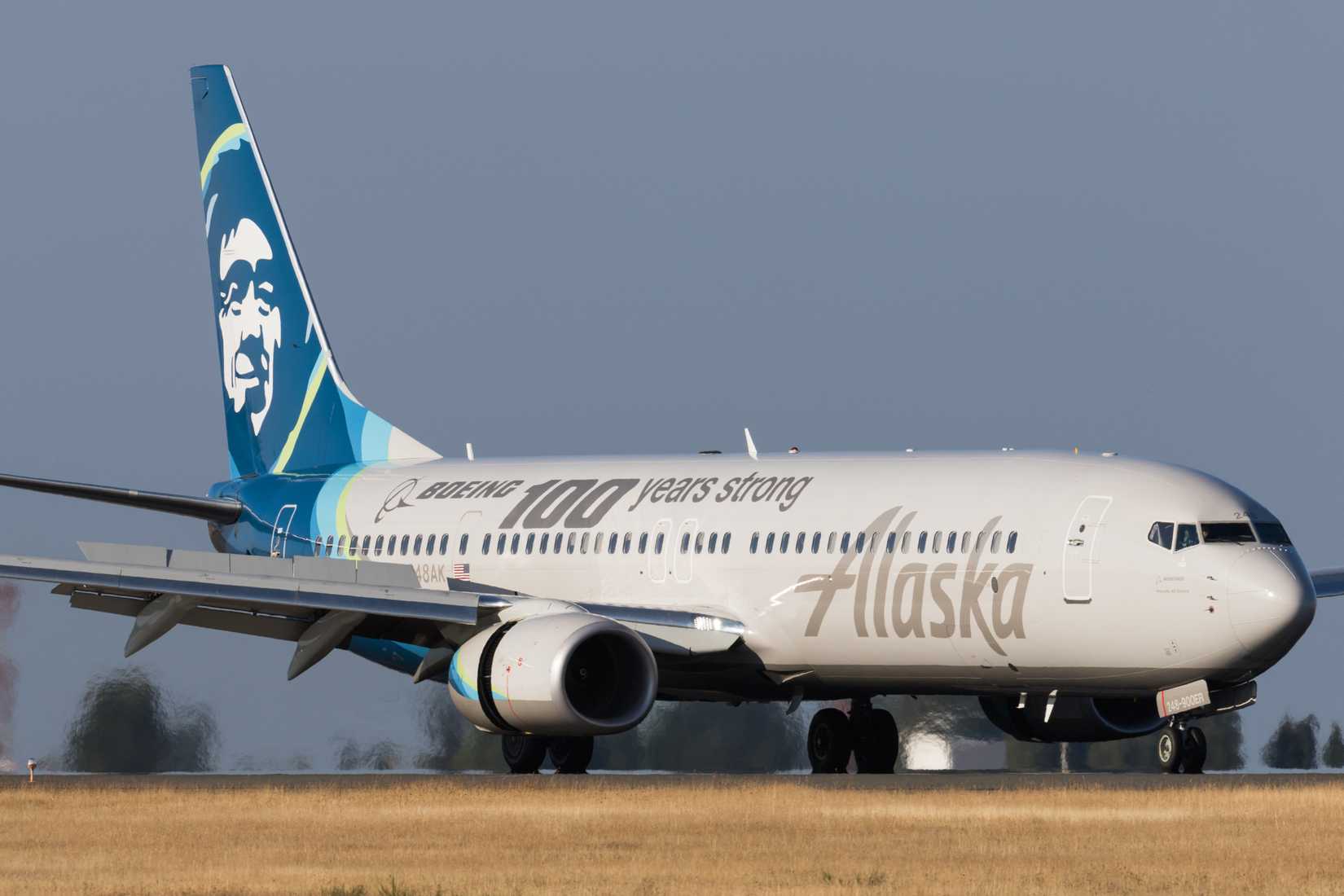
Alaska has almost exclusively flown the Boeing 737 for decades as its workhorse narrowbody platform, which is exactly why many of its jets bear the mantra 'Proudly All Boeing.' Yet, the widebody fleet strategy is the absolute core of Alaska's new international ambitions. Because Alaska Air Group has a very close relationship with Boeing, it is possible that it could leverage its deep backlog of airframe orders to swap slots and move up the deliveries of additional 787 widebodies.
In early 2026, Alaska Air Group placed the largest aircraft order in its history, committing to a staggering 105 firm 737 MAX 10s and locking in 5 firm 787-10s. By tossing Boeing a multi-billion-dollar lifeline for the uncertified MAX 10 at a time when the manufacturer is desperate for stable domestic backlog stability, Alaska bolstered its status as one of Boeing's most critical customers.
If the MAX 10 certification or production timeline slips further, Alaska is in a prime position to demand compensation. Instead of accepting cash penalties or standard discounts, Alaska's management can negotiate for accelerated widebody delivery slots.
Whether or not this will actually happen is purely speculative, and with the high demand for the Dreamliner, as the world's best-selling widebody jet of all time, it simply may not be possible to change delivery slots that easily. Another snag in that modernization plan is also the retrofit of Starlink to the five Dreamliners that it already has, which will take each out of service periodically, and the upcoming overhaul of Hawaiian's A330 cabins.
Managing A Fleet For Two: The Merged Armada Of Alaska Air Group

Committing to a comprehensive cabin refresh for the 24 Hawaiian A330s starting in 2028 prioritizes near-term capacity over immediate fleet simplicity. The upcoming overhaul introduces private business class suites and a true premium economy cabin to protect market share against international competitors. These widebodies are relatively young and highly efficient at overwater hops to the mainland and Asia, making premature retirement financially impractical. That also makes the long-term decision to either replace them with an A330neo or 787 a problem for the mid 2030s instead of today.
|
Aircraft Platform |
Fleet Status |
Operating Brand |
Quantity |
|---|---|---|---|
|
Boeing 787-9 Dreamliner |
On Order |
Alaska Airlines |
12 |
|
Boeing 787-10 Dreamliner |
On Order |
Alaska Airlines |
5 |
|
Airbus A330-200 |
Active |
Hawaiian Airlines |
24 |
Instead of trying to fly one fleet type everywhere, management is partitioning the globe between the two widebody types to build long-term network stability. The new routes from Seattle to Osaka and Tahiti will be explicitly operated by Hawaiian using their active A330s.
This allows Alaska to rapidly build a heavy international footprint at its Seattle hub without pulling a single factory-fresh 787 away from European destinations. By keeping the Airbus aircraft flying west over the Pacific and the Boeing aircraft flying east over the Atlantic, the airline isolates its maintenance, parts supply, and crew bases, preventing complex mixed-fleet logistics from bogging down a single region.
Alaska Airlines — Live Flights
| Flight | From | To | Aircraft | Altitude |
|---|---|---|---|---|